Tuesday, 14 July 2015

VARIOUS ARTISTS: Now That's What I Call Music 14


Now That's What I Call Music 14 [Vinyl]: Amazon.co.uk: Music


Track Listing:  Something's Gotten Hold Of My Heart (Marc Almond Featuring Gene Pitney)/Two Hearts (Phil Collins)/Stop! (Erasure)/Help!(Bananarama/Lananeeneenoonoo)/Looking For Linda (Hue And Cry)/Fine Time (Yazz)/Four Letter Word (Kim Wilde)/Stop (Sam Brown)/You Got It (Roy Orbison)/She Drives Me Crazy (Fine Young Cannibals)/Need You Tonight (INXS)/Burning Bridges (On And Off And On Again) (Status Quo)/Big Area (Then Jericho)/The Last Of The Famous International Playboys (Morrissey)/Every Rose Has Its Thorn (Poison)/Belfast Child (Simple Minds)/Buffalo Stance (Neneh Cherry)/Good Life (Inner City)/Hey Music Lover (S'Express)/Blow The House Down (Living In A Box)/Promised Land (The Style Council)/Respect (Adeva)/Wild Thing (Tone Loc)/I Live For Your Love (Natalie Cole)/First Time (Robin Beck)/Straight Up (Paula Abdul)/I Only Wanna Be With You (Samantha Fox)/Be My Twin (Brother Beyond)/Love Like A River (Brother Beyond)/All She Wants Is (Duran Duran)/Tracie (Level 42)/Love Changes Everything (Michael Ball)


"In the moments that followed the withdrawal of one wave of history you could see, if you chose to look, a brief glimpse of the undercurrents at work in the late twentieth century." John Higgs, The KLF, pg. 211


This is the inaugural posting on Then Play Long of an irregular series - albums that would have been number one but for the fact that they were various artists albums.  At some point in 1988 enough music industry people (Stock, Aitken and Waterman being three) complained that their artists were not getting a fair chance at the top because of the omnipresent nature of the Now and Hits compilations.  Rick Astley should have gotten to the top with his second album; Sade would have; and so on.  And so the official chart began a separate chart for such compilations; on the NME chart, though, the rule didn't apply and this album was there at the top for a week in April.

Because of the "unofficial" quality of this, I feel free (well, I always do, that's obvious) to mention a few other albums as well, and to cherrypick from The Hits Album 10, too - so this covers roughly the spring of '89, as that came out in June...

....which brings me to my last semester at Ryerson, a hectic and not always unpleasant time.  For reasons I still don't understand, I was given the job of the editorial page on The Ryersonian as the person who first had it wasn't opinionated enough.  I tried to be serious with my opinions while pleasing the actual editor and head of Journalism, while running completely inane person-on-the-street questions underneath.  It wasn't exactly perfect, but our edition never missed a deadline, and the tv installed up in the corner of the composing room (so we could follow the Dubin enquiry into athlete doping after Ben Johnson) was always turned on to MuchMusic anyway, our deadline on Tuesday being heralded by the country part of the program schedule, Outlaws & Heroes.  It was stressful but good; I wrote poetry on the side that was okay now that I think about it, and some of it was published in the White Wall Review.  If I focused on the present - this sentence, that essay, that exam, this poem, that seat - I was fine.  But there is only so much commuting and writing anyone can do, and I graduated with no real goal or ambition.  (I felt alone in this respect, as you'll see.)  My health was so bad I had to get iron pills that spring and as I can't swallow pills, I had the, uh, "fun" of smashing them up and eating them on toast with strawberry jam or (a better method) smashing them up and eating them quickly via ice cream.  Anaemia is what I was fighting, though a general lassitude was another.  I went to our graduation dinner at a fancy hotel by the lake and as I was a vegetarian at the time, I got...a plate of fruit.*  For dinner.  It was most embarrassing, and I didn't go to my graduation ceremony as my father wouldn't get to see me graduate, and my mom isn't much for ceremonies, anyhow.

In the meantime, the world of music was changing; even I could see that.  The brief glimpse that Higgs talks about he dates at 1991, but for me it starts earlier (maybe being a poetical half-exhausted opinionated outsider helped).  Decades tend to speed up as they go, but the 80s was just go-go-go for so long that by '89 it was disintegrating before my eyes, the 90s were already here, save for the calendar.  I wasn't sure about the 90s, but then time itself - so regimented for so long - began to take on a different and horrible dimensions.  I was ill, pale, in need of good cheer, and music had to rise up to help me...

...and so to Now 14...

...in the figurative diner where I have had my portobello burger and onion rings and shake and now am having my tin roof sundae** and looking over the songs here...some I have done before, or will do, and by 1989 standards there are some I know and some I don't...to make things easy, all hopped up on the sundae as I am, I'm going to categorize: 

Cover Versions

"Something's Gotten Hold Of My Heart"- The bracing dramatic New England blizzard that is Gene Pitney finally gets to number one, courtesy of fan Marc Almond, whose warm and equally melodramatic voice make this declaration of love - from blues and grays to scarlets - quite stunning.  Pitney had a hit with it back in 1967 and its confiding tone - it's like an aria, really - meant he recorded it in Italian, where its title in English is "You Don't Know, Man."  And that is how bold it is - out of the darkness comes light, out of pain comes blessed relief.  I didn't hear this at the time, alas, but how good is it to hear Almond's proclaiming and then hear Pitney's voice - there hasn't been anyone quite like him since, and I doubt there will be. 

"Help!" - This was the Comic Relief single in February, long before the public were requested to wear deely-boppers (I think) and DJs exhausted themselves one way or another to raise money.  It's Bananarama and Jennifer Saunders, Dawn French and Kathy Burke together to make up Lananeeneenoonoo and it works as Bananarama play it straight and the others are what's missing - i.e. they are John Lennon making fun of the song and wouldn't he have loved it?  (McCartney's recent quotes about The Beatles, amongst many other things, makes me think he would.  Also, Paul, shut up and play the bloody bass.)

"Promised Land" - Paul Weller & Co. didn't do that many cover versions, but this is Chicago House DJ/producer Joe Smooth's song and it's done with mmmmmmmmmmmmlllllllaaaah flair and sincerity, the joy and optimism here is genuine, but their label didn't think anyone would want a Style Council album that was all House-style songs, and it was scrapped and the soulcialists broke up soon after.  Modernism:  A New Decade didn't see the light until the late 90s, by which time Weller had probably become mates with Noel Gallagher (maybe later?) and he really should do a dance album now, shouldn't he?  The message of this song is timeless, he might do it again... 

"Respect" - Or, you thought it couldn't be done, but this is a great House version of the Otis Redding & Aretha Franklin song. Patricia Daniels plays with the words, woooooo-woo-woo-woos them, makes the song her own, darlings.  "Come on and respect me when I'm cleaning, come on and respect me when I'm cooking" she sings, and with her "Respect ME respect MEE AY AY" and the house piano dancing all over the song with her, it is a classic.  Daniels came out of her church choir to the world of house, as did someone else I'll be getting to soon...

"I Only Wanna Be With You" has to be one of the least necessary cover versions of all time; even by her not-very-high standards, it's only so-so.  That Dusty Springfield herself was working with the Pet Shop Boys and was known to a whole new generation of fans was a good thing.  This, uh, not so much.  Even The Tourists are better than this, and I'm saying that as someone who likes the Eurythmics a lot more.


Soulcialism And Its Discontents

"Looking For Linda" - Hue and Cry do Level 42 better than Level 42 shock!  Possibly the only song to mention Paisley, this is soulcialism done right - focus on the particular, not the general.  Linda and the narrator meet on the train, and the narration is worthy of Henry Green - there's romance, drinking, running away from a man, and constant longing.  Musically it's jazzy and lovely and the whole song is very fine. 

"She Drives Me Crazy" has already been discussed over here; suffice it to say there are only a few bands who did the veni, vidi and vici thing, and Fine Young Cannibals was one such band.  If only more could do that.

"Blow The House Down" - Whenever I hear Living In A Box I am reminded that the late Bobby Womack covered their song "Living In A Box" and I would rather hear him doing this song than them.  Still soulcialist, but with lyrics like "We have got the power to build the highest tower/Standing with our feet on the ground" - this is the tower, I guess, of righteousness that will blow the house (of Parliament?) down.  I am not sure this kind of big-lunged bluster (complete with "rock guitar solo") is going to work after the Second Summer of Love, and it was not really a tower that helped to end a particular woman's career as PM, as we shall see....

"Love Like A River" - Climie Fisher's last hit, and recognizably them without otherwise being particularly good or bad.  This is the sort of thing that is about love being like water, saving the narrator from living in a desert, etc.  It's all very Magic 105.4 brunch background music on a Sunday, but nothing else, and I'm not even sure it's remembered outside of the Climie Fisher fandom. 

"Tracie" - In which Level 42 aren't just missing Tracie but are also missing Boon and Phil Gould, so this sounds like a diet version of Level 42, lacking that vital something - a song? - and just skirting around this loss and never really getting down into a genuine feeling.  Which is a shame as Tracie was a real person.  Guitarist Alan Murphy (who had been in Go West) joined the band in '88, died of AIDS in late '89, which is of course far worse than this being a meh single. 


Good Morning Radio One

"Two Hearts" - In which you can have Lamont Dozier help write a song and it's only bearable because of him.  From the movie Buster, where a criminal's life is whitewashed because it's really about Buster's relationship with his wife, and not so much about the crime.  Even in this light, Phil Collins told Charles and Diana not to attend the premiere of it as it is about the Great Train Robbery, which in some quarters is the Worst Thing That Ever Happened, Short Of WWII.  In 1988 terms, at least.  But the song is bright and breezy, a pastiche that works because of Dozier.   

"Stop!" - Oh the multicolored and flashing and almost overly-awake world of Erasure!  And, uh, confusing too - I mean there's Andy Bell talking about "we'll be together again" and how no one is going to separate him and his Other, but then the chorus is all about how others want them to slow down and be cautious.  Don't jump before you look say these faceless people, but the narrator and his Other are never going to be separated, and that "again" means maybe they were before?  Why do I think this is some lost song from a Jane Austen musical?  A very busy song, and one that, despite its cheer (and the odd echo of "And Then He Kissed Me" in the verses) is all about defiance of the worrybots.

"You Got It" - The return of Gene Pitney was within the mourning period for Orbison, a dry Texas plain hiding riches and depths.  It is too bad that Orbison is singing on what is essentially a tailor-made ELO record here (you can hear Jeff Lynne in the background), putting a limit on this song, which if produced differently could have been as dramatic as Pitney's song is, really.  (And then on the title track "Mystery Girl" he's supposed to be Bono.  I'm sure it's a fine album if you can ignore all these things, but come on, Orbison deserved better than that.)  The Traveling Wilburys are on the TPL schedule, and how well do I remember my Reporting teacher pausing to listen to Roy's part on their singles, when the videos was being shown on MuchMusic.  He always smiled, and I do the same.

"Burning Bridges (On And Off And On Again)" - Status Quo are one of those groups beloved in the UK but unknown in North America, so I didn't hear this at the time and apart from its odd highland-fling parts thrown in I am not really sure what makes it different from any other uptempo single by them.  This was later adapted as "Come On You Reds" in the 90s for Manchester United.  The original seems to be about a man who thinks he can leave someone but really can't - it is all false bluster, but deep down he's sad.  A cheery song about misery...

"Big Area"- Gives the impression that something of importance is going to happen, but besides the cheekbones of one Mark Shaw I am not really sure there is much to admire here. "Living far beyond my means, do you know how that feels?" he sings, and the big area is apparently somewhere inside him - his heart, his mind, his soul, his liver?  I am still not sure.

"Every Rose Has Its Thorn"- The US Christmas number one, if that counts for anything.  Power ballad by the numbers, but not that bad, all things considered.  I'm not sure why it is that cowboys always sing sad songs, but they sure do, and even hair metallers have to slow down sometimes and talk about how love hurts.  Bret Michaels wrote this after he talked with his girlfriend on the phone (he was calling from a laundromat) and he had been crushed as he heard another man's voice in the background while talking with her.  Yes, even glam metal bands do their own laundry, folks. 

"First Time" - This is a song so devoid of anything close to true feeling that of course it was used as a commercial for Coca-Cola, which then propelled this to number one.  I am sure Robin Beck was happy about this, but it's no "I'd Like To Teach The World To Sing" - there has been no lasting impact here, though she is still out there performing to this day.  Doing work that is strictly commercial is not a terrible thing per se, but nowadays songs themselves stand unaltered, unlike the 80s, when a song was a mannequin to hang an ad on. 

"Be My Twin" - In which Brother Beyond work with Stephen Hague so it sounds like the Pet Shop Boys while still being a nice but kind of forgettable song, which is too bad - they are the anti-Bros, after all, and I want to like this a lot more than I do. 

"Love Changes Everything" will be dealt with along all the other songs on Aspects of Love.  Oh, you thought we were done with musicals?  Nope! 


What Becomes A Legend Most?

"Four Letter Word" - This section is all about daughters; not that I knew Kim Wilde was anyone's daughter in particular at the time, and I don't even think it was released as a single in North America.  But it is a fine ballad (written by father Marty and brother Ricky) about no, not that word, not that one either, but love.  "How can the love that she has be profane/And how can something that's so beautiful/Just Jeckyl and Hyde around?" she sings, and the divine love she had has fallen into the abyss, though this is as smooth as a river stone and Wilde's singing is quietly despairing and disappointed - she knows what love is about.

"Stop" - Also a daughter, though again at the time I didn't know Sam Brown at all - unlike Kim she seemed to come out of nowhere with this torchy ballad that is amazing - the whole thing works because of her voice and I think she almost cries at the end!  The horror of knowing "you're not the only one" in your Other's life is at the heart of this song, and Brown gets down into it, making the desperation and anguish leap out.   

"I Live For Your Love" is a Natalie Cole ballad - yes, I knew who her father was at the time - but this is soft and squishy and nice in a stuffed toy way.  She sings it really well and the song is on the brink of existential nothingness, but it's so sweet that you might not notice.  The narrator only lives for her Other's love and nothing else actually matters.  "I just can't go on anymore" she sings, smiling, "I hate to admit it." You never know with some songs, do you?

"Need You Tonight" - I've already mentioned how great Kick is over here, but this is one of those songs that sounds just as fresh today as it ever did; slinky, genuinely sexy, minimalist.  Eventually I will get to it over at Music Sounds Better With Two, where no doubt I will talk about how it segues into "Mediate" and another little bridge into the 90s is born.  However, I cannot mention one band from Australia without mentioning another:


In the whole story of 80s music - which of course is winding down here at TPL - I cannot let The Triffids go by unnoticed.  If I had more time I would talk about them altogether, but at some point I was alerted to them (I think it was an NME cover story on them that was so big it had to be stretched over two issues) and went and bought The Black Swan (the symbol of their hometown of Perth) and lost myself in it,  from the saturated colors on the cover to the vague understanding that this music was practically from the end of the Earth itself.***  Did I feel more grown-up and sophisticated just owning this?  You're damn right I did, and I did crush out a little (hey, I had a lot of catching up to do on that front) on singer-songwriter David McComb, one of the few men I've heard who are audibly handsome.  I think I found a previous album of theirs secondhand somewhere, but this was my favorite, and it is not as far as you'd think from a newish townhouse in a cul-de-sac where very little happened in Oakville to Perth, which I presumed was like Los Angeles but only on a tiny scale, or maybe more like Baltimore...a port city.

A place where sailors pass through, where restlessness sets in pretty early.  So many of the songs are about that fierce restlessness and accompanying lethargy ("Too Hot To Move, Too Hot To Think").  "Falling Over You" is the Triffids doing the Pet Shop Boys and making fun of Dire Straits (I think) at the same time and AAAAAAAAAAAAA is it good.  The first song mentions listening to the Hit Parade, and this album is a hit parade all on its own, from the sweet-and-sour pop of "Goodbye Little Boy" to the country ballad "New Year's Greetings" to the punk rock of "One Mechanic Town" - dammit it is good to hear Stephen Street produce some rock again - and there is a bluntness to McComb's language that evades irony and just goes straight for the physical, the tangible, again and again.  It must have been that restlessness that I picked up on, plus the small-town romanticism that was as fierce as The Smiths, but so so different...  

Oh I want to build a time machine!  I usually say this whenever I am lamenting that a particular artist didn't get to do something he or she was going to do, or to prevent something from happening that had a lasting influence on them.  In McComb's case I would go back to 1986, to somehow stop him from being in a car crash that would mess up his back and cause him so much misery.  (I would somehow make it that I could see The Triffids live, just as I would go back and see The Go-Betweens live.   If they ever did a double bill then oh who can build a time machine for me?)...

...the moods shift and continue, with the relief of "Good Fortune Rose" to the melodramatic "The Clown Prince" (their version of "Tears Of A Clown" by way of Tom Waits); and ends with the lovely but painful "Fairytale Love." Innocence and youth are remembered, idealism too, but where are they now?  "The black swan spread its wings and hissed lo! the night came on" McComb sings, and I am now aware (I wasn't then) that he wrote poetry.**** I also didn't know it at the time, but this was their last studio album; the wear and tear of being critically popular but unloved by the masses exhausted them, which is too bad (echoing what happened with The Go-Betweens, now that I think of it).  Still, who made an album with The Triffids as his band in 1986?  Bill Drummond, that's who - he got to know them as they toured supporting Echo And The Bunnymen.  (Another double bill worthy of a time machine.)       

R.I.P David McComb, 1962-1999.


"The Last Of The Famous International Playboys" - There is a definite being-down-with-the-lads element to Morrissey, and if those lads are criminals, well, what of it?  They dress sharp, they're nice to their mom and other harmless types - "they only kill their own" is the phrase here.  But "Dear hero in prison" leads to the narrator committing crimes so he can be just like his hero, and I somehow sense the worship here is real and not ironic.  He doesn't want to be evil!  But he wants to meet his hero, and day visits to prisons are so passe!  This song works because he means it, and it doesn't hurt that Mike Joyce and Andy Rourke are here, too.  Didn't he eventually meet one of the Krays? 

"Belfast Child" will be discussed in a future entry at TPL, which as you may have guessed already I'm going to write. 

"All She Wants Is" - In which Duran Duran, who actually regained some cool when they worked with Nile Rodgers back in '86, totally lose it with this song, which manages to be worse - or at least as bad - as "Hungry Like The Wolf."  Big Thing may well be an okay album Duranwise, but this song is just so...eeech...complete with a groaning female voice and a stop-start-stop rhythm that reminds me of nothing more than a traffic jam (this is diplomatically described as "aggressive" on wiki).  

Modern Fizz

"Fine Time" - Yazz slooooowwwwwws down here to a near crawl, in order to get across her misery and despair over being left alone.  They were together and she is still in love, but "everybody seems to tell you/that ain't no good for you/You say that I make you feel so blue" and a thousand girls in pubs, wine bars or just drinking at home nod and drink and feel her pain.  Yazz (aka Yasmin Evans) now sings gospel and is much happier than this song, which slinks along, Yazz so quiet there's a desperation behind the gloss.


1989:  The Year That Saved Music


I don't want to write too much about Raw Like Sushi, other than it's something that I listened to a lot at the time as a kind of older-sister-tells-how-it-is album - I mean, how with it is Neneh Cherry?  (And like the others [Wilde and Brown], I didn't know she was Don Cherry's daughter as my father wasn't a Don Cherry fan, so she came to me fresh, as she did for most folks I expect.) The album is vital and moving - after being in bands and working as a backing singer she finally gets her own thing going, which is still so hard for young women in the UK to do.  It could easily be called Love Vs. Money***** as almost every song is about that subject, about love's importance above selfishness and cheap self-regard.  Musically it's kind of dated (these things happen) and the first two songs are the best, which makes listening to the rest of the songs a bit of a letdown.  There will never be a day when "Buffalo Stance" isn't like a ray of sunshine ("harmolodic" she says, signifiying that she comes from jazz, and the zipping and twists and turns in the song are certainly jazz - hey people who think you don't like jazz, you're soaking in it!) and it sums up the whole album pretty well.

But then...

....comes "Manchild" and you can just hear the 90s opening a door gracefully, coming in and sitting down.  The white light illuminating the darkness on the cover of Now 14 may be from a mundane source, but this is something new, something that is shedding light from a divine place, a little scary and yet shamelessly from the heart as well.  Is this the future?  As tremendous as her singing on this song is, and her lyrics and compassion, it is the strings of Wil Malone that make this the stupefying thing that it is.  After that warmth and chill, the rest of the album is just one big recovery room of anger, lust and true love, not to mention motherhood and a strong sense of self-worth and endless honesty.  I was reading Jane Austen for the first time around now******, and while Austen's world is so different from Cherry's, there is that heroic quality to her that Austen's main characters have as well.  Cherry will not settle, and neither do they.       


It is a rare thing for me to feel, but Inner City for me are from Detroit (Kevin Saunderson) and Chicago (Paris Grey) and yet Big Fun (or as it's known in the UK, Paradise) is for me an album from some other dimension that us Earthlings are blessed to have.  I am that in love with it, and it touches me in a way nothing else here can, with few exceptions.  That Paris Grey, like Adeva, came from the church is one thing, but get your mind around this - it's just them.  She sings; he plays his various synths, and that's it.  She is in the front at all times, but the beats, the rhythms, the little noises and notes that appear...when something like this happens, I just have to sit down (or dance) in awe.  Is it house?  Techno?  Is this the spirit of Detroit itself, that indestructible no-matter-what city come to life?  It is all these things, but it is one big reason I got through 1989.  How could I not be cheered up by "Do You Love What You Feel" or sense a much bigger and better world through "Paradise" or "Inner City Theme"?  Or the New Pop "Good Life" with its Occupy London-predicting video?  The light at the end of the tunnel is what's on the cover of Now 14, but this was my light, absolutely, which is why I cannot write about it too much without...not crying...but feeling very moved.  That it all seems so effortless is the simplest way of saying it's a work of art.    


"Hey Music Lover" - How can you tell this is produced by Philip Glass?  Because it's really good and blissfully repetitive. Yes there are samples, hell yes you can dance to it, no there's no narrative, but it has an irresistible energy that is like the Ocean of Sound David Toop goes on about reaching out to you, taking you by the hand and skipping with you down the street.  Higher HIGHER HIGHER!!  Music itself comes out and says hey, it's a new day, y'wanna play? It is indeed wonderful.

"Wild Thing" - In which Tone Loc goes girl crazy, does the wild thing on a kitchen floor (ouch, her mom is there but forgives them - well phew) and ends up with a girl who is "good to go" but expects to get paid.  Oh Tone, are all girls the same to you?  Sexy in a way teenage boys think they're going to get all the ladies, but end up alone as they don't know how to be nonchalant and yet not a jerk.

"Straight Up" - Or, what the US danced to before Rhythm Nation appeared later in the year.  Abdul worked with Jackson, and this is as sharp and fierce as Jackson, without her plush sensuality.  New Jack Swing meets the girl group lyrics and yes, it still makes me dance.  Abdul's a dancer and choreographer first, so it's always on the beat. 


1989:   The Year That Saved Music Part Two

There are plenty of good songs (or at least songs I like) on The Hits Albums 10 - any album that starts with "Eternal Flame," "This Time I Know It's For Real" and "I Beg Your Pardon" by Kon Kan is going to get my attention, but there are three songs that stand out for me here...

"Edelweiss" was done by two Austrians who read The Manual (they actually met up with the KLF who had just finished writing it!) and it's a riot of hip hop aw-yeahs, disco, bitonal yodelling, ABBA being revised and God knows what else.  It starts with actual cow bells and goes into house piano and it's completely insane.  This is what "Doctorin' The Tardis" hath rendered, and the aforementioned Kon Kan are sober rationalists with a love story to tell (Canadian, so it's all very deadpan) in comparison.  The rise of the non-narrative song continues...

Now there are probably going to be some raised eyebrows out there, but may I suggest that the next album here is better than the debut by The Stone Roses?
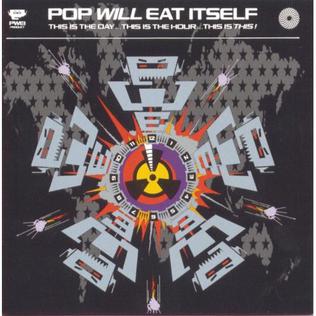


The reason it's better for me is that this album, full of OMG the-world-is-going-to-end-any minute-now humor and nervousness, was simply a much better match for me as my time at Ryerson was ending.  The Roses seemed to be singing to themselves, but the Poppies (as they were called) seemed to be in a magical place where hip hop and rock actually met just as much as Run-D.M.C.were and it was like a big high-five all around.  "I'm freakin' and you couldn't care less" sings Clint Mansell, and that summed things up for me - I was freaking out about so much, but everyone - my fellow students included - were too busy freaking out themselves to notice.  The Stone Roses couldn't help me out with that, but "Can U Dig It?" and "Not Now James, We're Busy!" and especially the boss "Def Con One" could, and did.  As the Roses have been talked about so much, this album is still ignored, and was only in the charts for a few weeks, in comparison.  But as I understand things, they are back - with Mansell! - and that is good news.


And then there's only the album of the year...


Around this time I was reading not just Jane Austen but something called Classics Revisited by Kenneth Rexroth, a poet who had seemingly read everything and wrote short pieces about everyone from the Greeks and Romans on down.  For him a classic, no matter where it came from, was always surprisingly simple.  They spoke directly across the centuries about how life is, and that is what De La Soul do here.  I think I must have bought this at some point and listened to it constantly.  Why?  Because they were so evidently great that even in my enervated state, they could cheer me up, keep me guessing, and just plain amaze me.  Skits!  A French lesson turned into hip hop!  Suburban surrealism!  The DAISY age was one I truly wished to enter, and in listening and relistening to this album the DAISY******* age (DA Inner Sound, Y'all) came to life again and again.  (Et encore, if you like this album, you like jazz.  You're soaking in it!) There are too many moments and sounds and beats and samples to mention here, in part because this is that (dammit I want a time machine again) time when you could sample anything and get away with it, and this album is proof that with some sensitive ears and fearlessness, you can do something that was fresh in 1989 and will remain fresh for some time to come.  "Me, Myself and I" is what Hits 10 has, but literally everything on here is great and so detailed that you have to listen to it a lot just to absorb it all, just like jazz.  And it's wise, put together really well, and tickles your mind the way it should be tickled - with fun first, and then with the deeper joy that it exists in the first place.     

And so went my spring of tension, iron pills, final exams and making it through the graduation dinner with a sense of the absurd.  The time I longed to be at home and yet elsewhere (not England....clearly that wasn't to be), out of my lethargy and with the purpose and ambition so many people I knew had.  I had no idea about anything, hardly, and had to grieve at home, and look for music to help me regain some sense of self and perspective.  It would be melodramatic to say the music rose up to help me, but music does seem to do that - reach out to meet those who need it.  Or maybe those who need it are more sensitive to it?

That late spring I saw on a dark night, out of my bedroom window, a huge red aurora appear and disappear in a matter of minutes.  The silent whoosh of color was a warning of sorts (red sky at night, etc.) but I felt it meant that yes, there was going to be blood, but blood is life and life in the darkness goes on.  Music encouraged me (along with all my reading and writing) to go on, to continue...

Next up:  Liverpool, once more.     


*I would have been perfectly happy with some salad and macaroni & cheese, really - but vegetarians were barely understood back then.

**A tin roof sundae is vanilla ice cream, hot fudge sauce and lots of peanuts.  Basic, sure, but really good.

***In case you were wondering, I am going to be discussing a certain album from New Zealand in 1990 and will be even more excited by it, and yes the band are from Dunedin.

****There's a book of his poetry called Beautiful Waste and I would love to get a copy, but I don't know if it's available outside of Australia.

***** There is an album by The Dream with this title and it's really good.  

******Believe it or not, I was never taught any Austen books at White Oaks or Ryerson, and thus had to track them down and read them myself, just out of my own interest. 

*******In one of those coincidences that exists just to make me wonder if the Ocean of Sound is a real thing, the first name the Triffids had back when McComb & Co. were in high school was Daisy.  The Daisy age is reborn! 

Monday, 29 June 2015

DEACON BLUE: When The World Knows Your Name


(#384: 15 April 1989, 2 weeks)

Track listing: Queen Of The New Year/Wages Day/Real Gone Kid/Love And Regret/Circus Lights/This Changing Light/Sad Loved Girl/Fergus Sings The Blues/The World Is Lit By Lightning/Silhouette/One Hundred Things/Your Constant Heart/Orphans

No doubt Ricky Ross considers himself as a sort of Alan Spence of pop, telling small stories about small victories and bigger metaphorical losses in a land where expressions like “wages day” are still used and whose people are still called things like Fergus. He is also righteously and rightfully angry about what his country and its people might turn into, as one listen to “One Hundred Things” will confirm, with its call to every “Jimmy” in the gutter to rise up and fight back.

The trouble is that the music has to rise to meet the spirit of the word, and too many times on this album it doesn’t, or buries the word beneath tasteful echoes of murmur. These songs sound expensive, and stifling; whether their subject matter is Maria McKee (“Real Gone Kid”) or the Spanish Civil War (“This Charming Light”), they get drowned out by restraint. The accelerando at the end of “Queen Of The New Year” leads to nothing, a step back which isn’t really erased by the extended, but fatally tasteful, feedback fade of “Your Constant Heart.”

Neither do I find Ross’ voice particularly endurable; most of the time he sounds like Paddy McAloon in severe need of Strepsils, and he has an uncomfortable growl, somewhere between Eden Kane and Barry McGuire, which, when used in extremis (“SHATTERED HOUSE!” in “Love And Regret,” the sudden upward ski-leap at the end of “One Hundred Things”), does not make him Samuel T Herring’s spiritual father.

What so much of this music does make Deacon Blue, unfortunately, is a direct precedent to the likes of Mumford and Sons; the majority of these songs play shamelessly to the stadium gallery. Attempts to rock out (“This Changing Light”), do Jam and Lewis (“The World Is Lit By Lightning”) or do the Blue Nile (“Sad Loved Girl” – truly, Hats and Paul Buchanan’s voice and feelings are everything this record and its singer aren’t, and let’s not even mention entry #386 – for now) end in the same compromise. I know Ross is enraged, and justified in being so, and have no idea about Michael Marra’s musical tastes, but the “sweet soul music” part of “Fergus Sings The Blues” – all about owning the “right” records, rather than the ones which touch you (the B-side of the “Real Gone Kid” single included covers of songs by Sam and Dave and Hüsker Dü; such “correct” choices that might provoke a scream) – could be said to represent the turning point where prosperity would be superseded by austerity.

Next: The first of our occasional short breaks, where we look at an album that isn’t on the Wikipedia list.

Sunday, 28 June 2015

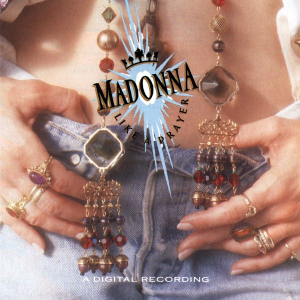
MADONNA: Like A Prayer


(#383: 1 April 1989, 2 weeks)

Track listing: Like A Prayer/Express Yourself/Love Song/Till Death Do Us Part/Promise To Try/Cherish/Dear Jessie/Oh Father/Keep It Together/Spanish Eyes/Act Of Contrition

Dear Miss Ciccone,

This is an open letter which I am virtually certain you will never read or even know about. I’m comfortable about that since this is the only way I can find to write about your album. I also take this risk because you (or your people) very briefly followed me on Twitter, and then all of a sudden you stopped following anybody. Maybe you’d seen that we hadn’t been that crazy about your previous records, or less crazy about them than we were thirty or so years ago, and decided against this “following” business. That’s fine; a lot of the time I wouldn’t even follow myself.

If I say that Like A Prayer was the astonishing leap forward which I had been awaiting, it would be no less true now than it was twenty-six years ago, and I hope that I can demonstrate why my reasons for liking it are subtly different from those of most critics. I loved this record when it came out; it was springtime, the patchouli oil scenting was spot on and I played the cassette – the very same one to which I have now listened again – endlessly on my Walkman as I journeyed around what was a much better London.

But I am keen not to fall into the misogynistic critical trap which claims that music by women can only be loved if accompanied by a degree of suffering. Personally I’d much rather listen to the funny, zestful and genuinely rebellious Billie Holiday of her thirties and forties days with Lester Young and Co. rather than the fifties waiting-for-death stuff. No, I’m not going to go there. But for me Like A Prayer works because it is what I regard as honest art, you singing about the people and things who mean or meant most to you,, and because, for a variety of reasons, its songs touch me very directly.

To illustrate what I mean, here are some words I wrote about the title song some eight years ago, when I knew substantially less than I do now. But I think they still stand:

Maybe the idolators understand the magic of pop better than anybody else, even, or especially, the idols they worship; since where the idols can get rattled, depressed, uncertain, pig out on drugs, turn up four hours late for a concert, become negligent with regard to their duties to the Inland Revenue, make crappy records, or die, the idolators will happily accept and embrace all of it; because they are dizzy with unquestionable and unquestioned love for those they choose to idolise, whatever their idols may do, and however painfully they might hurt them. If the new album’s substandard, it’s because we aren’t quite worthy of it, we’re not advanced or close enough to appreciate what drove the artist to extract ten-year-old rejects from their bottom drawers and pass it off as new music. As with football teams, or parents, we stand by them, regardless. Not for idolators the exhaustive, exhausting schemata of the open to and sceptical of everything “critics,” those who can securely classify the differing degrees of their love for different aspects of the same anatomy, the people who just know that the Verve lost something vital when they gained that auxiliary definite article, who are fully aware that Morrissey or Björk are career variables whom the rational would only approach every five years or so. But then, what truck has pop ever had with rationalism, especially when it comes to adding up the total bill for territories gained or souls lost? After all, we idolise idols precisely because of their superhuman status; they can do things we can’t, or won’t. They are never like us; even with the alleged democratisation of punk it quickly became clear that only John Lydon could ever hope to be John Lydon.
                                      
From her name upwards, Madonna knew that she had to be worshipped if she were to mean anything, and that another couple of years of “La Isla Bonita”s would lower her perspective to a curious over-shoulder gaze from newly disinterested consumers. So she had to come back with a blockbuster, something that Debbie or Gloria or even Belinda couldn’t have achieved, for all their individual and substantial merits. When the single of “Like A Prayer” came out it seemed to stop the rest of pop, momentarily but vitally; as with “Two Tribes,” it made everyone else in the Top 40 at the time seem like trespassers on newly privatised land.

The perspective of Madonna aspiring to God(dess)hood on “Like A Prayer” – she gives a barely perceptible whisper of “God” at the beginning of the track before the backwards guitars flood in and immediately slam, smashed, into a decisive wall of steel in order to suggest that all “rock” had been leading to this – has to be considered in balance with the rest of the Like A Prayer album, which focuses, at times very sorely, on the fallacies of the values of memory applied to lost loved ones (“Promise To Try”), fathers (“Oh Father”), errant husbands (“’Till Death Do Us Part”) and Prince (“Love Song”). Along with Erotica it is Madonna’s most palpably human record.

From the introduction onwards – and I believe that the guitarist here is indeed Prince, as it is at the album’s opposite end – it is also hard to imagine “Like A Prayer” without the immense precedent of Prince to inspire it; here is the dayglo Dadaism familiar from Sign ‘’ The Times, mixed with peculiar logic into that brew of unquenchable spiritual faith (“The Cross”), although the influence of the Pet Shop Boys (especially “It’s A Sin”) can hardly be discounted. “Like A Prayer” is perhaps the only pop single of the late eighties which could use a gospel choir and get away with it; Andrae Crouch and his Disciples are an indispensable part of the song’s architecture, rather than a tacky addendum. The use of the church organ is as unarguable and definitive as, say, Scott Walker’s “Manhattan” or Arcade Fire’s “Intervention.”

The song itself is all about worship, and Madonna seems intent on arguing passionately against the opening proposal of “Life is a mystery, everyone must stand alone” since she goes on to demonstrate how impossible it is to live a life of any description on one’s own. As the video depicted the tableau of the black saint and the sinner lady, so does Madonna blend spiritual and carnal with a recklessness comparable with the Stanley Spencer of Cookham; thus the line “When you call my name, it’s like a little prayer” could have been sung by the Ronettes or the Shangri-Las a generation earlier, but then we get the more explicit “In the midnight hour, I can feel your power” – and the question here is: who is worshipping, and who is asking to be worshipped? Note that it’s the “you” who is calling Madonna’s name but this is enough to get her “down on my knees.” And later, there’s the ambiguous “You’re in control, just like a child/Now I’m dancing” – so again the idol here could be parent as well as, or instead of, lover or God; and really the three (the Holy Trinity!) all merge into one (“Just like a dream, you are not what you seem”).

The record really takes off immediately after the second verse, when the dual basses of Randy Jackson and Guy Pratt make their dramatic entrance underneath the church organ and the intensity of the “Life is a mystery” couplet is doubled; eventually it resolves into an epic call-and-response between Madonna and choir and absolution, or orgasm, is reached – but then recall the end of the video, after the burning crosses and the stigmata, when the black Christ figure is revealed merely to be a prisoner in a police cell; the curtains draw and reopen as Madonna and her cast take a bow (another clue to the future there). Illusion, a six-minute diversion – or can it be mistaken for transcendence?

Despite the hopped-up controversy of the video and Pepsi’s precipitous cold feet, all that Madonna really does with “Like A Prayer” is amplify the age-old conflict between spiritual and carnal in art and attempt to resolve it by sheer force of will and personality. Of course, throughout the record we are kept aware that this worship is “like a prayer” rather than a prayer in itself, rather than, say, “My Prayer” by the Platters – a song and group whose roots both go back deep into an unreachable church. Finally, “Like A Prayer” must take a seat next to “Running Up That Hill,” if only because, where “Like A Prayer” compares to God (passive), Ms Bush (and we’ll be hearing from her again before this year is out) is intent on making a deal with God (active). The song drops the mask, just as Madonna drops the blonde in the video, and reveals its singer as someone who feels, breathes, cries and shits just like the people who idolise her. Pop was obliged to take a breath, and count again.

Are you still reading, or have you long since metaphorically crumpled up the note and tossed it into the bin? Who’s this sad old British blogging jerk? Well, I can only act as my heart’s ventriloquist. And then the record briefly turns into another “Madonna album”; “Express Yourself” has all the zesty pop drive of old, but its zest is borne of experience, as Helen Reddy didn’t quite sing, and its message appears to be doublefold; don’t surrender to materialism (but then, isn’t that really what “Material Girl” was truly all about?) and don’t settle for second-best compromise, since it always pays to be fussy and go for the best. From direct experience I can only concur with this philosophy.

Prince again, on “Love Song” – was it just the cold of Minneapolis that kept you two from coming together so long? – and it’s a nervous, circumferential eyeing-up and sizing-up of gifts and desires; the song frequently folds back on its own tropes like a series of Russian dolls being wrapped up in reverse, as three-dimensional as any de Chirico painting or Gil Evans orchestration, and again and again in the background, a motif from the aforementioned John Lydon; “this is not a love song.” But, as the song’s ending makes clear, it doesn’t end there – “This is not a love song that I want to sing,” and there are other odd and foreboding reference points in the song (“God strike me dead if I did you wrong,” “Mean what you say or baby I am gone,” “Don’t try to tell me what your enemies taught you”) which suggest that you might actually be singing about the subject of the next song.

“Till Death Do Us Part.” As I said (and so did Chrissie Hynde), don’t get me wrong. It gives me no joy to derive pleasure from music borne of suffering. I would rather you hadn’t made this album and not have had all these things that you describe within it happen to you. Listening to it now, I am afraid that it is clear why an awful lot of people still have serious problems about the man who is this song’s subject, despite what he has done since (does it all count as penance? Not being a doxologist, I’ve no idea). The music is nightmare power pop which stops once to allow the sound of breaking glass and then it starts up again towards a morbid fade. The things I could tell you about my parents, but this is neither the place nor the time; instead I wonder whether this is the other end of the benign “Anything For You” emotional seesaw.

It’s possible that at this moment “Promise To Try” cuts me deepest, and I hear how close you are to tears while singing it, and I wish there were an easy answer to this but there isn’t.  Looking back, it’s remarkable how close one repeatedly gets to what Gil Scott-Heron called selective amnesia; remembering the good times and cancelling out all the rest. And you have to think, from a distance in time which is now equal to that between when this album came out and now, that maybe memory is indeed an elaborate façade which won’t bring your loved one back. In my case it’s not quite fourteen years, and it wasn’t my mother, who I’m happy to say is still with us, and, well...if you want to know how I tried to live up to my own promise, the history’s easily found here. You take what is good in someone and do your best to make sure it survives and thrives in you, the things you do and the way you do things, which in my case includes writing. Then you either kiss the past goodbye, as you sing, or look at it in a different way which is relevant to the way you live now. I’ve never been in any doubt that that is what she would have wanted.

Then you go back to the sixties – this whole album really is far more late eighties psychedelia than even your Spacemen 3 or Dukes of Stratosfear – for pop; “Cherish,” which references everything, especially Romeo And Juliet and The Association, in a cheery and uplifting manner, and the re-photographed 1967 of “Dear Jessie,” which I understand relates to the daughter of your writing and producing colleague for much of this record, Patrick Leonard – yes, its “pink elephants and lemonade” make me think immediately of Prince, but its tricks with tempo and trumpets are sufficiently un-Prince-like to count as “authentic” (yes I know, it’s just one of those words, but I do try to make them mean something again).

As well you know, neither of these songs fully prepare the listener for “O Father.” I’ve read about the problems you had with your father and have no idea whether what has been written about them bears any relation to what or how they actually were. Like “Promise To Try,” this is a song which struggles to escape from a parent, but here the escape is sadly triumphant (“You can’t make me cry; you once had the power”) and is echoed against an immense, blue Hitch-Hiker’s Guide To The Galaxy soundscape (the golden sunset which attracts me towards probably far too many albums). And yet you find it in you to offer some empathy: “You didn’t mean to be cruel/Somebody hurt you too.” Perhaps, but it doesn’t make the existence of it any less painful. My father’s been gone almost thirty-four years now and he taught me most of what I still know but...but...the other stuff...it’s no help to you but I can’t talk about it now. Not here, not yet.

Getting towards the end now, and it was nice to see somebody still using the DC Go-Go beat in 1989: “Keep It Together” is a warning about staying close to your family, particularly your brothers and sisters (if, unlike me, you’re lucky to have any), where you are, as you sing, loved for what you are and not what they want to see, unlike people who try to get close to you and are bitterly, and angrily, disappointed because they’re not with “Madonna.” That’s my uneducated guess, anyway. But you’re right; whatever one’s family situation, one has to try to keep it going and keep it strong. I mean – this is what journalists call “full disclosure” – I myself am a widower, was widowed very young and started writing in public because I could see no other way of getting myself up off the floor (Bill Fay, “Strange Stairway”). By doing that I managed to kiss the past goodbye, or at least to come to terms with it, and I created a new life for myself. But I could never have done it without the help of family – and that includes the woman I happily married some years ago - and friends close enough to be considered family. There not to see through each other, as the proverb goes, but to see each other through.

As for “Spanish Eyes,” I know this was about a friend of yours who died of a big disease with a little name – the “AIDS IS NO PARTY!” summary, white print on black background, remains prominent in the album design – and there is another meticulous, huge musical backdrop which puts me in mind of what George Michael would go on to do, and for not dissimilar reasons, in the nineties. If I knew no better I’d say that here you sounded like a mind at the end of its tether.

But there’s always a way out, and you have to come to terms with yourself on this most Catholic of pop albums. In “Till Death Do Us Part” you sing “You’re not in love with someone else/You don’t even love yourself” – and how the hell can somebody expect to be loved if they don’t love themselves, or at least have nodding respect towards themselves? Different people respond to the self-awareness issue in different ways; me, I tend to be quiet, reserved and rather diffident in a social setting. This is connected with the qualities I don’t have – especially easy, natural, non-arrogant self-confidence – which could have helped me to reach somewhat “higher” in life than I have done, i.e. I would be a published and respected author rather than the writer of blogs which no one reads because all that musical theory gives them a headache. A lot of that was, shall I say, beaten out of me at an age when I might still have been able to do something about it. So I have rely on the strength of my written word to connect with people.

Not ideal, but then you turn this album upon its head, spin the “Prayer” semi-backwards, say your atonement and then wait, and falter, then gather slowly mounting and dreadful confidence. “I have a reservation.” You know something’s about to boil over.

All of a sudden you scream “WHADDYA MEAN IT’S NOT IN THE COMPUTER?” and it knocked me off my chair back in 1989 and still makes me jump now. But I think I know the moral; just making the right noises for repentance isn’t going to automatically get you into heaven, as though you were booking a hotel suite. A good afterlife isn’t an entitlement; it’s something for which you have to prove your eligibility by the way you live your life.

But this is amateurish layman droning and nobody, least of all you, needs yet more pseudo-psychology. This is just to say that I thought your album connected with me in ways that others from this or other periods don’t. I haven’t put any links into this letter either as an abject gimmick to persuade you to read the rest of this blog; people who know what I’m talking about also know where to find it. Anyway, I’ll shut up and get on with the rest of the story now. It was good to talk, even if the conversation was almost certainly one-sided. To end - and with the subject of "Spanish Eyes" specifically in mind - I should tell you how proud I am of what happened in your country two days ago, with the great step forward taken on behalf of a nation which even the day before resembled a civilisation at the end of its tether. One step at a time, admittedly, but even that is better than finding any excuse to take no steps.

Sincerely,
M A Carlin

Thursday, 25 June 2015

Gloria ESTEFAN and MIAMI SOUND MACHINE: Anything For You


(#382: 25 March 1989, 1 week)

Track listing: Betcha Say That/Let It Loose/Can’t Stay Away From You/Give It Up/Surrender/Rhythm Is Gonna Get You/Love Toy/I Want You So Bad/1-2-3/Anything For You

Why is Anything For You vastly more entertaining and inventive than A New Flame? I could set up some blanket trope about Americans (or, in this case, Cuban expatriates) doing it better than the British, or women doing it better than men – but whether Miami Sound Machine or Gloria plus MSM or Gloria alone, this is essentially a husband-and-wife double act.

It is, crucially, far lighter in tone and far more fun to listen to than Simply Red; you do not feel that you are doing penance or being sternly lectured. Its basic subject matter is one of the oldest and most durable in pop, that of the girl who secretly knows this boy’s no good but is nevertheless drawn to him and even loves him. The opening “Betcha Say That” sets the tone; beginning with a huge backwards panoramic thwack like a Fairlight soldering iron, it proceeds jauntily with regular upward curves (or raised eyebrows) of synthesiser which rub together, not unpleasantly, with a pop that is immersed in its past – “Let It Loose” and “Love Toy” are just two other examples of sixties girl group methodology let loose in a spaceship – but which leaps to grab the future. Hence all of these three songs, together with “Give It Up,” feature intervals where stuttering electronics shift the song out of focus and tonality before normal service is restored.

Most importantly, Gloria Estefan is one of pop’s great actresses. Her performance on “Betcha Say That” moves with absolutely natural ease from cynical via cautious to committed (though her “B-b-b-baby” indicates that she still has merry doubts), and the music – including fellow Miami singer Betty Wright on backing vocals, here and on “Surrender” – is behind and with her all the way. On “Let It Loose” – this album’s title track when it was released as such in June 1987 (it was subsequently repackaged and retitled for Europe and other territories) – one is pleased to hear Clarence Clemons, almost absent from Tunnel Of Love, having some fun with his solo.

The album’s three ballads are among her greatest achievements. “Can’t Stay Away From You” was the one which perspicacious critics compared to Karen Carpenter, although while Gloria’s voice is clearly capable of expressing the same kind of stoical hurt, she is unafraid to raise her voice in ways that Karen never really tried (or was allowed or asked to try). Hence her desperate devotion is more palpable, but she is equally resolute not to break down: “But if all I’ve been is fun/Then baby let me go,” is one of the record’s most striking and hurting couplets, and she sings it as though a close relative has unexpectedly died. But she knows this routine too is, when one comes down to it, “fun”; she twice admits “And though I’ve heard it all before,” indicating that this probably won’t be a goodbye. The song is an exercise in excising life from the jaws of slow death.

During “Surrender” the Cuban influences start to nudge their way into the music explicitly (Paquita Hechevarra’s exuberant piano solo is the most obvious signifier of this) and throughout side two they slowly become more pronounced. “Rhythm Is Gonna Get You” and “1-2-3” are so sheerly catchy, danceable and good-humoured that they remind me of very early Madonna, before people started telling her that she was “great.” Equally, “Love Toy,” with her husband Emilio, amongst others, eagerly responding in the background (“No batteries required!,” “Wind me up and I start to move!”), is rather like Ze Records doing a kindly send-up of the Captain and Tennille.

But “I Want You So Bad” is the one here. Free of percussion or discernible tempo, this is so mighty a performance I’m surprised Melody Maker didn’t immediately jump on it, with all their talk of “oceanic bliss” and suchlike. Here the singer is as unmoored from the music behind and around her as Alex Ayuli is on side two of AR Kane’s 69; she sings in front of an immensely pacific seascape of synthesisers and bass guitar, as lost-waiting-to-be-found as the Elizabeth Frazer of side one of the Cocteaus’ Treasure; she feels him but is still unsure (“I’m so scared I’m afraid/I can’t find a way/To say I love you”). At one point the music halts altogether, as if to catch its own breath, before restarting; at another point shortly thereafter the bass arches once, like a reluctant whale, and later still Estefan freezes on the “swear” of the line “I swear that’s no lie.” Anybody who venerates the OMD of “Stanlow” and “Sealand” will find common ground in these unexpected surroundings.

The album ends with its title track, the third of its ballads, and the scenario is the same as “Can’t Stay Away From You”; this time, she initially seems able and willing to let him go, even though it’s inwardly tearing her to pieces, but as the song progresses and gently gathers pace and texture, her voice gradually rises to meet the elements; by the time she gets to her second “And though inside I feel like dying/You know you’ll never see me crying” you can’t believe her. Brass, guitar and percussion shuffle in to take control of the song and also to offer optimism to balance the singer’s subtle defiance; the moral appears to be that these two people will orbit each other forever and never quite lose (sight of) each other. Anything For You is an absolutely cracking pop record. Who, apart from the Pet Shop Boys and maybe Chuck Eddy, would have admitted so much at the time?

Next: Everyone must stand alone. You sure about that?

Tuesday, 23 June 2015

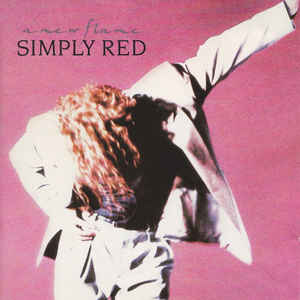
SIMPLY RED: A New Flame


(#381: 25 February 1989, 4 weeks; 29 April 1989, 1 week; 22 July 1989, 2 weeks)

Track listing: It’s Only Love/A New Flame/You’ve Got It/To Be With You/More/Turn It Up/Love Lays Its Tune/She’ll Have To Go/If You Don’t Know Me By Now/Enough

If Mick Hucknall fulfilled the same function that Rod Stewart had done for album-buyers in the seventies, then he seems to have progressed straight to the Rod Stewart of Foolish Behaviour or thereabouts ("Holding Back The Years" was his "Mandolin Wind"); most of Simply Red’s third album could serve as alternative themes for 1986’s hilarious Robert Redford/Debra Winger knockabout comedy Legal Eagles. Listening to this, and looking at what follows it in 1989, makes me wonder anew if this is really how two-and-a-sixth million British people preferred to be entertained; boring, expensive music promising boring, expensive lifestyles to boring, expensive people.

I mean, Hucknall tries – at least, he tries my patience – by God, how he tries (at times). But just as the cover versions prove that he is neither Barry White nor Teddy Pendergrass, there is so much banal lurve stuff here, like a Farmfoods Luther Vandross, and the Montserrat setting for its recording, with tasteful guitars plucked just so and just the right amount of echo to give the impression that one is in the driveway of the Sandy Lane Hotel in Barbados, suggests that Hucknall has lost sight of what prompted Simply Red in the first place; the picture of him on the inner sleeve, grinning and cocking his head in what looks like a pyjama jacket, resembles no one so much as professional seventies pop troll Judge Dread (the portraits of the rest of the group are direly dated in both clothing and hairstyles, although guitarist Heitor T P looks uncannily like Bobby Gillespie).

He doesn’t, it has to be said, entirely lose sight of what really inspired that “Red”; after the tepid love bath of side one, it is something of a shock to hear him launch into a fulsome anti-Tory blast on “Turn It Up”; “…Ruling the country/Are unfaithful husbands/Who spank little boys/Gagged and bound” is startling imagery even by 1989 standards (again one has to ask: did Hucknall know what the rest of us pretended not to know?). But its streamlined “soul” surface makes one wonder how many of the shy and not-so-shy Tories who bought this record ever bothered to listen to what he was saying. It’s the same story with “She’ll Have To Go” which is a better anti-Thatcher tract than “Tramp The Dirt Down” – but again, unless you read the lyric sheet and pressed an ear to the speaker, how would you know that was what it was?

The harmonically agreeable lovers rock of “More” was the only thing here I wanted to hear more than once, but even this serves as a reminder of how Sade did, and do, this sort of thing so much better. And yet for most of its year A New Flame was the year’s biggest-selling album, only being overtaken towards the end of 1989 by entry #387. I don’t quite know whether Hucknall qualifies as Britain’s Michael Bolton – for a start, he only ever seems to have had one haircut, rather than two – but it is uncannily prescient of the allegedly beloved New Labour; don’t say what you really think or stand for, just make the right faces and make the right noises to win over the waverers. Wavering towards, or away from, what? On a Mancunian level, A New Flame - the first, it should be said, of five number one albums by Simply Red - possesses enough inbuilt torpor to make me wonder whether the group shouldn't have been named Mick Hucknall's High Flying Birds.

Monday, 22 June 2015

FINE YOUNG CANNIBALS: The Raw & The Cooked


(#380: 18 February 1989, 1 week)

Track listing: She Drives Me Crazy/Good Thing/I’m Not The Man I Used To Be/I’m Not Satisfied/Tell Me What/Don’t Look Back/It’s OK (It’s Alright)/Don’t Let It Get You Down/As Hard As It Is/Ever Fallen In Love

The album title came from Claude Lévi-Strauss’ 1964 study, which is kind of a New Pop thing to do, except I’m not quite sure how these ten songs work as conceptual tools to enable the formation of abstract notions and combining them into propositions. Perhaps it’s as simple as representing the early stirrings of retro-nuevo pop; music clearly aware of its past yet unafraid of, at least, the recent present. Interestingly the trio originally wanted Prince to produce some of the album, but their American record company instead offered them Prince associate David Z, with whom they completed the record at Paisley Park.

Unlike some other recent TPL entries, this has held up pretty well. At thirty-five minutes and fifty seconds, it doesn’t outstay its welcome – but one has to remember that the Buzzcocks cover dates back to 1986 (for use in the movie Something Wild) and three other songs, including “Good Thing,” were featured (as were the band themselves) in 1987’s Baltimore knockabout Tin Men.

No matter. I confess that for much of the time I have no idea what Roland Gift is going on about on this record, except that it’s all about love; he’s probably as unlucky as Bernard Sumner, but sounds both angrier and lighter of spirit and in truth I really don’t want to find out what he’s saying, for this is pretty nifty and catchy pop (the debut album’s sleeve-worn politics are gone, but that works to the group’s advantage). Andy Cox’s guitar dallies with bitonality on both “She Drives Me Crazy” and “I’m Not The Man I Used To Be.” The closest the record comes to The (English) Beat is the subtle ska underbelly of “Good Thing” and the exultant “It’s OK (It’s Alright).” They know their Motown and Stax but find an unhackneyed use of the “Funky Drummer” loop (on “I’m Not The Man I Used To Be”) and even go in for some Man Parrish electro on “Don’t Let It Get You Down”; when Graeme Hamilton enters, we are abrputly back in 2 Men, A Drum Machine And A Trumpet territory.

Hurting gospel is also not beyond the group; Gift’s seldom-used lower register in “As Hard As It Is” puts me in mind of those other Baltimoreans, Future Islands (two musicians dutifully backing up an idiosyncratic singer). Overall, the record gives a good early portrait of the kind of approach that the then eleven-year-old Mark Ronson would eventually make his own. Perhaps knowing their limitations, Fine Young Cannibals more or less didn’t do anything after this record, but then they didn’t really need to. I note that one of the backing singers on “Good Thing” is Simon Fowler, presumably the future Ocean Colour Scenester.