Wednesday, 24 August 2011

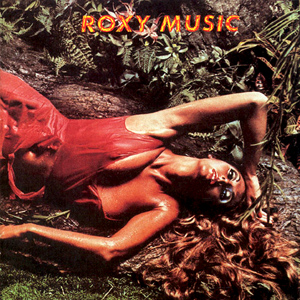
ROXY MUSIC: Stranded


(#134: 8 December 1973, 1 week)

Track listing: Street Life/Just Like You/Amazona/Psalm/Serenade/A Song For Europe/Mother Of Pearl/Sunset

"The Futurist Official dinner avoids the grave defects that pollute all official banquets:

FIRST: the embarrassed silence stemming from the fact that there is no pre-existing harmony between the table companions.
SECOND: the conversational reserve, owed to diplomatic etiquette.
THIRD: the moroseness produced by insoluble world problems.
FOURTH: the rancour of frontiers.
FIFTH: the low, wan, funereal and banal tone of the dishes."

(F T Marinetti, The Futurist Cookbook, 1932: trans. Suzanne Brill; San Francisco: Bedford Arts, 1989)

"I am for a life around the corner
That takes you by surprise"

(Roxy Music, "Manifesto," 1979)

There are recipes, and manifestos, and sometimes the division between the two is not as comprehensible as their shared unity. But think. Would it be worth it? It sounds revolting, potentially life-ending, too strange to look at, let alone try to eat. All these different, opposing ingredients. But take one bite, just the one. There will be such momentarily excruciating pain that you will briefly never want to come near it again, wish to run as far away from it as possible. But get past that wall of limitations, squeeze, push, burst beyond it, and you will experience delicacy and joy such as has barely been revealed to you in your years. The taste is catching, not really fatal; but there is a clear road, and two ways to travel - the past, and the future, the notions of nostalgia and consumerism, for your future lies in what you want, or are persuaded, to consume. Anything but to think about or stand in the present, with its awkward need for commitment and alternatives. Because sometimes the present is so unbearable that your feet might burn with the mere thought of living there.

But throwing it all together, and reorganising it into new and enriching shapes, is what it's all about. It? Or is it but a way to avoid thinking about the past, with all its torture disguised as retrospective candy? Or - and better - to look the past squarely in its reddening eye, laugh at it, or rather laugh with it (but why not both?) and nudge a future into existence? What if, like most of us, you're not at all sure where you want to go?

I think by the time of Stranded - and this is already The Third Roxy Music Album - Bryan Ferry had at least sketched out a draft of where he wanted to go. The mixing bowl has settled into a colour next door to concordance; Eno has already left and taken his flaming yellow with him. It's a wonder that either of the first two Roxy albums popped into pop; the eponymous debut laying out its agenda, then eating it into a symbiosis of King Crimson and Mike Westbrook's Solid Gold Cadillac that somehow cut deeper and worked warmer than either; side two of Roxy Music is like a photocopy of pop, muffed enough in the greys for unwary types to view it as "prog" (but didn't Ferry audition for the King Crimson singer job?). For Your Pleasure retains the dirty melancholy but gains more confidence; the vast Tara(ntula) plains of "Bogus Man" and the title track float with damaged Great Learning elegance (for Eddie Cochran was regarded as Cornelius Cardew's equal, and made better people's music into the bargain) while "Do The Strand" and "Editions Of You" spell out rock with a K for Kafka (and Kidd) and "In Every Dream Home" was coldly sweaty enough to christen the plasticity of prog anew.

But the end of 1973 was unjustly cold, dark and unforgiven. Here is where complete dissatisfaction with the present is made bare (if wired) in "Street Life," that least transparent of the season's Christmas hits with Paul Thompson's drums regularly tripping over themselves, finger snaps an oil scare away from The Addams Family and wavy line keyboards (stop feeling fascination?), Ferry growling, snapping, Little Richard wooooo-ing as though half a decade belting out "In The Midnight Hour" in toilets had to be paid back (and note the chewed-up "d"s and "l"s in the Billy Fury tradition). Anywhere - dreams of jet black angel fifties, Vassar debutante perfidity - is better than standing still ("You might be stranded if you stick around...and that's really something," concludes Ferry over a soundtrack that sounds like walking on hot coals).

There were other records around that related to Stranded, and ideally these should be heard in tandem: Ferry's solo These Foolish Things, a canny and canned exercise in emphasising the importance, majesty and continuity of popular song. Did anyone realise that "A Hard Rain's A-Gonna Fall" was such a great - and shocking - pop song before Ferry and David O'List got to work on their Spike Jones effects, and how naturally it fitted in next to Eric Maschwitz, or the whole Noel Coward thing? The comedy effects are put to subtler yet more ecstatic use on "Mother Of Pearl" - the single castanet which answers "flamenco," for instance. Then there is Eno's Here Come The Warm Jets. Much like Stranded, Warm Jets hovers lovingly over several differing variations of the same song and has no reserve or lack of wit about bashing different elements into each other, dodgem-style; thus the slo-mo poignancy of "On Some Faraway Beach" breaks straight into the punk sneer of "Blank Frank." "Baby's On Fire" sounds like rock trying to rescue itself from The Towering Inferno, whereas the tenderness of "Cindy Tells Me" meets its opposite, and match, in the determinedly ludicrous Ferry impressions on "Dead Finks Don't Talk."

What I'm trying to get at is that the Roxy Music of Stranded - and most of them were on both these records - walks a remarkable line in between the pop and popped extremes, even as its leader wrestles with his mind and Brylcreem. New keyboardist/violinist/electronicist Eddie Jobson was eighteen and fresh from Curved Air, and actually (or, at least, on this record) makes a better companion to Ferry, mainly because his lack of questions means greater concentration on how to soundtrack this mixture of woe and titillation. Some Roxy fans were disappointed by his work on "Amazona" and while it is true that the song's "weird" sections are clearly constructed with effort and skill, as opposed to the Connect 4 pot luck of Eno's anti-strategies, the interaction between Jobson and Phil Manzanera's guitar (albeit with Manzanera clearly taking the lead), coming out of the rapid 14/8 section, suggests the icy fallacy of the paradise to which Ferry is supposedly taking his partner, or hostage (although, with its references to "hollow sound" and "longings more profound," Ferry, as I think he is doing on "Serenade," may well be singing to, or about, Eno). Flashing blasts are finished by a serene Ferry hiccup and as they approach the drawbridge ("Journey's over - we're almost there!") the drums roll to a funereal stop and electrified bird whistles possess a false memory. "Serenade" flops along like a three-wheeled chariot with its fulminating Spector percussion - Fury doing Bowie's "Silly Boy Blue" sprung instantly to my mind - and Ferry (Ferry/Fury, and the two didn't look dissimilar) growls about G-plan gymnastics being of less meaning than the old mill stream in summer ("From courtly love to costly game"), even if, as any reader of George Eliot will know, the presence of an old mill stream does not preclude drowning. What does he want? "Will you swoon, as I croon your serenade?" he asks himself as much as, or more than, us.

Because this man is stranded; he is not quite undecided, but the tide is coming in, he can't make up his mind. Throughout Stranded he refers repeatedly to wasting time, and "wasting" can mean "in decay" here too (the latter is present in the "party-time-wasting" of "Mother Of Pearl," the more reflective meaning of decline in the "Do you disapprove how we've wasted my time?" of "Sunset"). At the beginning of "Amazona": "No more fall-out." As I said, anywhere and everywhere but here and now; and yet he can't live without it. Who could?

And yet Ferry can play tricks with time. If the transcontinental wanderings of "A Song For Europe" - which really play only in his head - will eventually become the falling-down buildings of "I Travel," if the ghosts of Sylvian are already making themselves feel in both "Song For Europe" and "Sunset," then the resemblance of the chord sequence of "Just Like You" to those of Blur's "Best Days" play like a blue prediction (those chords themselves being decidedly Kentish in the Robert Wyatt/Kevin Ayers sense), while the singer struggles not to fall in love, not to be overcome by it or to fall into it. Every time, fashion is pulled in as the culprit, just as it is on "Psalm," where it plays the role of a red herring. And yet, that sudden emotional eruption in the "How COULD..." section of "Just Like You" shows the momentary dropping of all masks.

Ferry is quite prepared to drop masks when needed (the snarl of "stepthroughthemirrorandSEE?" at the beginning of "Amazona") and to acknowledge that masks are not only needed a lot of the time but can also advance our case for living. "Mother Of Pearl" is a remarkable piece of music because he gruffly turns "pop" onto itself and forces it, and himself, to admit to real emotions, particularly happiness and joy, which the record had previously been doing its best to avoid. It begins waspish, the best Little Richard/New York Dolls jam session you never heard, with Ferry whooping, guitars, saxes and synths flying around his head like the artillery fire which will presently engulf Adam Fenwick-Symes at the close of Vile Bodies. But in comes a booming suburban James Earl Jones voice from nowhere: "HAVE YOU A FUTURE?" Shrieks Ferry in reply, "NO, NO, NO!" before the Voice corrects him with a firm and simple "YES."

And then he opens up, as the song slows to half-tempo, quoting "As Time Goes By," indulging in every sentimental gimcrack of a trope he can dredge up, knowing that this may yet be a dream of the firmest plastic...but he wants it, and her, as he allows awe to take over (Jobson's synth shiver which provokes Ferry's suddenly chloroformed "Steps right into-view"), as Andy Mackay's saxes honk like filled boots, and the Voice ("FU-TURE!") returns, before everything dips away towards Ferry's own voice, in a Newcastle club somewhere in 1964.

Newcastle - while Ferry was serving his art school/Gas Board apprenticeship, the thing was to be the Animals, but Roxy, though of similar instrumentation and talent distribution, appeared as a re-sexified Animals; sex thought of differently, and more colourfully, and more fervently - not that there's much talk of it here, but the breath of it is fetid enough to curtain any notions of overspent grief. As indeed is the spirit of Eno, hovering ambiently over the closing "Sunset," from the pre-ambient waterways which directly presage Another Green World to the unexpected poignancy of the Brian Wilson sleigh bells towards song's close, and the song is a hopeful and discreet closer, a record of a satisfied life closing down (Ferry's voice rises exultantly on "larks," glides effortlessly up and down an octave on the following "will sing"), the depth of his being underlined by Chris Laurence's magisterial bowed bass.

Perhaps the most palpable evidence of Eno's continuing grip on 1973 Roxy comes with "Psalm," which according to some sources was the first song Ferry wrote:

"'...On that occasion you told Bernard Stevens that you got no kick out of High Mass at some church or other in Patis because they went through the ceremonial and the music "as a formality" - those were your words. If you are religious it is your Protestantism, or if you aren't perhaps it's your British Way of Life that prevents understanding a faith which needs no exhibition of fervour.'"

(Constant Lambert, quoted in Arthur Hutchings' 1965 introduction to the former's Music Ho!)

Again he begins with fashion to trip up the unwary, and more importantly to prevent himself from believing, but as the song develops, with its straight piano and not quite straight-faced organ, his voice rises and chews on the second syllable of the word "sublime. A rhythm approximating broken-down R&B is introduced, Thompson drumming like Dannie Richmond, away from the centre. On the word "high," firecrackers explode as Ferry's voice dissembles into a single crystalline spark of electronics, violin, guitar and squealing alto. The drums steadily become more forceful, and even martial, as Ferry's surrender to faith grows more intense, and the London Welsh Male Choir quivers into being behind him. Ferry's "Op-EN-UP-your-EYES!" is simultaneously more exasperated and affectionate than Justin Hayward would have pitched it. At this point we notice how Manzanera, Mackay and Thompson have gradually turned the stately English background into a New Orleans gumbo shuffle, and also that the choir is singing in strange, unsettled tonalities (again there's something similar happening two years hence, namely Gavin Bryars' The Sinking Of The Titanic, which will appear on Eno's Obscure label). Everything boils forth, and Ferry is saved and convinced, or at least convincing us that he's been saved. An OMD drone awaits at journey's end.

Because the journey's beginning could scarcely have been more painful. Over thirty-eight years of familiarity with this record, "A Song For Europe" is always the one for which I reach first, and most fervently, because it spells out so many of the things I regard as essential to what can be understood as music, or even art (as though music weren't art); most tellingly because, if we view early Roxy Music as Al Bowlly trapped in a prog-rock band (the thirties trying to live within, and not merely with, the seventies), then we have to admit base emotion as being as profound as lofty speculation. Yes, it's a pisstake of Eurovision - some even say the song was anonymously submitted to the 1973 committee, although there is no real evidence that this ever happened - but it only uses pastiche as both shield and battering ram, to get through this stupid wall of plastic divisiveness, to admit that banal, crazy pop can quite a lot of the time get to the nub of things more handily than some higher art, but that a concept such as "A Song For Europe" could scarcely be imaginable without its high art carrot-masquerading-as-stick. He's sitting alone in an empty cafe - it could be in the shadow of Notre Dame, but then again it could be anywhere - thinking about someone who has gone, who isn't coming back (if there's any trace of the sixties in this record - potentially the first number one album of the eighties, never mind the seventies; the endless, futile search for "love" - the term "holy grail" even makes a climactic cameo in the midst of "Mother Of Pearl" - then it's in Jacques Brel filtered through Scott Walker) and, as a successor will do in a similarly climactic song of loss nine years hence, breaks down. "There's no more time for us" - a final response to West Side Story? - "There's no today for us," "My oyster [is] only a shell full of memories," "Now, only sorrow, no tomorrow." He closes down every escape route, but what else does the abandoned heart do when it has lost something central? And as mournful saxes, piano and guitar rise behind him, he intones the song's words, first in stentorian spoken Latin, and then in emotional French - his final cries of "Jamais! JAMAIS!" hardly offset or cancelled by his keep-us-guessing fading whistling. The point here is that sometimes you have to immerse yourself in "trash" to get to emotion, to express it directly, with candour and without cover, even if for half the span of a long-playing record you are playing hide and seek with emotion? Stranded, below and above all else, speaks for a future, one where high and low are revealed as two sides of the same, smiling coin, one where nothing is off limits or remote in terms of what can be reached or used; because, like Marinetti (but without his anti-Xenomania tirades), Ferry doesn't want to keep this an unruly mess; it is rather the basis for a new understanding of pop music, a different angle, a saltier taste. A style by which, against most odds, substance can be argued or sung into existence (the Futurism conceals, as it usually does, a Romanticism. Did somebody mention Keats?). The words here are as true as they would have been ten years ago, when I felt it necessary to begin writing in public, and five years ago, when Romanticism found, for me, a new purpose and a renewed meaning:

"never again, no, will I give up my heart
to gamble with fate is my crime
nevertheless love, it's all here in my book
I'd write it but don't have much time"

("Just Like You," Roxy Music)

Which then goes on to "I know it sounds crazy/But what can I do?/I've fallen head over heels over you," sung exactly as Adam Faith would have sung it. Faith, you can really see (all those "yes"es and "no"s in "Street Life"; "Mother Of Pearl" confirming that "yes" is the only final way to travel).

Sunday, 14 August 2011

David BOWIE: Pinups

Pin Ups - Wikipedia


(#133: 3 November 1973, 5 weeks)

Track listing: Rosalyn/Here Comes The Night/I Wish You Would/See Emily Play/Everything's Alright/I Can't Explain/Friday On My Mind/Sorrow/Don't Bring Me Down/Shapes Of Things/Anyway, Anyhow, Anywhere/Where Have All The Good Times Gone

On several occasions throughout Aladdin Sane one gets the feeling that Bowie is trying to rectify the sixties, the history which by 1973 was already setting into boots of concrete. A sixties where, already, Lou Reed and Iggy Pop counted for more than anyone cared to reckon, where a furious reclamation of the Stones as improper punks could be essayed. Perhaps he felt the need to underline this mission further (if not necessarily deeper) or perhaps he was momentarily stuck for something to do after the end of Ziggy, but the reclaiming exercise attempted on Pinups speaks for elements of that decade with which I don't think too many people have still come to terms. With perhaps two or three exceptions, none of these songs in their original versions is revived on oldies radio. This is the world of flat-jawed, thuggish, nascent British R&B, a world in which many of its inhabitants felt that they were still playing jazz, bypassing the roll altogether to rock into a fairly frightening idea of the future.

Moreover, Pinups is the work of someone shut out of the epicentre by virtue of being that crucial three or four years too young; Bowie worked the clubs to some extent fronting the Lower Third and the King Bees but was always overshadowed by his elders. So Pinups is also a love letter penned by an only slightly disillusioned fan. Somebody who can't remember whether the Ricky-Tick was spelt with a "y" or an "i" is as devout a follower of his chosen movement as Thatcher must have been of Larkin's, with her "mind full of knives" misquote.

Commercially it did the business but was largely mocked by the critics; Bowie was accused of lacking passion, of applying a pop voice to R&B material beyond his ken, of ludicrously camping everything up. Yes, Bowie at his peak was always a pop looter, stealing bits of everybody's records and outfits and running off with them as though it were always Christmas. But, particularly in the dark light of the past ten days or so, Pinups offers, I feel, some of the most passionate singing Bowie has ever tried, and some of his most troubled singing, too. Van Morrison shrugs off "Here Comes The Night"; what the hell, I lost on this one, I'm a bit grouchy but there will be more nights to come. But Bowie sings it as though being booted about by a gang of baddies; against the Palais band saxophones he sounds like a wounded Lotte Lenya, screaming his hiccups, becoming gradually more and more desperate as he slowly grasps the extent of his loss. Likewise, "Everything's Alright," a top ten hit for the Mojos in 1964 but done by everyone on the circuit, sounds anything but all right; he shrieks and gurgles as pianist Mike Garson detonates any plans to turn the track into a Zeppelin prototype.

The two Yardbirds covers Bowie uses more obviously as Zep templates; on "I Wish You Would," Ronson's guitar sounds like a parody of the Jimmy Page to come, there are drunken harmonica/guitar unisons and police siren noises (thus also post-predicating "Happenings Ten Years Time Ago"), syllables exaggerated like spotlit goldfish, and the inevitable atom bomb ending. "Shapes Of Things" is a clearer seventies heavy rock adaptation ("Maybe a soul-DIAH!") although the mood is clouded by the gradual intrusion of desolate high string tones.

The pair of Pretty Things songs - they were perhaps the most thuggish of the lot - works well because they are played more or less straight, so much so that we can still see how the attack of "Rosalyn," both in rhythm and vocals, foresees Dr Feelgood and the Clash with rare acuity. But he can't quite get a grasp on the Who. With "I Can't Explain" he tries to turn '65 Pro-Plus rush into '73 glam stomp, with some rasping, ghostly sax, before flattening the song into a midtempo hard boogie crunch. Meanwhile "Anyway, Anyhow, Anywhere," a song practically impossible to cover, if purely because of the inbuilt failure of any attempt to revive the scarlet shock of the original, is handled comparatively timidly, with phased drums and Ronson working on the feedback, but only as a competent student. At a time when the Who themselves were looking back on their own history with Quadrophenia, and wondering whether to bury or incinerate it, Bowie's nods don't seem quite adequate, or diverting, enough.

"Sorrow," the hit single, is effective because of its photo-negative inversion of the ebullient horror of the Merseys' original; it suggests huge banks of emotion, with its lonesome violin and lacrimal saxophone, rather than the full-frontal brass assualt of the source, and manages both to cover and amplify some of Bowie's most heartfelt emotions on the record (even with his over-enunciated "The OWNLEY thing I ever got from you"); his overlapping "I tried to find her 'cos I tried to find her" gets to the emotional nub (look at Twiggy, the cover suggests, see what the seventies have already done to her, how the mutating waves have hardened her, made her less approachable, more like...Bowie?). Its reverse is the brutal treatment handed out to "Friday On My Mind," in late '66 a handle for the Easybeats to work off some tension and drift out of office-dictated normality, but now a strange echo of the "rabbit" running in Dark Side Of The Moon becomes palpable as Bowie cries hysterically about how the working week, The Man, is crushing, squashing, strangling his life. His "even my old man is..." disappears into a murmur but he can barely hang onto the dead man's handle of the tube train; is this, his performance seems to suggest, all that we got from the sixties to take with us into the seventies (see also, needless to say, "5:15")? More of the same, but flashier-looking? Was it all...the silent cry of every concept album...for NOTHING?

"See Emily Play" takes that idea further. Bowie does everything to the already bent song except try to put it straight again. Already the Roger Waters undulating bassline at the end of the original - which announces quietly that this is the way the Floyd are going to go, with or without the guy at the front - has taken the song over. Bowie does it over in an oafish Cockney grunt as Ronson's synths hiss and Aynsley Dunbar (man of the match; superb throughout)'s drums collapse. A harpischord tries to nudge its way in without success before being drowned by Garson's tortured free piano. Drums stumble over the chorus as though unable to find their way home. Garson alternates between John Cale plink-plinks and Antonello Salis-style random assaults. Led by the drums, a vague Indian drone feel takes over momentarily. Then everything falls to pieces - like, it is implied, the mind of Syd Barrett - as string quartets, saxophones and other noises scrabble towards a scruffy fade. The song is viewed as a ruination, a sort of psychedelic Pompeii (and of course the Floyd would play Pompeii), a sternly playful warning.

But the heart is reserved for the closing, faithful reading of Ray Davies' "Where Have All The Good Times Gone," which is performed as good, lusty hard rock. The composer's rueful nod to McCartney ("Oh! Yesterday was such an easy game for you to play/But let's face it, things are so much easier today") is retained, Bowie's true voice finally emerges, and despite the obvious comparisons with the "depression" of its own time, the performance generates hope, confidence, the idea that, at the end of "Love Reign O'Er Me," Jimmy will survive the water, the crash, the sixties, and gladly carry on into a future. Still, Pinups remains one of Bowie's darkest corners, and the first step on the Low road. Maybe its sustained scream of mercy was something that the world of oil shortages, three-day weeks and strikes needed, just to get us through to a different world.

And then, with his next album, he encouraged the end of the world.

Thursday, 4 August 2011

STATUS QUO: Hello!

(#132: 27 October 1973, 1 week) Track listing: Roll Over Lay Down/Claudie/A Reason Of Living/Blue Eyed Lady/Caroline/Softer Ride/And It's Better Now/Forty Five Hundred Times Sir Clive Woodward, the former England rugby union coach, came up with the phrase, and it remains applicable, not least to the efforts of the current England cricket team. The phrase, or tactic, is "incremental accretion of marginal gains" and what it means is that a team hones itself in meticulous, microscopic detail, slowly working on improving every aspect of their practice and play, however seemingly irrelevant (hence, work on your palms because sweaty palms mean you don't bowl so well). The factors run into their hundreds, if not thousands, and the team is invariably the better for it. Likewise it is sometimes the case in rock music that the spoils go to those who don't set out to cause controversy, or make extravagant gestures, but rather work hard on honing the one thing they know they can do. As with sport, the prize quite often goes to the player who doesn't "want" it as much as their opponent, and throughout their remarkable four-and-a-half-decade career (which at the time of writing shows no signs of winding down), Status Quo have never presented themselves as the kind of band which "wants" something, other than to rock. There is no indulgence in their work, but instead fierce concentration (its fierceness amplified by the group's surface amiability). They may never have made a Sgt Pepper but neither are they liable to make a Goats Head Soup; they have simply carried on working on their thing with unflagging intensity and minute attention to their craft. Of course, none of this - particularly the word "craft" - is particularly sexy, and a music based on craft and effort alone would not be one to warrant major attention. It is probably true to say that Piledriver, this album's immediate predecessor, is the core Quo record; nothing but guitars, recorded practically as live, the purest vintage. But Hello! is seen by many as the definitive Quo album, and its many surprising variations on what might initially seem to be a monumental, one-string template suggest that it might be the ideal album with which to teach a new follower or listener how to play rock. What is offered here certainly isn't unwavering three-chord boogie, even though it might sound like that most of the time. For instance, "Roll Over Lay Down" is a surprisingly brutal (and possibly even brutalist futurist) opener with many touches of inspiration in its arrangement; the subdued and subsidiary role played by Alan Lancaster's bass, for example, which sets itself as part of a call-and-response routine which lasts for the song's first half. Similarly, John Coghlan's drums do not settle down, seem always poised for action. There is the group's trademark usage of silence as punctuation, as well as an effortless control of the loud-to-quiet-then-back-again procedural, such that it all ends in a furious, hammering climax, accompanied by an ironically desolate Moog wind roar. It is all about the group, however; it doesn't really matter whether Francis Rossi or Rick Parfitt is soloing at any given time (although as Rossi is credited with lead guitar I am assuming that most, if not all, of the solos are his work) - like Keith Richards and his various sparring partners in various editions of the Stones, they sound telepathic, ready to swap the lead/rhythm roles, and back again, at a mere second. And lyrically - though road manager Bob Young was responsible for most of their lyrics - there is a good deal more trouble being expressed than the music would superficially suggest. Both "A Reason For Living" and "And It's Better Now" explicitly speak of religion - the latter song owing a good deal in its construction and delivery to George Harrison (but, again, with ingenious stratagems deployed throughout, from the introductory Wilsonian vocal harmonies through the stop-and-start guitar/bass unisons to the final counterpart, gradually thickening in texture and spreading out before returning to the original setting and ending with a fast-drawing signoff) - and the protagonists of "Blue Eyed Lady" and "Caroline" are worse off due to an absence of faith, usually on the part of their respective cheating women ("To whom do you belong?," "How come you're all alone?," "When I'm thinking of you sleeping/I'm at home alone and weeping"), while the central emotional tenet of "Forty Five Hundred Times" - it comes down to the simple plea of "Be my friend," as basic and harrowing in its seemingly benign way as Richard Manuel's vocal on The Band's contemporaneous "Share My Love" - emphasises the record's theme of loneliness and detachment. When they stray from their patent, it doesn't always work - "Claudie" is a pleasant midtempo meditation, melodically slightly indebted to "Maggie May" but rescued by its astute harmonic variations at the end and its brush-off vaudeville finish; "Softer Ride," already available as the B-side of the single "Paper Plane," bases itself on a drone model, over which Rossi and Parfitt glumly intone "I ain't gonna work/I ain't gonna work no more," before bursting into focus. "Never no more will I have to be..." - cue three harsh guitar "DO DO DO!"s - then the most deadpan "down" you are likely to hear, prior to ending on a harmonic question mark - but their modest commitment to adventure does them credit. Note the compelling structure of "Blue Eyed Lady," which, following a harmonically adventurous duet between ascending guitars (we could almost, for a few seconds, be listening to Yes), goes into boogie mode, but with a colourful array of key variations and a central hook which is only played and heard once. Coghlan's emphatic cymbal and snare bashes build up the tension which we already half-know is never going to be released. "Caroline" and "Forty Five Hundred Times," however, are the record's main events; in its elementary tension-and-release palindromic structure, "Caroline" is one of the most natural rock hits of its, or indeed any, day; the group play with absolute assurance and deceptive lightness, Coghlan once again outstanding on drums, while Rossi sings his carefree lament in a what-me-worry (well-maybe-I-do) south London nasal tone which often creeps into the Kent backyards of Robert Wyatt. Piano (played largely by Parfitt) is added to the mix (as it is on other tracks), but does not overwhelm or impede the music's propulsion. Apart from a few keyboard and lead guitar overdubs, the feeling is live, and the attraction is instant. "Forty Five Hundred Times" is the group's magnum opus, clocking in at nine minutes and forty-five seconds - and if the long-playing record format had allowed, it could theoretically have gone on forever - and presenting a virtual handbook on the moods and dynamics of a rock band, not to mention an advertisement for Quo's entire repertoire of styles and gestures. It begins with a quiet, contemplative first verse (with Parfitt taking lead vocal), before the familiar midtempo stomp asserts itself. There is the hint of "Peter Gunn" in the bassline underpinning the song's main riff. Complex but canny guitar/bass unisons follow, then a guitar solo which could have sprung out of the happier pages of Aaron Copland. The song metamorphosises into a more familiar Quo tempo before accelerating with subtle speed; guest pianist Andy Bown essays minimalist high piano plink-plink notes straight out of John Cale's textbooks. The tempo grows faster still, asserting itself as the song's third palpable rhythm, before turning the volume down for another quiet interlude, guitars now scratchy fragments of notes (as with Mingus, Quo are experts at turning around when everything appears to be at the point of boiling over), but Rossi hits on a riff, both Bown's piano and Lancaster's bass pick up on it immediately...and then the group zones in on this motorik totality which reminds me how Quo have less to do with the history of rock than with what is to come, and in this case it is Kraftwerk (via, clearly, Neu!; the track is self-evidently Quo's "Hallogallo") - their assurance and community verge on ahuman, but at the same time they pull themselves back from the robot brink by their palpable enthusiasm for playing these riffs. The beauty of "Forty Five Hundred Times" is that it doesn't offer a solution, or a climax; the music gradually builds up again but just as it's about to climax it comes back down again and the song fades out, possibly to eternity. Seriously (because they're not taking it so seriously) outrocking the 1973 Stones, Quo sound as though they eat, live, breathe and sleep rock, and it is as untrammelled and welcoming as any rock of which I can think. All the detail, every single polish, or scrub, or tone-up, moves their music towards a greater good. They, for now, are British rock, and certainly capable of becoming a machine - until those winks and grins remind us that it's all for us, too.

Thursday, 28 July 2011

SLADE: Sladest


(#131: 6 October 1973, 3 weeks; 19 January 1974, 1 week)

Track listing: Cum On Feel The Noize/Look What You Dun/Gudbuy T' Jane/One Way Hotel/Skweeze Me, Pleeze Me/Pouk Hill/The Shape Of Things To Come/Take Me Bak 'Ome/Coz I Luv You/Wild Winds Are Blowin'/Know Who You Are/Get Down And Get With It/Look At Last Nite/Mama Weer All Crazee Now

If this seems like yet another premature greatest hits collection, bear in mind that (a) Noddy Holder's "Baby baby BAYYY-BEY!!" at the beginning of "Cum On Feel The Noize" wipes out all traces of Goats Head Soup in a sparrow's fart, and (b) the record was very nearly Slade's epitaph. Drummer Don Powell had been involved in a terrible car crash in the group's native Wolverhampton on July 4, 1973; his fiancee, who was a passenger in the car, was killed instantly, and Powell himself sustained horrific injuries and was lucky to survive. The other members were adamant: if Powell didn't come through, that would be the end of Slade. He came through surprisingly quickly; by mid-August, though still using a stick to walk and requiring to be lifted onto his drum riser, he was back onstage, gigging with the group. Why? Work, he felt, was the best therapy available - and yes, as with this record's music, it's a working-class attitude; keep ploughing and you will find redemption. Note how many of their hits depend on the leitmotif "It's ALL RIGHT," and transmit this to their audience; these may be tough times, my friends, but together we can break through them. All of "us" in it together.

So Sladest may have been conceived as a necessary stop-gap to keep their profile high while Powell recuperated, but pound for pound I reckon it's the best Slade album, and so did Lester Bangs, who back in December 1973 was moved to cite Pharaoh Sanders ("...it's the summun bukmun umyun culling of their flashest stompers...") in praise of it, and them. It did appear briefly on CD in 1993 (I managed to track down a copy) but is currently out of print, superseded by many subsequent Slade compilations. Still, I don't think any of the latter got the balance as exactly right as Sladest did; true, the as yet unreleased "Merry Xmas Everybody" is not included, but that track deserves (and will eventually get here) its own story, and in any case the record does an admirable job, with its mix of big hits, early singles and key album tracks, in summing up why they mattered.

The record's progress is marked in terms of contrasting dynamics and approach rather than a chronological snooze; "Cum On Feel The Noize" was, via clever marketing, the first single to debut at number one in the UK chart since "Get Back" and deservedly so; every fibre of the record blasts out a group at the summit of their powers. The purpose of the song was to commemorate their own audience - Chas Chandler produced all of their hits with a view to recapturing the band's live atmosphere, hence all the handclaps and boot stomps - and there is never any doubt that audience and group magically become one flowing unit; as I said in my review of Slayed?, the matchless shuffle n' grind of Powell and Lea's rhythm section has much more to do with jazz than rock. The music breathes out goodness, and Holder shrieks as though absolutely on top of his world. Abruptly the Stones seem very tame and limp.

The early songs, for those who do not know them, are a revelation; they clearly signify a group working hard to establish their own sound, but instead of unicorns and opening one's eyes to the sun these songs speak of ordinary matters. "One Way Hotel" is a shaggy dog story based on the situation of the group being on the road, having to check in at bed and breakfast dives, six to a room, and totally skint, although at song's end Holder indulges in a bit of Hammer horror as he gravely and oleaginously intones "sign my name on the line" before shrieking "I was done for!" The music indicates that Slade were, even at this stage, far closer to the Beatles than the Stones in terms of songwriting techniques and rhythmic approaches; Dave Hill's guitar solo is extremely George Harrison-esque. Similarly, "Pouk Hill" - amusingly pronounced throughout as though sounding like something else - is about a photo session in the dead of midwinter where the photographer obliged the group to pose naked from the waist down and displays remarkable group telepathy, particularly the closing rallentando. "Wild Winds Are Blowin'" demonstrate marked Led Zeppelin tendencies, although Hill's guitar veers more towards Hendrix and pulls the rest of the group into an Axis: Bold As Love groove. Their 1969 single of Mann and Weill's "The Shape Of Things To Come" was the first of their songs I recall hearing on the radio - and, although not a hit, got them on Top Of The Pops - and here the listener can most clearly discern where they're going; everything points towards Holder's trademark shrieking, the already individualistic drums and bass, Hill's cheeky "You Keep Me Hangin' On" paraphrasing. The strangest of these tracks is "Know Who You Are" which grew out of an instrumental jam entitled "Genesis" and which mixes Crosby, Stills, Nash and Young harmonies with Zeppelin attack and "Mouldy Old Dough" drums! Here Holder is positively threatening, alternating between soft vocal musings and harsh, staccato barks.

Then came the hits: Bobby Marchan's "Get Down And Get With It" which still feels the blood brother of Zeppelin's "Rock And Roll" (down to "It's been a long, long time") taken to punk slapstick extremes: it was the band's big setpiece stage act closer and Holder's lunatic cheerleading alternates with Joe Meek/Dave Clark tactics (the climactic entry of the foot stomps from "Have I The Right?", Powell's quick tribute to "Bits And Pieces"), while Hill's guitar becomes progressively unhinged, at the end zoning out beyond Hendrix to somewhere in Sonny Sharrock's back garden. It felt like, and proved to be, a reclamation to kids bored of "Tom-Tom Turnaround" or "The Banner Man."

"Coz I Luv You" is one of those singles which comes across as more and more unsettling and spectacular every time I listen to it, even with almost forty years' familiarity. Holder's Lennon-shaking vocal is the necessary cynosure, since everything else that happens around it parallels everything else that happened around the Beatles - think of a blend of (again) the Dave Clark Five, the Stones (Jim Lea's Wyman-esque bass octave rumbles), Stephane Grappelli, Fairport Convention and John Cale's Velvet Underground (Lea's violin). There is a terrible certainty which looms and finally takes over the track, which Holder's matey lyrics do nothing to dispel. "Look Wot You Dun," the follow-up, seemed a partial step backwards, back to Beatles song structures but with a lyrical limbo which examines itself as meticulously as anything Gilbert O'Sullivan was doing at the time, but who else would have augmented the rhythm section with a toothbrush? "Take Me Bak 'Ome" saw the more familiar Slade template develop, taking the boozy time-gentlemen-please-hiccup-babe scenario from the Faces and running with it. Then the blockbusters - how easy the swing of "Gudbuy T' Jane" still feels (Oasis really are not in it), the double-whammy closers "Look At Last Nite" and "Crazee"; the former the dark side of "Coz I Luv You" (with Lea'a bass subtly quoting from "Taxman" in the final verse), Holder resorting to more screams as he warns that all this is not going to last, the latter the perfect closer, Slade now their own planet, every atom fusing into a madness that can sometimes sound more terrifying than celebratory. "Skweeze Me, Pleeze Me," the most recent thing here, takes the formula to somewhere just beyond extremis; the group sound filled with helium and the chanting and communality are venturing towards the inhuman; sometimes these huge stompers sound as though stamped out within a huge, metallic meat-packing plant but the overall impression is what Lena calls "the hockey arena effect"; the ability of Slade to communicate to their core people, and who cares if no one in the States understands them, either when playing or speaking (Quiet Riot eventually hit number one in the USA a decade later with a majorly cleaned-up version of "Noize," now perfectly comprehensible but devoid of the original's unreachable magic)? Those who want to understand will understand. Nevertheless, "Skweeze" sounded about as far as Slade could go with this formula without spontaneously combusting. Regardless of where they went next - and we are not finished with Slade yet - this collection represents a perfect picture of why, three years before punk, things needed to be confronted and overhauled.

Tuesday, 26 July 2011

The ROLLING STONES: Goats Head Soup


(#130: 22 September 1973, 2 weeks)

Track listing: Dancing With Mr. D./100 Years Ago/Coming Down Again/Doo Doo Doo Doo Doo (Heartbreaker)/Angie/Silver Train/Hide Your Love/Winter/Can You Hear The Music/Star Star

'You haven't got any money?'
'No.'
'We aren't going to be married to-day?'
'No.'
'I see.'
'Well?'
'I said, I see.'

(Evelyn Waugh, Vile Bodies, chapter eleven)

"Sometimes I wanna...but I can't afford you."
(The Rolling Stones, "Winter")

In his memoir Life, Keith Richards doesn't spend too much time dwelling on Goats Head Soup, apart from explaining that "Angie" was just a name that came to him, and that Anita Pallenberg was about to give birth to their daughter Dandelion, who shortly thereafter had to be renamed Angela. He takes a good deal more time to discuss his experiences in Jamaica, whence the Stones decamped to record the album, and his memories are warm and real: the unexpected fusion of influences due to strong radio signals bringing in music from both New Orleans (the rhythm) and Nashville (the song), the devotional trance music of Steer Town, the movable community that was the Covenant, shoot-ups of the cinema screen - he loved it so much he kept, and still keeps, a house there. And, of course, enjoying the local delicacy (Anthony Bourdain has made a particularly persuasive case for its deliciousness) which gave the album its title.

His memories of making the album are not so rosy; overall he found it an enjoyable experience but the band hadn't been in the studio for a year, their tight looseness appeared to have shrivelled to a loose looseness, and everyone involved, including producer Jimmy Miller and assistant Andy Johns, was strung out on dope. In truth Kingston, Jamaica, was one of the few options open for the Stones at the end of 1972; Nixon's goons were playing tough over giving Jagger and Richards visas for the USA, while back in Britain they would have been hammered for tax. Few other countries would have been willing to let the whole band in.

Listening to the record now, it's a wonder that they didn't just call it quits after Exile - since where else was there to go, following a record of that dissoluble quality, but the way out? But there was money involved, and the interests of others. That stupid delusion that they needed to make a living took them over, and its effects on their music were pretty immediate. All the gamely disorganisation of Exile - and virtually all of its inspiration - had vanished, to be replaced by the first aural manifestation of the Stones as brand, as shareholders' paradise.

They had trapped themselves, and that is instantly evident from the dismal "Dancing With Mr. D." Did "D" stand for the Devil, or Death, or David Bowie, or Love Bug star Dean Jones? More pressingly, the song gives us no reason why we should care. All the elements from Exile and its immediate predecessors are present, but incorrect, or possibly too correct; the devil motif from "Sympathy," of course, the screams from "Gimme Shelter," the general swampiness of the rhythm track. But this is dabbling with the dark side for family entertainment purposes; Jagger does louche even less convincingly than Tony Orlando, and the whole is like a polished replica of Exile with all its elements cleaned up, scrubbed whole (and holy). Fatally for the Stones, and like much else on the record, the song plods. These are Stones ready to support Wayne Newton in Vegas, and a lot of people couldn't forgive them; the "D" finally turns out to stand for "dunce." "Black velvet eyes"?????

It doesn't help matters that Jimmy Miller appears to have been asleep for most of the record; the meagre production makes the group sound anaemic, almost invisible. Keyboards - variously played by stalwarts Preston, Hopkins and Stewart, as well as by Jagger himself - dominate the sound and the guitars are virtually inaudible. "100 Years Ago" begins like "Ruby Tuesday" but there isn't the song to support its musings about the impermanence of relationships; the track does pick up in the middle, largely because Mick Taylor is doing his best to keep us awake, but then settles back into its burrow of grey porridge. "Don't you think it's sometimes wise not to grow up?" sings Jagger, but that is exactly what they have done here; or at least proposed their notion of growing up. Is he really singing "I wanted out" towards the fade, or is he just pretending that he wants to "hide away" from us?

"Coming Down Again" reduces itself to a "Let It Be" cop, with yet more blanding-out piano and organ blocking our ears. Keith sings, and although it's not one of his better "wasted" songs, he at least sounds believing and believable. Charlie Watts is also moved to do his first creative act on the record; his drums, as they build up through the song, carry the intimation of the chain gang. But neither Bobby Keyes' Lyricon solo nor the pleasing harmonic variants which crop up towards song's end lifts us out of this gloomy, gruel-like morass. "Doo Doo Doo Doo Doo" tries to be a "Gimme Shelter" for the Watergate age but its improbable and dissociated grumbles - once these would have been howls - against the police and drugs and New York suddenly sound very old and watery pink rather than the redness of old; again, most of the musical interest comes from extraneous elements: Preston's clavinet and Rebop's congas, the horns (albeit mixed far too low) and Keyes' sudden irritable tenor bursts, the way the song mellows down and opens up for Taylor's solo before attempting to rage again - but the 1973 Stones are not the 1973 Stevie Wonder, and this is not "Superstition." As for "Angie," the song as a single topped the US charts and sold a million; here in Britain we saw Jagger doing his Charles Aznavour routine on TOTP and with sad wisdom stopped the single at #5. In the States it was taken as a protracted lament for/goodbye to the sixties, what have we lost, etc., but it's impossible to take Jagger's protestations about "no money in our coats" seriously (especially since he, no doubt with major prompting from Bianca, was good enough to donate considerable amounts of money to the Nicaraguan cause that year); getting back to Vile Bodies (to which this record sounds a more sober and apt musical accompaniment than Aladdin Sane, which of course doesn't make it the better record - on the contrary), one thinks of Adam and Nina, and the absence of ready money, and the drunken Major, and really are we not talking to our mirrored selves? It is true that Jagger's complacent sorrow nearly cracks on his last "Come on, dry your eyes," but he remembers his accountant in time and tidies up his yellow necktie.

Side two rushes through with paradoxical dreariness. "Silver Train" and "Hide Your Love" are utterly routine, robot Stones rockers and shufflers; for the first time in this exercise, I nearly fell asleep listening to them. "Winter" goes for the epic cry-out, but "Mandolin Wind" sends it packing without any ado; Jagger's self-pity seems (to borrow that Waugh word again) bogus (but nowhere near as fun or as disturbing as Roxy's "The Bogus Man" from a few months previously), unfelt; he strives for the Tosca self-immolation climax (the "coat" in "Sometimes I wanna wrap my coat aound you" which he makes sound like "cord"), complete with exasperated howls degenerating into random mutters (but he's not 1973 Van Morrison either). At this point Lena remarked: "This could be a very good Sheryl Crow album" - and I think she would have produced it better too. Some pacing strings materialise for an instant before the song's end, but it's melted before you can be moved by it.

"Can You Hear The Music" proceeds, in Lena's words, like Hallmark greetings cards being processed through a "Jaggerisation" machine; "When I hear the git-TAR," barks Jagger unconvincingly, "Makes me wanna MOOOOVE." By the time a cheery leprechaun flute enters the picture - what is this, the fucking Moody Blues? - one is almost ready to give up on life, let alone 1973. "Sometimes I, I'm dancin' on air/But I get scared" sings Jagger, sounding approximately eighty-six years old. Thereupon the track settles for a bad Traffic impression. Was there a worse major rock album release in 1973?

With "Star Star" the band finally comes to something resembling their senses, but it's too little (and also too much) too late in an era of "Personality Crisis" and "Your Pretty Face Is Going To Hell"; their pupils had suddenly become their masters. Keith opens with an outrageous "Johnny B Goode" lift - yes, when times are bad, you reach for your original bottle of Chuck (and yet this was recorded in the same city and at the same time as records of such cruciality as Blackboard Jungle Dub!). Following Jagger's unattractive burp of "Hun-NEH," the band suddenly realise that they are the Rolling Stones, and, along with Jimmy Miller, wake up; the volume is audibly turned up. But it all still comes to so little; where once the band hardly needed to try in order to shock, here the pretend "outrage" is approximately as outrageous as Judge Dread, the Steve McQueen/John Wayne namechecks drift by us (because they are so badly mixed) practically unnoticed, and now it's a wonder that these guys ever got out of Anne Boleyn Secondary Battle of the Bands; well, no wonder, or more accurately there was no wonder left - the earnest Young Businessmen of 1965 had come through on their profit margins, sounding completely professional and comprehensively dead (Joan Jett's 1983 reading, hidden as a bonus track on the cassette edition of her Album, is far more knowing and far better). The songs sound unfinished and/or cynical, the band are either too sloppy or too cynical to give a damn about performing them; little wonder that this tale doesn't return to the Stones for a good (or bad?) seven years - like their sailors slowly being drowned by bubbly bath foam in the video for "It's Only Rock 'N' Roll," they were out of time. And what was with that "only"? What'a the point of "only" or onliness in art?

Thursday, 21 July 2011

Rod STEWART: Sing It Again Rod


(#129: 1 September 1973, 3 weeks)

Track listing: Reason To Believe (Find A Reason To Believe)/You Wear It Well/Mandolin Wind/Country Comfort/Maggie May/Handbags And Gladrags/Street Fighting Man/Twisting The Night Away/Lost Paraguayos/(I Know) I'm Losing You/Pinball Wizard (From the Rock Opera "Tommy (1914-1984)"/Gasoline Alley

Busy (to a point) with the Faces, Rod Stewart didn't have time to cut a solo record in 1973, and thus this time-marking/ticking-over retrospective from Mercury wrapped in a sleeve designed in the shape of a highball whisky glass, complete with ice, no evidence of soda and a grinning, reddened Rod in its spotlit reflection. Once more he was one of the lads only up to a point; apart from a grinning Ronnie Wood in the background of one shot, all six liner photos capture Stewart alone, having fun on stage, pirouetting in a tutu or just squatting on the floor, chilling (I'd bet a Having Fun With Rod On Stage record would have been much more fun, if less bamboozling, than the one from Elvis which crept into the racks the following year). Increasingly, it's all about him and him only.

The compilation itself is a decent, crafty one, dividing the sides neatly into meditative/folky Rod and rocking out/electric Rod. Commercialism had its say, of course; of the dozen tracks, four are taken from Picture, three from Moment and two apiece from 1969's An Old Raincoat Won't Ever Let You Down and 1970's Gasoline Alley. That leaves the scanty bait of Stewart's rendition of "Pinball Wizard" from Lou Reizner's all-star Tommy gala from 1972 as a dubious bonus; I would have been much keener to hear Stewart tackling it with the Who alone (cf. Fury's "Long Live Rock") but here we have to be content with the London Symphony Orchestra, grimly grinding through Wil Malone's charts and wishing they'd been a bit nicer to Ornette, and the English Chamber Choir compelled to bark out such lines as "I thought I was the bally table king" as though it were Brecht.

Of the remaining four tracks not previously discussed in this tale, three are covers, and one, 1969's take on "Street Fighting Man," is far more interesting for the group arrangement than Stewart's distracted-sounding vocal; there is no doubt that the only thing on his mind is to sing in a rock and roll band. The musicians, however, slow it down to a Delta groove, spearheaded by Ronnie Wood's grumbling bottleneck and underlined by Ronnie Lane's burping bass. Doubtless inspired by the "Dancing In The Street" quote, and mindful that Marvin Gaye was the chief drummer on the latter, the aim seems to have been to go for a smouldering "Grapevine" (via Creedence) undertow, and hence the various pauses, hesitations and so forth until Nicky Hopkins' piano triumphantly emerges from the melee and goes straight into the "We Love You" riff. A stage setpiece in the making, perhaps (particularly in light of another spectacular drum performance by Micky Waller) but it doesn't tell us much about its singer.

The record's relative lack of focus on Stewart the songwriter also means that we are deprived of such embryonic gems as "Cindy's Lament," "Blind Prayer" and "Lady Day," not to mention his spellbinding reading of "Man Of Constant Sorrow." The latter I would certainly have preferred to Mike d'Abo's "Handbags And Gladrags," which I have always found a pompous and sententious dirge regardless of who sings it; the song may as well have been titled "An Open Letter To My Teenage Daughter." d'Abo himself is on hand here, contributing piano and bombastic arrangement, but it is against the odds one of Stewart's great acting performances; even as one grumbles at the song's cheap sentiments (and sentimentality), one can feel Stewart's bafflement and despair, the sense that he is slowly losing himself as well as his child.

This leaves an early reading of Elton John and Bernie Taupin's "Country Comfort," issued before Elton's own version (on Tumbleweed Connection), which sets the early Stewart template fairly neatly; full piano, punctuative drumming, discreet guitar, a slow-burning consideration of the singer's situation. Against these must be measured the song's general half-baked naivete (John and Taupin were still on the way to maturation), but once more Stewart makes you want to listen: his weary sigh of "bones," his melancholy chewing over the concept of "machinery" superseding "fifteen men," the low-key harmony work (I think Lane's is the second voice) and the cinematic but uplifting final key change as Stewart makes his way towards "the road that's going home." Likewise, on the title track of Gasoline Alley, he sings about running back to the slums, backed by mandolin and guitars of various volumes, about "goin' home" and "runnin' home"; his cries eventually become more urgent ("Don't bury me here - it's too cold!") and finally his voice echoes into the vapour as the guitar train slowly toot-toots its way towards a halt. There's no real argument here against getting the original four albums, but Sing It Again Rod is the first example of stories in this tale which won't take too long to retell.

Sunday, 17 July 2011

PETERS and LEE: We Can Make It


(#128: 18 August 1973, 2 weeks)

Track listing: All Change Places/I'm Confessin'/Take To The Mountains/Turn To Me/There They Go/We Can Make It/Let It Be Me/Cryin' In The Rain/Good Morning Freedom/Cryin' Time/Never My Love/Welcome Home

"From the moment they started to sing, the whole studio was filled with a great warmth, not just because they make a beautiful sound, but because they are both very beautiful people."
Royston Mayoh, producer of Opportunity Knocks, from his sleevenote to We Can Make It

"We're here...then we're not here. We're somewhere else. Maybe. And it's as natural as breathing. Why should we be scared?"
Willie Parker (Terence Stamp) to Braddock (John Hurt), from the film The Hit, 1984)

The Hit, directed by Stephen Frears, was maybe the first modern British gangster movie. True, The Long Good Friday was set in the present (1980) time but still seemed umbilically attached to the tradition which Get Carter had set a decade earlier (if "traditions" can be said to stretch over just one decade), but this road movie seemed more prophetic of the neutered, ineffective hideaways of such successors as Sexy Beast (Ray Winstone could almost be Tim Roth grown a generation, still having learned next to nothing), not to mention the gradual, voyeuristic glamourisation of gangland practised by Guy Ritchie and others. In The Hit, however, the picture is more jumbled; Stamp's supergrass, exiled in Goya's Spain for a full ten years after sending some former associates down with his testimony, seems to accept the arrival of his executors with calm, verging on cold, acceptance. He is supposed to be delivered to Paris to meet his fate, but soon we know that, like Lorca's Cordoba-bound horseman, he will never make it out of Spain. But he is not quite a regenerated, resigned John Donne; he subtly plays Hurt's robot professional and Roth's hardnut trainee against each other through their various adventures. The inevitable bloodbath occurs, but as Fernando Rey's police catch up with Hurt's Braddock, he has absorbed Willie Parker's unreachable coolness, become Parker.

The crime lord Parker sent down we only see at the beginning of the picture, as he is led down from the courtroom into the cells - he is hardly in shot for more than a few seconds, but his impassive glower casts a shade over the rest of the film which the plentiful sun cannot obscure or supersede. He looks, stares, although of course he cannot see. His name is Mr Corrigan, and he is played by Lennie Peters.

It is something to consider when one looks at the purple-dominant sleeve of We Can Make It, Peters and Lee's first and most successful album; Dianne Lee looks the picture of Test Card girl purity, but despite his homely smile one senses that Peters is concealing something; more pronounced is the high probability that, despite his blindness, there is the vaguely suggested ruthlessness of someone who could order your head to be taken off your shoulders if he so felt. There is a bigness to Peters which doesn't quite fit in with the intended cosy listening profile; he appears ready to burst out.

His history is accounted for in different ways; some stories claim that in his sixties days of pub and club work he was close friends with, and was promoted, or even protected, by, the Krays. What is certain is that he was not born with his blindness (although estimates of his year of birth vary, he was certainly born at some point in the thirties); when he was five, he was knocked down by a car while crossing the road, losing the sight in his left eye, and ten years later, upon remonstrating with a group of youths about throwing stones and disturbing his sunbathing, a brick was thrown directly in his face, causing permanent damage to his right eye.

He grew up in north London, was even one of Charlie Watts' uncles. He seems to have become seriously involved in music in the early sixties; the Migil Five of "Mockingbird Hill" fame were originally formed as his backing band. He worked solidly throughout the decade and issued the odd single here and there but greater success eluded him. While doing a summer season in 1970 he met with Dianne Lee, then principally a dancer and aspiring actress; they got on (though were never romantically involved) sufficiently that Lee became his backing singer; the duo's sound was refined (and made closer) with experience and in 1973 they managed to win a slot on Opportunity Knocks. Less an everyman's scenario of getting in ordinary people with extraordinary talents off the street, the show concentrated more on semi-established club and cabaret acts seeking a big break. They appeared, and won the show for the next seven weeks; it was not until the third or fourth week that Peters revealed his blindness. Their popularity was sudden and immense; the single of "Welcome Home" made number one and stayed on the chart for six months, and this album, masterminded by Scott Walker and Dusty Springfield's old Philips team (producer John Franz and arranger Peter Knight) quickly followed.

What to say of We Can Make It in 2011, other than the title's implied reaching out of hands to a beleagured British public desperate and hungry for the smallest crumb of warm reassurance? On the most superficial level it is a typical MoR record of, and firmly entrenched in, its time, with a boxed-in production and the general, slightly anaesthetising feel of music played to Co-Op shoppers.

On a deeper level it indicates the importance of establishing a distinctive and successful vocal harmony out of two fundamentally unremarkable voices. It's no accident that side two begins with two consecutive Everly Brothers covers; despite the already dated "Willesden Sound" reggae arrangement of "Cryin' In The Rain," these tracks demonstrate how much stronger Peters and Lee's voices were together than they were separately, especially when they take their solo turns. Peters is clearly the stronger singer, with an appealing brand of post-Ray Charles bluffness to his voice, although it is arguable that such voices could be found in any pub of a musical evening (Blackpool in the early-to-mid seventies, for instance, was, as I know from personal experience, full of Lennie Peters types, boisterously playing the hits of the day and silently wishing that somebody would come up and ask them to play Jerome Kern's "Yesterdays"; my father, indeed, made that very request to the pianist/singer in one restaurant in the summer of 1970 and he seemed startled but pleased - I cannot with certainty either deny or confirm that the pianist/singer was Lennie Peters since this would certainly have been part of his circuit at the time). Lee, on the other hand, really couldn't sing, at least not at this point - there is a Dusty-ish timbre to her voice but the best that can be said is that, when unaccompanied, she just about manages to stay in tune.

But when singing together, this somehow doesn't matter; indeed the underlying semi-amateurism is quite appealing, and both voices cancel out the failings of the other. Hear, for instance, the really rather touching ballad "Turn To Me," which is "Reach Out, I'll Be There" as Scott might have conceived it, so much so that Knight reproduces the intro and outro from Walker's "Rosemary" at song's beginning and end. And there is something surprisingly moving about the largely unspoken struggle of the pair to make sense of a nonsensical 1973 world, or the good fist they make of Tony Hiller and Ivor Raymonde's title track. "We can make it to the other side," their voices reassure us; hang on, we know the way even if one of us can't see (recall also Walker's highly pertinent "Such A Small Love").

When they don't strive for effect, Peters and Lee do well, and I think prospered over the coming decade because they knew their limitations. They turn "I'm Confessin'" into an affectionate little Satchmo tribute (complete with vocal impressions by Peters) with some nice spoken interplay: "It's too late for that, honey," whispers Lee's Home Counties vamp. Their reading of Buck Owens' "Cryin' Time" is aptly claustrophobic, conjuring up images of darkened front rooms, endless soul searching (why does this happen every time to Peters' protagonist?), Cresta cans, The Changes and Fred Trueman's Indoor League and other 1973 detritus, whereas their version of Blue Mink's "Good Morning Freedom" is bouncily optimistic in a let's-take-this-kandy-kolored-VW-camper-van-to-Maidstone sort of way. The Association's immortal "Never My Love" is recast as a Crown Paints commercial, complete with Pete Murray's Open House/Northern Dance Orchestra trumpet/flute unisons, and if this version doesn't begin to approach the heartrending profundity of the original (because, as they always did at their best, the Association sound as though they're holding something back; the ambiguous final chord of "Cherish," the simultaneous medium and fast tempo playouts of "Windy," the deceptive, full-throated plaintiveness of "Everything That Touches You") it says: well, we're reaching our destination, let's settle and sit down, and will this do? At this point, you feel, anything would.

Even on more challenging material they mostly retain their assurance. The opening "All Change Places," written by two chaps named David Gold and John Garfield, about whom I've been able to find out next to nothing, is the record's fiercest gauntlet; there's the warmongering general sending people to their deaths, here's the old guy queuing up in the Post Office for his pension - wouldn't it be so much better, the duo beam glowingly at us, if they could change, not just places, but faces, for a day? The arrangement suggests a development of Mike Vickers' chart for Cilla Black's "Surround Yourself With Sorrow"; the sympathies the song is expressing aren't that far away from those of Prufrock (and how right that, at virtually the same time as this record, Eliot should be cited in the singer's notes to Let's Get It On - literally, everything that We Can Make It isn't, or wouldn't want to be. There is no sex here - "If I Should Die Tonight" is very far from either singer's mind - but neither is there a "Just To Keep You Satisfied" with which to close down the planet). They don't quite meet the challenges posed by Tony Hazzard's exceptionally strange "Take To The Mountains," a minor Top 40 hit for ex-Quiet Five singer and future West End rep reliable Richard Barnes three years previously, and the buried vocal mix doesn't help matters, but still the feeling of communal escape is unavoidable, the repeated refrain "No peace of mind" softly hammering at us over and over - it is simultaneously the more sober and the more abstract mirror of "Good Morning Freedom." Wherever you go, Peters might have reflected, you end up having to take yourself with you. Only Harold Dorman's clunky reggae-lite song "There They Go" doesn't work; the lightness the song needs to balance out its shadows isn't achieved in the production's murkiness, and the alternating of solo voices is perhaps unhelpful.

The record closes with "Welcome Home" itself; an adaptation of a French song entitled "Vivre," and a record which, I think, did as much to pull together an alienated 1973 Britain, or at least part of it, as "Merry Xmas Everybody" (each song pulled together separate strands of the same society). In some ways, it's a deliberately old-fashioned record; it could almost stand as a displaced WWII anthem with its huge choirs, soaring strings, homely guitar (possibly played by Derek Bailey, who was present on the sessions), slightly disturbing echoes of bass voices and subtle spreading out of its initial miss-you loneliness until the singers turn, face the world and sing to their audience. Such essential good-heartedness was rare in that season's pop, and I still find it an almost unbearably poignant performance - here, in all places and on/of all records, is a scenario which ends with the words "You're home once more."

"One person with two voices," Lena calls it, and each half makes the other complete. I think of another P&L - the McCartneys - and how Linda's vocals, while not especially outstanding in themselves, prove themselves indispensable to the whole. And we can also look back obviously to the Everlys, and look forward less obviously to the untutored female voices which will work to startling effect in just over eight years' time. As for Peters and Lee, although the hits dried up after 1976, they remained a hugely popular act on stage and television; they split in 1980, and Peters continued as a soloist for a while, with only limited success. They reunited in 1986 and continued to work together sporadically until Peters' death from bone cancer in 1992. Lee meanwhile went on to marry ex-Move/Wizzard bassist Rick Price, and both now perform as a double act. But it is perhaps wise to reflect on how hard won this return home was, particularly for Peters; there is menace in his unseen eyes but also much evidence of trouble and pain, despite his gamely smiles (and yes, he also appears briefly in The Long Good Friday, near the beginning). The predominant message from this collection to its purchasers and listeners, however, is unmissable; don't be scared. You know the game.