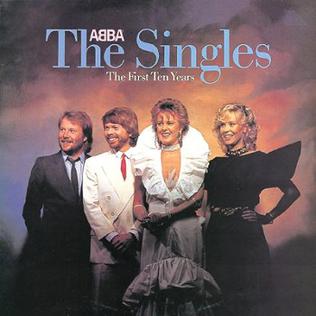
(#271: 27 November
1982, 1 week)
Track listing:
Ring Ring/Waterloo/So Long/I Do, I Do, I Do, I Do, I Do/SOS/Mamma
Mia/Fernando/Dancing Queen/Money, Money, Money/Knowing Me, Knowing You/The Name
Of The Game/Take A Chance On Me/Summer Night City/Chiquitita/Does Your Mother
Know/Voulez-Vous/Gimme, Gimme, Gimme (A Man After Midnight)/I Have A Dream/The
Winner Takes It All/Super Trouper/One Of Us/The Day Before You Came/Under
Attack
His name was Richard Cook, and I must have first noticed
his name in the NME towards the end
of 1979. I can’t remember the jazz album he was reviewing except that it was on
the Enja label and was probably South African – the likeliest candidate is
Abdullah Ibrahim (back when he was still called Dollar Brand) and his quartet
recording Africa – Tears And Laughter,
a busy but engaging session where undersung players like Talib Qadr and John
Betsch work hard, and Ibrahim/Brand even harder, to sound easy and effortless.
I thought; well, here’s another new name on the jazz block.
In the late seventies and early eighties the NME had to work especially hard to catch
up on the jazz front with Melody Maker,
then under the editorship of Richard Williams and whence Brian Case, latterly
the NME’s chief jazz voice, had
recently defected. Other active voices included the veteran Max Jones, the less
veteran but still renowned Michael James, and Max Harrison, who is one of the
greatest music writers I have ever read.
But on the NME,
Cook and (eventually) Graham Lock had to go it alone, or as a pair. Over the
next couple of years I noticed Cook’s name becoming more frequent in the
paper’s pages, and, interestingly, dealing not just with jazz but with
practically any type of music which was thrown his way. I realised that, like
the other Richard, he was thinking in ways which were roughly parallel to my
own thoughts about music, that he diplomatically stood for a natural plurality
in music, a world in which everything and everyone was entitled to the same
critical standard (I cannot underemphasise the importance of the singular tense
there).
I gradually realised that he was a magnificent and
possibly visionary writer, and thought that with time and experience I could be
a better one. Put it down to teenage student arrogance, but my eyebrows were
raised by a review he did of the (double) album of Mike Westbrook’s stage show Mama Chicago, of which he approved and
which he said far outdid Escalator Over
The Hill, which he dismissed as obfuscatory and overblown. As Escalator was even then, or especially
then, my favourite album, I couldn’t let that pass (I’m afraid that I found,
and find, Mama Chicago literally overblown,
hugely overwritten and tediously overlong) and so I wrote a grumpy review, with
covering letter, of the 1981 ECM reissue of EOTH,
to the NME.
I got back the expected, Xeroxed thank-you letter from
Lynn Hanna (the review was written exactly as you’d expect a record review
written in the early eighties by an eighteen-year-old Penman and Morley fan,
i.e. unreadable) and heard nothing more about the matter. But a month or so
later, I saw in the NME a column
called Double Take, in which albums
were, shall we say, re-viewed, given a second hearing. And there was Cook,
talking about EOTH, making it
abundantly clear that he’d read my communication, and rather shamefacedly
backtracking, admitting that it was, after all, a singular monument (“It just is”). It was the only, indirect moment
of contact we ever had.
Being a writer is one thing, but over the next couple of
decades Cook proved that he was much more; his skills as an organiser, editor,
animateur, broadcaster, encyclopaedia compiler, motivator and proselytiser have
been suitably lauded elsewhere and stretch far beyond anything of which I might
be capable. Reading between the lines of the tributes, I would guess he was a
quietly awkward presence, officious, stern, quick to bark, and other activities
which may have helped to shorten his lifespan. I don’t know – I never met him;
although we must have been in the same room or concert hall many, many times, I
had no idea even what he looked like (his music press byline pictures seemed
designed to avoid the reader seeing his full face); when somebody said, oh the
guy in the white mac with the Sainsbury’s carrier bag, I thought, oh HIM. He
lived until 2007, so theoretically could have been aware of my work, and if he
were, then undoubtedly he would have crinkled up his nose and snorted at such
arrant nonsense. In probable truth he wouldn’t have known me from Adam
(Sweeting); he always had stuff to do, more records to listen to, more stories
to absorb.
And sometimes a residual stubbornness, mixed with
shortness of temper, led to unhelpful postural castle-building; a stupid row
developed between Cook and Morley in 1982 over New Pop and the New Thing which I
believe tainted that year’s NME
writing for the worse (the celebrated May 1982 Morley Quick Before They Vanish column was essentially him having a go at
Cook and Pigbag, and even by the time of the year-end Phil Collins interview,
reproduced in Ask, Morley was still firing cheap shots at the
writer).
This possibly fatal stubbornness was still in evidence in
the NME as late as 1985, when Cook
used a singles review column to decry the presumed tunnel-visioned writing of
Neil Taylor, the paper’s chief cheerleader for what would become C86. Violent,
colourful and genuinely provocative (as set against the bland, dated snobbery,
and worse, seen elsewhere in the paper at the time); it has to be acknowledged
that in the context of 1985 Taylor’s voice – you may not agree with him, or
only in part with him, but at least he believes in something and speaks up for
it – was vital, as such voices are at times of crisis.
Cook’s response was to snort balefully and again, and
more angrily, preach the gospel of pluralism. His single of that week was Rick
Springfield’s “State Of The Heart,” from his album Tao. Now, the latter is not the worst album you could buy; it sees
Springfield (who incidentally wrote “Life Is A Celebration” as heard, rather
lumpily and stagily, on The Kids From
“Fame”) and co-producer Bill Drescher getting to grips with things like
drum machines and glossy mid-eighties fist-shakers to interesting effect, and
he gives the 1980 Mondo Rock song a fine, controlled reading (as he had done a
few months previously at Live Aid). But even I knew that, as the Mary Chain
were conquering all, Rick Springfield was just never going to be enough.
He was highly readable when he wrote about music he liked
– principally jazz, in The Wire (more
so I think than free improvisation), when he edited the magazine and it still
primarily dealt with jazz – but when he turned out routine stuff in Sounds to help pay The Wire’s bills, the results could seem forced (though not always;
try to find his five/four/three/two/one-star review of Sigue Sigue Sputnik’s Flaunt It). And then the “jazz revival”
found it couldn’t extend beyond Wardour Street, readership figures fell and
Cook was called upon by the magazine’s publisher to go eclectic. Whatever happened
with the magazine after his tenure there, it must be remembered that the
Michael Jackson cover was something forced upon the editor, rather than
something in which the editor naturally believed. I applauded his
anti-weariness editorial, just as I had applauded his “if you don’t accept
Ayler, the new interest is worth nothing” declaration of principles a few years
previously, but the nagging question remained: how far did he really believe
(in) this?
My feeling, and the reason why I’m being tough here on
Cook as a writer, is that, yes, he probably did believe that the church doors
should be flung open but remained a Blue Note fan at heart. As mentioned
elsewhere, when he began to co-compile the Penguin jazz guides there is no
doubt that he saw this as his true life’s work – his, if you must, Then Play Long – and reading them
underlines (like TPL) the importance
of having two voices and two minds at work (the other being Brian Morton). But
leafing through them is a gruellingly didactic and not especially rewarding
experience – whereas I go back to David Thomson’s equivalent books about the
cinema again and again, boomerang-style. And the eventual Richard Cook’s Jazz Encyclopaedia carried with it an unwelcome air
of sullen impatience.
But then there are all the nineties PolyGram CD releases
– and, crucially, reissues – that he enabled or helped to enable, and there’s no
doubt that he gave full service to his chosen music. From my own experience I
can also say that I believe that he listened – truly listened – to every record he heard or bought or sold or re-bought
or upgraded. I bow to the dozens of writers he discovered, mentored and
nurtured, one of whom has more or less turned out to be my mentor. I
acknowledge the acres of critical insight which he instigated, and not just
within the realm of jazz either, and anticipate lots of flustered responses to
this piece saying “hang on, RDC was NEVER like that…”. His NME reviews of Imperial
Bedroom and No Jacket Required
should act as models to anyone who fancies themselves as a music writer. The
multi-part guide to recorded jazz that he and Lock published in the NME midway through 1981 probably helped
inspire thousands to discover the music. His Christmas 1982 Coltrane requiem
was as downbeat and restrained as anything on Expression. His interview with Hex
Enduction Hour-era Mark E Smith was startling enough in its semi-spoken
implications for one to overlook the Howard Jones interview that he made up a
couple of years later.
But the principal reason why I am mentioning him here at
all is because of the review which appeared in the NME of Abba’s double compilation The Singles – The First Ten Years, a review which confirmed, to
these expectant eyes at least, that he knew and understood more about New Pop than we, as readers, thought. First, the
assumption that New Pop really wouldn’t be anything without the prior example
of Abba; second, that this compilation marked the turning of the critical tide.
Not uniformly; Colin Irwin in Melody
Maker was a sourpuss, but as that paper’s chief folk correspondent he was
probably pissed off at the gradually reducing space his editor was giving him.
And third, that The
Singles – with that always fatal subtitle – came at a point when New Pop
was on the wane, might even have been dying. The mood of pop in late 1982 was
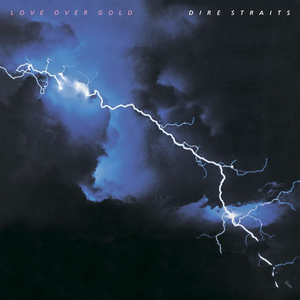
becoming progressively darker; Love Over
Gold may only have been a starting point. Even when superficially bright
and upbeat, there was a warning sheen of grey, or charcoal sunset, on pop songs
of the period; as if the whole adventure were coming to an end. Here are a few
other examples:
“I’d Like To See You Again” by A Certain Ratio.
“Desperate But Not Serious” by Adam Ant.
“Living On The Ceiling” by Blancmange.
“Theme From Harry’s
Game” by Clannad.
“She Blinded Me With Science” by Thomas Dolby.
“I.G.Y.” by Donald Fagen.
“Gypsy” by Fleetwood Mac.
“Wishing (If I Had A Photograph Of You)” by A Flock Of
Seagulls.
“I Know There’s Something Going On” by Frida.
“’Til Tomorrow” by Marvin Gaye.
“One On One” by Daryl Hall and John Oates.
“Let Me Go” by Heaven 17 (12”).
“Dirty Laundry” by Don Henley.
“Billie Jean” by Michael Jackson.
“Shopping” by The Jam.
“Goodnight Saigon” by Billy Joel.
“The Apple Stretching” by Grace Jones.
“All About You” by Thomas Leer.
“Ice Cream Factory” by Mackenzie Sings Orbidoig.
“Primrose Hill” by Madness.
“Empty Eyes” by Marc and the Mambas.
“Dirty Laundry” by Curtis Mayfield.
“Don’t Make Me Wait” by The Peech Boys.
“1999” by Prince.
“Just Drifting” by Psychic TV.
“Uncertain Smile” by The The (7”).
“Eastworld” by Theatre of Hate.
“Parade” by White and Torch.
“Shipbuilding” by Robert Wyatt.
“Ode To Boy” by Yazoo.
But then with Abba an end was, I think, always in sight.
Listening to The Singles, the group’s
developmental arc – it is not quite a rainbow – is evident. The quantum leap
from jolly Eurovision singalong types (Scott Woods accurately describes “I Do,
I Do, I Do, I Do, I Do” as the exact midpoint between Sly and the Family Stone’s
“Hot Fun In The Summertime” and Hurricane Smith’s “Oh Babe, What Would You Say?”)
to something else, and darker, was more or less accomplished with “SOS” and
that knowledge doesn’t make the latter record any less startling. Then they got
as definitive as pop music could be defined; like the Beatles, they kept
raising and raising the bar to a level where many people felt they couldn’t keep
up; disc one ends with “Summer Night City” which is in danger of overloading
the unwitting listener with its remorseless adventure (and hear, elsewhere, the
full-length version, complete with Lexicon-style
orchestral prelude).
So there was a retrenchment of sorts, back to Eurovision
singalongs or sideways steps into disco (side three), but by the time we reach
the eighties (side four) there really is no hope left. But was there much hope
to begin with? The record starts with the singer pleading with her lover “Why
don’t you give me a call?” (does anyone else hear an overlap with Coldplay’s “Talk”?),
and by “One Of Us” the message has remained unchanged (“One of is only/Waiting
for a call”). And it may be, as Cook persuasively argued, that “Waterloo” saw
the immediate displacement of prog by pop, but “Under Attack” – this record,
and effectively the group’s, last word – sees the conquering metaphor turned
from dream into nightmare, such that the song barely hangs together; its main
rhythm line anticipates Massive Attack, but the construction is ungainly, as if
Björn
and Benny had forgotten how to write a pop song.
Elsewhere it can be noted how “So Long” sounds like
Status Quo covering “Little Honda,” how the backing track to “Does Your Mother
Know” – is the subject of this song the seventeen-year-old dancing queen seen
from a different, and maybe truer, angle? – could well be Pete Shelley’s “Homosapien”
and how even campfire singalongs like “Fernando” (finally getting its TPL day here) do not quite escape being disturbing;
they have been fighting a war, and appear to have lost it (“Everybody knows that
the good guys lost” – Cohen), and are now old, and that Fernando may have lost the
will to live (“Since many years/I haven’t seen a rifle in your hands”); what
exactly has happened to them? And freedom in whose land? Which war? The
Mexican-American one? Furthermore, we note that the trio of number two hits
sung by Frida – “Money, Money, Money,” “Gimme, Gimme, Gimme” and “I Have A
Dream” (two of these were NME-only
number twos) – gently suggest that the singer is slowly going out of her mind.
But the bigger Abba got, the darker they got, in ways
that the Beatles did not (Abba came down from the top, the Beatles found that
they couldn’t get down) and finally, once again, they got so big that they
virtually became invisible – and untouchable.
The Singles had
been a last gasp decision; the original intention was to make another Abba
album – as if any album could be made after The
Visitors – and so they trooped into Polar Studios in May 1982, recorded a
couple of songs and weren’t too pleased with them. They returned in August to write
and record three more songs – one of which was “The Day Before You Came” – but it
was clear that the group had come to a logical end, and so two of the new songs
were appended onto a deluxe greatest hits package. Well, deluxe to a point;
there are no notes, pictures or credits within the album, and the cover sees
the quartet, dressed very smartly (Frida already looking like royalty) looking,
smiling, away from the camera, perhaps looking back and being both proud and
grateful that they had made it through to here. Other proposed songs (which
turned up as B-sides and so forth) included “You Owe Me One,” “Cassandra” and “I
Am The City”; was this a Gary Numan record?
But what to say about the song which was, essentially,
Abba’s farewell?
(And isn’t it strange how, thirty-one years later, Abba
have still not, technically speaking, broken up?)
Things to note might include the following:
1. Agnetha
tries to keep her countenance but cannot help sounding anguished. At many
points throughout the song she resembles Buffy Sainte-Marie (with an undertow of
Stevie Nicks).
2. Where’s
Frida? In the background, distant, like the lover on the faraway opposite bank
in Cohen’s “Tower Of Song,” wordless, heartbreakingly exquisite; also available
to buy as a single in late 1982 was “Death,” Klaus Nomi’s rendition of Dido’s
Lament, recorded when the singer was under the death sentence of Aids, and of
which I am strongly reminded here.
3. But
I disagree that the “you” who, or which, comes the following day is death. That
would make nonsense of lines like “At the time, I never even noticed I was blue”
and “I had no sense of living without aim.” The question is: was she aware of
these feelings at all before she met him, and did he instil these feelings in
her?
4. If
there’s “death” here, it’s the death of an old life which reads like a living
death. She tries to recollect what she did every day without thinking,
painfully and painstakingly, at a distance of – what, ten, twenty years? All we
are led to believe is that once she had this life and now she doesn’t have that
life anymore. What happened in between?
5. The
constant build-up of musical background as emotional intensity steadily
increases; more synthesisers, more backing vocals verging on the choral, as if
moving towards an unpleasant ending.
6. Agnetha
sounds upset with herself; did she really “live” like that? And how much of
this can she actually, or accurately, remember?
7. The
song is an inversion of “I Say A Little Prayer” crossed slightly with “Losing
My Mind” (and acknowledging “Alone Again (Naturally)”).
8. “A
matter of routine/I’ve done it ever since I finished school.” The daughter in “Slipping
Through My Fingers”; is this what she grows up to become?
9. The
part on the swings in Lanark when
Coulter talks about how going to school was just something you did, but the day
job wasn’t compulsory; he had chosen to live like this. But he escapes, and
Thaw doesn’t.
10. Add
the necessary black humour, in both construction and delivery, and the song
really wouldn’t be far away from the Cohen of “Waiting For A Miracle” in a
what-have-I-done-with-my-life sense.
11. She
has lunch at the same place with the same people at the same time every day.
She reads the paper going to work and another one going away from it. She doesn’t
cook (“Chinese food to go”). Why does
she need a lot of sleep? Abdication from the need to think about one’s life?
12. Joy
Division. “Decades.” It doesn’t matter whether Björn and Benny knew about them
or not. It’s just there; anyone could
hear it.
13. But
as “Decades” helped usher open the doors of New Pop, then perhaps this song
closes it again, like a coffin lid. There appears to be a deep acknowledgement,
not just that Abba were over – while recording the song in half-light, all four
knew that the game was up, that there was nowhere left for them to go – but that
New Pop, or at least a phase of it, was closing down; there was, after all, a
limit to how far you could push the pop envelope. Björn has made it pretty clear that the
song was about his and Agnetha’s divorce, but this is an art song, nearly six
minutes long with no obvious hooks and acres of linguistic silence (an
alternate title could be “Is That All There Is?”); Tim Rice warned the writers
at the time that the song might go over the heads of British record buyers as
well as Abba fans, and so it proved; as a single it peaked at #32, their worst
showing in the UK since “I Do, I Do, I Do, I Do, I Do” six years earlier. Did
the stuff in between actually happen? Or were the composers’ feet already
halfway out of the pop office, heading for musical theatre?
And yet the whole double album is, if
not quite an epitaph for New Pop, at least on the recommended reading list for
anyone hoping to understand what it was all about. Cook was unequivocal in his
piece, calling Abba “the group who altered the course of pop more than anyone
else – anyone…” Including even the
Beatles? Cook at least asks us to consider the possibility, to consider all
possibilities.
But there is the wider matter of Cook’s
legacy. I promised you a resolution in this piece, an explanation of what Then Play Long has been patiently
working towards; and now is the time to lay my cards on the table. You see, in
handing over the editorial keys of The
Wire nearly quarter of a century ago, Cook helped to mentor Mark Sinker,
who in turn helped to mentor me, and so I am conscious that a lineage is in
operation here; the need to pass on something of importance. I remember when
Mark told me about Cook’s death, from a recurrent cancer, six years ago, aged
fifty; it was a sunny Sunday afternoon and we were walking through Hackney, and…I
didn’t know what to feel; Paul Rutherford, the great improvising trombonist, had
died at home, not entirely unexpectedly, at more or less the same time, so my
sadness was instantly blunted.
Bear in mind, however, that I
am making rank judgments about a man I never knew or met and yet, not that he
ever knew it, was one of the architects of me as a writer, or the person who
best confirmed what I already felt. And maybe some of his Abba praise was borne
out of a darker subtext; that if there had been any sort of “war on pop,” that
Abba had actually long since won it, and common people, and particularly women,
knew in their bones that they were great, and that hipsters were hopeless. And
it strikes me that nothing much in 2013 has changed; everything, from Ayler to
Abba, is back in its particular safe niche (rather than at opposite ends of the
same CD shelf), all is accounted for, instantly accessible and comprehensible.
And it has all ended up making the history of music taste like the blandest of
broths.
To want to – not yank, or
coax, but maybe to persuade people
that all music is worth their attention, that it is all part of the same,
interrelated story, is a fast ticket to being ignored
14.
BEVERLY
MOSS, STILL GRIEVING. IF YOU SEE A WIDOW CRYING, HOLD HER HAND, SHE’S MY
FRIEND. IF THESE WORDS SOUND CORNY STOP READING, I DON’T CARE.
(Kevin Rowland, remixed by the
author)
because it’s unmarketable. Everything
equal means no arguments, or conflicts, and people want controversy and
provocation. Not to listen, or to learn…
And we cannot hope to complete
our circle of knowledge about what it’s like to love and understand music until
we drop our guard, reach out and listen.
And, by virtue or otherwise at
that, we cannot hope to understand and respect each other as human beings.
This tale does not aim to
destroy music criticism, but to – reconnect
and reconstruct it. To abolish the
smart aleck verdicts and either/or traps that keep us all tired and in the
darkness.
To stimulate wisdom so that we
can all ascend to the same level rather than descend into it.
Never to be afraid of seriousness
or to be afraid to laugh.
Other than that I can only hand
over to Mr Sinker himself, who put it better than I could ever hope to do when
he spoke about Mr Cook in his Wire
tribute:
“I remember: his three-fold
plan.
To change the way music was
written about;
which would change the way it
was thought about;
so as to change the way it was
played.”
To which I would ambitiously
add: and therefore to change the way human beings behave towards one another,
so that we might actually save ourselves.
That “we” of Cook’s? It’s
still out there –or in here – and some
of “us” still feel what he inspired – and, before him and alongside him and
after him, writers like Richard Williams, Steve Lake, Karl Dallas, David
Thomson, Simon Barnes – and if indeed he is musing on a cloud somewhere, I’d
like him to think that his work wasn’t in vain and that the quest, the mission,
didn’t die with him.
I see it, and Then Play Long, as a duty to carry on
with the work that Richard Cook started, and as a reminder that no exile really
ever has to be on their own.
And, actually, don’t Fernando
and his lover cross the Rio Grande and escape, thereby becoming exiles?
Time, as so many albums in
this tale have concluded, to find our way back home.
Next: A Christmas ghost story.



 Posts

