Monday, 17 December 2012

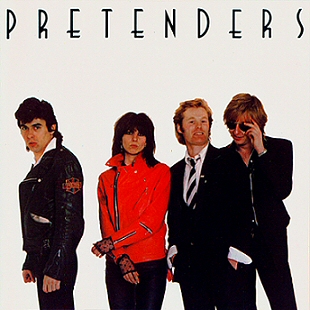
The PRETENDERS: Pretenders


(#221: 19 January 1980, 4 weeks)

Track listing:  Precious/The Phone Call/Up The Neck/Tattooed Love Boys/Space Invader/The Wait/Stop Your Sobbing/Kid/Private Life/Brass in Pocket/Lovers of Today/Mystery Achievement

“Change has a way of just walking up and punching me in the face” – Veronica Mars

The scene now changes; this blog is now being written by two people – Marcello Carlin and me, Lena Friesen.  For the rest of this blog’s (un)natural life we will both be writing here, and it has been a long wait for me to arrive; in part because I am a bit younger, and thus was a mere bystander to the on-going colourful slo-mo crash which was the 1970s.  So I am starting right here, in 1980, with the first album I ever owned, knowing that this was my new favourite band; that this was more than just an album, in some ways.

Let me set the scene; it’s Los Angeles, spring of 1980.  At some point I get a radio with a tape deck and earplugs; at some point, I get this album on cassette.  I know nothing – repeat – nothing about punk.  I am so naïve, I don’t even know about Joan Jett, let alone the Runaways or the Ramones – I listen to Top 40 radio and serious AOR stations and Dr. Demento and Rick Dees and KRLA with Art Laboe, who will play oldies, particularly plaintive ballads for the low riders and those who love them.  New Wave is a concept I understand; but the radio had so many great singles in ’79 that going out to buy albums seemed unnecessary.  Dr. Demento plays the anti-disco anthem out of Chicago and I am suddenly aware there are disco-haters out there, people who would hate my neighbourhood in L.A. – Silverlake - where the Toy Tiger and the Frog Pond are local gay clubs.  The New Wave hits keep coming (I now understand some of them as New Pop) – Gary Numan’s “Cars” and M’s “Pop Musik” and even Tusk could be seen as a New Pop gesture.  As 1979 waned, there was an impatience in the air, an eagerness, to see this decade out, gone, never to return.  A decade of men who could not be trusted, disaster after disaster, the whole way through. But it was also a time when women were, Equal Rights Amendment or not, gaining strength and dominating the radio – Debbie Harry, Donna Summer, Stevie Nicks, Christine McVie and Linda Ronstadt, to name a few that could be heard at almost any given time on L.A. radio, sometimes on FM for a whole commercial-free half hour. 

But then Pretenders came out, and assumed (for me, anyway) an overwhelming prominence.  I had just turned 13; I’d had a radio for two years, had listened dutifully to it for that time, and had never heard anything even close to this.  I was still learning about the history of rock ‘n’ roll at the time, and unwittingly bought only one of the most important albums ever; absorbing it, assimilating it, and realizing slowly that this was new, with the equally newfound arrogance of the teenager who believes she has a favourite band that was far superior to anything else, and that everything in the future would have to be as good as this or she just wouldn’t bother with it.  I listened to Pink Floyd’s The Wall because the serious heads at KMET told me it was an instant classic, and I was impressed; but its deeper meanings, because I was naïve, were lost on me.  (I had no idea who Syd Barrett was, and FM radio never played any Syd-era Floyd.)  But no one needed to tell me Pretenders was a classic; it was mine, and needed no hype.

The album tells a story; so I will go through it song by song.  The band were named after the song “The Great Pretender” by The Platters – Chrissie Hynde had a pal who, when he was in a bad mood, would go into his room and play the song over and over.  It is a song about being brave and showing no misery after a breakup; one of many songs where the man pretends to be happy when he isn’t.  At first Hynde makes it very clear that she isn’t pretending…but is she? 

“Precious” is a song of – well, from the first drumstick clicks and inchoate yells, this is not your ordinary song.  Hell no.  Hynde and James Honeyman-Scott’s guitars surge back and forth so intensely that you know there’s a tug-of-war here; between the nervous narrator (because this album is so autobiographical I will just call the narrator Hynde) and the superior proto-preppie she’s with, the big frog in the small pond (small in Hynde’s view) who leaves her with a “bruised hip” but also makes her feel like she’s “shitting bricks” as she knows she can’t live up to whatever he wants from her.  Swearing!  Swearing, dammit!  It has taken us this long to get to a woman who really doesn’t give a crap and is going to swear, is going to make a lot of those guys who run radio stations a little…nervous.  The song’s not even over and I love it already; the dive-bombing guitar as she goes into the break wherein she seems to make fun of…the idea of having a baby which automatically cancels out a thousand ‘baby’ lyrics in so many tacky songs.  The conventional life of a suburban Akron teenager was supposed to aspire to, accept.  You can just tell she’s not going to settle for that, no way, and then it gets very quiet; Hynde’s voice is miked very close, her every breath and inflection can always be heard.  “Trapped in a world that they never made” is what anyone in the 1970s could say, and when Hynde then says, heroically, “Well not me baby I’m too crazy – fuck off” it’s as if the 1970s barely existed.  They’re dead, as Hynde escapes in 1973 to be in a rock band in London, come hell or high water.  The push-and-pull ends, Honeyman-Scott gets the visa and plane ticket and the door all but shuts at the end, Martin Chambers’ drums providing the slam.

And that’s just how it starts.

“The Phone Call” is one of the many songs here (the album didn’t, and still doesn’t, come with lyrics, and in 1980 you just had to make them out yourself as best you could) that I never really understood, other than it was in an odd time signature (7/8) and was about someone getting a call that was urgent, from a callbox, with the phone ringing and ringing on the other end.  The song is urgent, claustrophobic, fixated on the one thing; the security of whoever is supposed to get these messages – a spy?  A woman in danger?  A gang member?  If this is another song about escape, it is an escape that is full of running, sudden stops, pieces of paper shoved under doors – it’s a getaway car ready with the motor running.  “This is a mercy mission” she says, her voice muffled as PJ Harvey’s will be one day, with the guitars ascending and descending like the breathing of a nervous person, willing themselves to be calm, only just holding out.  It ends with a long exhale of final freedom, with the phone back again, the line engaged.  Beep-beep-beep-beep; you hope the person who is there heard about the parcels in the mail.  There is danger everywhere, this is the 1970s; or should I say, the 1970s themselves had to be fled, to be escaped.  (This album, quite pointedly, doesn’t sound like anything from the 1970s or earlier.)  So are we free yet?

“Up The Neck” is a laid-back song about “anger and lust” that is just as claustrophobic in its way as “The Phone Call” except now it’s the apartment, the flat, and not the callbox that’s the setting.  The gruesome relationship is spelt out with a veteran’s sneer from Hynde on the one hand, and a kind of crushed innocence on the other.  “Under the bed with my teeth sunk into my own…flesh” is how badly she feels one morning – UNPRECEDENTED here in Then Play Long, and her description of sweaty sex as “it was all very…’run-of-the-mill’” then followed by how the relationship was full of “bondage to lust” – the two people as physical beings only, with nothing else between them.  Her continuing cries of “I said, baby?  Oh, sweetheart…” grow less ironic as she realizes that that’s all there is.  Sticky shag rugs, dirty tiles, tongues and lips and bulging veins…and then the relationship dies, the guitars churn and churn mechanically, the ease of the song gone, evaporated.  The relationship never got above the neck; it was all kisses and slugs, no heart.  She walks out, sorry and rueful, sadder but wiser.  (How many girls like me learned so much from this, as opposed to the cheery advice columns in Seventeen or Glamour?)

Pretenders was an album bought by girls, after all.  And guys too; Hynde’s no-bullshit singing/songwriting was a fresh breeze at the time, and a big corrective to having to listen to “Whole Lotta Love” and other such paeans to the female sex yet another time.  And the next song is one of those that simply separates – as if the three before hadn’t already – this from anything else even thinkable in rock ‘n’ roll at the time.  For one thing it’s a 7/4 -4/4 time signature, meaning producer Chris Thomas had his hands full trying to keep this erratic and wild song from coming right off the damn rails.  That he and the band could do it was a testament to their intense rehearsing and gigging, meaning that the album was done quickly and (I assume, I don’t know this for sure) as live as possible.  This is a band, after all, Chrissie’s band, and the unity and skills shown by everyone here is amazing.  Along with Hynde’s voice, the band is also close, all the better to emphasize the intimacy of the songs; you feel as if you are there, though Hynde’s voice is the guide, letting you in on some things while leaving other things to your imagination, which Hynde assumes you have.

“Tattooed Love Boys” rings like a bell and before you know it, the struggle is on.  “Little tease – but I didn’t mean it…but you mess with the goods doll, you gotta pay, yeah…” Her “tease” is squeaked out as if maybe she wants to, and maybe, she doesn’t.  She knows how to flirt, but she’s not with the flirty types; these are bad boys, the kind she’s read about…and now here they are. The song comes to a stop after yet another unprecedented lyric:  “I shot my mouth off and you showed me what that hole is for” and here Honeyman-Scott stings, floats, wrenches his guitar, bitter and fierce, as Hynde groans and says “oh baby baby baby” as if reinventing the blues, the band then leaping from one speed to another out of the mystery of what happened to the consequences.  Well, it’s not pretty for him; “you’re gonna make some plastic surgeon a rich man” she crows, with the song ending with nothing but contempt for her would-be…attacker?  Rapist? “Another human interest story…YOU ARE THAT.”  And the song ends, abruptly as it started.  Our heroic narrator survives hanging out with some tough guys who maybe, really, aren’t so tough.  She is not singing those kind of blues – not yet, anyway.

“Space Invader” is an instrumental – one that points back to 1970s rock and yet lighter, simpler, pacing around at its root like a lioness stalking prey, or for that matter someone playing the video game of the same name that is sampled at the end.  “The pulse of the new” as I noted, and this is where Pete Farndon and Honeyman-Scott shine; the song is like a knot being tied and untied, yet another breakaway from the past, the bomb effectively dropping, the past being destroyed, for lack of a better word.  (Already I can sense all sorts of guitar players, teenagers and rock stars alike, listening to this album and playing along, from Johnny Marr to Lindsey Buckingham, from Courtney Love to Neil Young.)  The bravado and heroism continue.

“The Wait” is yet another song that is sung so quickly and rhythmically that just what it’s about and what is going on is only half-understandable; even knowing the lyrics now I still don’t know what it’s about, besides a child who is forgotten, alone, kicking a ball up and down the street, an outcast, a loner, who is hurting and who only Hynde seems to care about.  But there is the wait; something is coming, something Hynde knows is coming that in the tense breaks of the song – again it is one that is brutally physical, meant for pogoing (in 14/8 time what else can you do?) – and you can hear her breathe as if she has run in the studio, as if she is actually waiting along with the hapless “child” for The New to occur.  Hynde is particularly vocal here, calling out, snarling, as the song yanks itself this way and that.  Honeyman-Scott’s guitar after the break is nearly atonal, as if he is trying to make the ugly beautiful, the beautiful ugly; in part I think this is due to his not really enjoying doing guitar solos as such, so they tend to be brief and to the point, sardonic even, a good match for Hynde’s voice.

“Stop Your Sobbing” was, as I eventually understood it, their first single, produced by Nick Lowe; it is a song by The Kinks, one I had never heard, and yet another turning-around of rock conventions – Hynde is now singing to some guy that it’s about time he laughed and had fun instead of just crying and bringing her down.  Here the band prove that yes, they can play your normal 1960s pop just as well as anything else; and it continues the theme of the crying man, unable to hide his emotions.  (“Stop snivelling!” she yells at the guy in “Tattooed Love Boys” – as if she’s the guy now, and he’s the weaker sex.  Hmmmm….)  Jangly fun, but Hynde’s doubled voice at the end is desperate, as if she is somehow singing to herself as much as him; even from the start, there is the undercurrent of never quite knowing what is going on, in these songs, despite the authority and power of them.  It’s itchy and uneasy.  Even the future she writes for herself here – meeting and falling in love with Ray Davies, who wrote the song – is going to be unpredictable and troublesome.

“Kid” is by far the most ‘normal’ song here, echoing Hynde’s beloved Beatles; the boy is ashamed of something, feels it’s wrong, and won’t hold her hand; why we never know.  He leaves, too proud to cry, though she begs him to cover his face, and Hynde’s voice is direct and yet full of the blues and sorrow that he can’t accept her for what she is; the situation is hopeless, and the song is cheery and upbeat as the scene is quiet, final.  “Kid, my only kid” – he goes, beautiful and young and uncaring, it seems, about her feelings.  The album is suddenly revealing (literally; this is the other side) that Hynde isn’t just a tough chick from Ohio who has been the victim and victor in physical encounters*.  There is another side here, one where a guy will just dump her, and she longs for him, “full of grace” but it doesn’t matter.  Write a pretty song about it and have a hit single, I can imagine Hynde thinking; and so they did.  But then, Hynde finds herself in a whole other situation. 

“Private Life” is a slow reggae – menacing, erupting with nagging/nail-digging solos from Honeyman-Scott that emphasize just how impossible the title really is.  A wife – unhappy, theatrical – comes to Hynde and pleads for advice, help.  Hynde pushes her away, dismisses her like dirt:  “Your marriage is a tragedy but it’s not my concern.”  But the woman continues, complaining about her sex life, about everything, and Hynde just tells her to leave the “somebody you deplore” and accuses the wife of “emotional blackmail.”  Pity, contempt, hatred; she asks continually to be left out of the whole mess, but the pressure builds and builds, and none of Hynde’s tactics here seem to work.  Hynde moans with pain as the guitars pierce her side; “Oh you’re mean!” she says, dying of a thousand insinuations and threats.  Does she give in?  Has she met her match?  It ends so quickly it’s hard to know, but the pressure breaks, and now there is no escape.  Hynde the Heroic of the first side is no longer able to conquer; the lies and stories and constant talking of the wife are too much. 

After this, “Brass in Pocket” can be seen as a relief but also as a sharp irony.  Here is she is, detailing everything about her that is so special, but it seems like an inventory mostly to impress herself; she’s all ready to go, but is anyone actually noticing her?  Again the lyrics and music go arm-in-arm, slinking down the street, but the attention she craves never seems to come, and she is alone at the end, and maybe someone noticed her and maybe someone didn’t.  She’s got so much to show, to tell, but there is an odd emptiness in the song, a kind of false hope that if she likes herself so much, then surely there must be somebody out there who will really appreciate her.  She stood up for herself in the first song, after all; but since then has yet to find that right person.  And then…

And then she does meet someone; and there they are, late at night, in bed.  He is crying (again, there’s no explanation; he just is) and it is breaking Hynde’s heart. The delicate figures of the song – hesitating, hoping – as she tries to comfort him, tells him that he makes the birds sing and the stars shine – the song leaps up to the dramatic, as Hynde wails her “oooohhh” and their relationship falters, as she tries – tries – to talk to him.  Hynde sounds as if she is finally crying too; the whole song is a lament for those who are scared to see people in love, people brave enough to take a chance, and for those who are too scared of having their hearts broken to get involved in the first place.  (If Brett Anderson owned this album, as I’m sure he did, this is the song that undoubtedly influenced him the most.)  The break is power chord glory mixed with an acidic lace, that this is how it ends.  She has tried and tried and found boys and kids and mere children to care about, and now (presumably when she is truly in love, not lust, not bondage) she has to face herself and know herself with as much acuteness as she has brought to bear on everyone else.  And it’s terrifying. 

“No…noooo…” she sings over and over, in total disbelief.  It’s the loneliest and coldest feeling in the world, this one.  She can’t leave and shut the door on it.  Because for once it’s not him; it’s her.  “No…I’ll never feel like a man in a man’s world.”  The whole album, nearly, leads up to that moment, as the song fades, as the relationship is engulfed by the sky, the birds, as being a woman is something she has tried to escape, to pretend wasn’t real, that she could move to London and be one of the blokes in a band and hang out with her punk band friends and never get hurt – the vagabond above the law.  But there’s law, and there’s what you can’t escape from, which is yourself.   She sings a lullaby but sounds as if she’s about to have some kind of breakdown herself; that promise of whoo-hoo self-definition badass which got her this far is of no more use.  So now what?

“Mystery Achievement” looks at the facts straight; where is her sandy beach?  What is success, in or outside of the band?  She just wants to have fun, be in a band, get drunk and dance the Cuban slide but the trophies –the promise of fame and fortune – she could care less about.  (How many debut albums come with a song about how the singer doesn’t actually want to be famous?) The song is a classic of a sort – drums first, followed by an audible Hynde sigh, then bass, then guitars.  Her worried “oohhs” are all over the place, and the instrumental break is one of joy; you can hear all the band somehow talking to each other, Hynde’s voice coming in for what sounds like her real happiness – finally she has her own band, they’re doing her songs, and they are having fun doing them.  (That a bit of it sounds like Magazine is par for the course; I mean, who wasn’t listening to them at this time?)  That she has done all this, had hit singles, survived the 1970s – seems unreal to her, as if it was a bad dream, that she is being rewarded for all the wrong reasons. 
.
Privately she may be the woman looking for the one good man, but here in her band, she has gotten what she has had to work hard to achieve; what she set out in 1973 to do, while those in Ohio called her crazy.  She was virtually the last one of the Sex shop on King’s Road set to get a band together, to play gigs (the first on the day Sid Vicious died), to make music so stunning that this album was the first debut album by anyone to enter the UK charts at #1.  This was in part due to anticipation of the band’s fans, but word of mouth as well, from girl to girl, woman to woman:  she is telling it like it is.  Pete Townsend found it, well, compulsive listening as did I; there was nothing else like it, and it jolted just about anyone who heard it (including fellow rhythm guitarist John Lennon) into some kind of action.  Words like “tough” and “tender” are used to describe Hynde and this album, but her voice has a piercing urgency to it that make generalities like those pointless. 
This album is a record (literally) of courage; of chances that led to ugly disasters, bodily harm, but also self-knowledge, to where she ends with a kind of Zen knowledge/not-knowledge situation.  She has a lot to learn, but at least she knows what it is she doesn’t know (hello Juliana Hatfield) and what she does; a heart that hurts is a heart that works, and being a woman in a band/a woman otherwise doesn’t have to be – cannot be – an either/or proposition.  Hynde showed a whole generation or two how it could be done; how to be frank and noble and most importantly, be herself and have her own band.  One woman talks and sings the truth of her life, and a whole world opens up; a world that leads to Sinead and Alanis, to Madonna (who saw The Pretenders live in 1980 in Central Park**) and L7, but just as importantly, to all the young future Britpop stars like Justine and Brett and Damon, who all inherited different aspects of the band’s works.  (Heck, even Katy Perry cites Hynde as an inspiration, but then her first album is called One Of The Boys, which this album could’ve been called, too.)  The Pretenders succeeded where The Clash, Hynde’s friends from way back, couldn’t; as great as London Calling is, this is what the public wanted***, and the plethora of female voices now springs from only a few voices from the past; and Hynde’s is one of them.****
This was a band that was almost too intense and brilliant to last; just months after the unnecessarily rushed Pretenders II, Honeyman-Scott died of heart failure in June of 1982, just a day after Pete Farndon was dismissed from the band – Farndon died less than a year later.  Hynde and Chambers found a new guitarist and bassist, Robbie McIntosh and Malcolm Foster, and continued to record startling singles and a blazing album, Learning To Crawl, the band on the cover dressed in black, as if still in mourning.  At the same time she was in love with a new man, and I will be getting back to that relationship in a few years…
And so at 13 I realized that it was possible to go somewhere else - this mysterious place called London - and I looked up to Hynde as a model of what I could possibly, just possibly, be...an American girl in London.  I realized there were other places to live, other countries (besides Canada, where I'd already been and would return to sooner than I'd thought)...and as I took Hynde as a role model, I realized there was more to the world, more in the world, and that it was right to be romantic and heartbroken, as long as I kept going.  And so I am writing this in London, a place I never thought back then I would get to visit, let alone reside in.  But I did visit, and years later, did move.  This album started that whole process, that opening up of possibilities.   
What else can 1980 offer?  As she sings in "Brass In Pocket" Hynde is “Detroit leaning.”  And so off to Michigan we go…
*Hynde was attacked by Nick Kent one day in the Sex shop; he beat her with a cheap belt as she tried her best to hide.  The album makes it sound as if she dealt out karate chops to guys, but in reality Vivienne Westwood thought she was causing a disruption, and thence Hynde was dismissed and oh-so-coincidentally later Nick Kent was beaten up at a Sex Pistols gig.
**The live version of “Precious” on their EP is from this same concert.  It is, if you can believe it, even faster and more intense than the original.
***Note how these days bands like The Specials (whom Hynde also knew) and The Clash will go on the radio and reminisce about ’79-’80 while Hynde pointedly refuses to indulge in any sort of nostalgic looking back.  This is more proof, I feel, that Pretenders is a far more rebellious and troublesome album for all concerned, and a lot of the songs still aren’t ‘radio friendly.’ 
****Hynde herself would acknowledge Sandie Shaw and Joni Mitchell as influences, even as she would downplay her own singing and guitar playing.  Part of her appeal is that she’s not a diva in any sense, and is very much someone who would say “If I can do it you can do it, if you have the nerve.”


Sunday, 9 December 2012

Rod STEWART: Greatest Hits


(#220: 8 December 1979, 5 weeks)

Track listing: Hot Legs/Maggie May/Da Ya Think I’m Sexy?/You’re In My Heart (The Final Acclaim)/Sailing/I Don’t Want To Talk About It/Tonight’s The Night (Gonna Be Alright)/The Killing Of Georgie (Part [sic] I And II)/The First Cut Is The Deepest/I Was Only Joking

(Author’s Note: The spine of the original LP edition optimistically lists the album’s title as Greatest Hits Vol 1 but this appears nowhere else on the record or its sleeve)


Let’s start with the Rod Stewart Greatest Hits Merchandising inset that comes with my copy of the record (catalogue number: Riva RODTV 1). Among the goods on offer are a T-shirt and sweat shirt, both of which are “Available in Shocking Pink or Jet Black.” Then there’s a calendar/poster: “A real first of its kind…A different picture of Rod each month to keep you going through the year.” There is the option of a black satin jacket: “‘Rod Stewart’ logostyle on left hand breast – be the envy of your friends this winter and stay warm with ‘Hot Rod,’” or if you fancy stretching yourself, or your credulity, you could have gone for a “REAL SILVER OR GOLD PENDANT OR BROOCH…Superbly made item based on Rod’s autograph individually made by craftsmen to each specific order. Don’t miss a unique chance to buy something to really turn on the girl or guy in your life” – yours for only £29.75 (gold) or £18.50 (silver) plus VAT and postage and packing. We see the items being modelled by a vacantly grinning Donny and Marie wannabe pair trying to convince us that (a) they’re happy and (b) they really dig “Hot Rod” (the calendar, with pictures that look as though they were drawn by Ronnie Wood, is also displayed). The record that accompanies this advertisement is almost an accessory before one even gets around to playing it.

If this were the kind of blog on which I’d want to get 40,000 hits a day, plus ringing celebrity endorsements and probably a book contract – I’m not saying I wouldn’t want any of these, but to quote Bernstein in Citizen Kane: “It’s the easiest thing in the world to make a lot of money – that is, if all you want is to make a lot of money” – I’d take the easy road, post a lot of YouTube links, ring out a few clichés and talk about how, well here we are at the end of the seventies and who better to see us out of this turbulent decade than one of its most reliable hitmakers, returning to do a lap of honour with the songs a generation loved (and before anybody asks me “What about The Wall?,” I regret to inform you that in Britain it peaked at #3, no match for the Christmas/Woolworth’s/television-friendly familiarity of Abba or Hot Rod). Basically this is a best of the Warner Brothers years, with only the obligatory “Maggie May” to remind us that he had a life before 1975 and Britt Ekland (and in truth the record, which objectively is a lot more playable and consistent than its parent albums, could have done without the over-familiarity of this song, which had already appeared on three previous number one albums in the seventies, even if it reminds us of Stewart’s strange obsession with “school” which of course dates back to his 1964 reading of “Good Morning Little Schoolgirl.” Oh, and how it’s always The Woman’s fault, but more of that later). Of these ten tracks, only four are new to this tale; and for reasons of perverse logic I am going to start with some partially recycled observations on the most recent one.

It’s not just the Britt factor that makes me think of Peter Sellers – a man who would barely survive into the eighties – in connection with Rod; in both Roger Lewis’ original book The Life And Death Of Peter Sellers and the incomplete romp of a film inspired by the same, the great comic actor is revealed as essentially a kid who never grew up, who wanted nothing more than to get his end off without any complicated paybacks such as pregnancy, fathering or commitment. However, whereas, as Lewis earnestly proves, there was a substantial reserve of evil flowing within Sellers’ mind, the news a few years ago that Rod might become a judge on The Ex-Factor - which has, to date, not happened – was greeted in one newspaper with the headline “Silly Old Rod.” Yes, Hot Rod may be old and silly, but somehow he has remained loveable; his public carpeting of Russell Brand over allegations of carnal knowledge of his daughter was the polar opposite of Sellers, who never avoided an opportunity to run as far from his children, both physically and mentally, as possible.

“Da Ya Think I’m Sexy?,” execrable title spelling excluded, is routinely derided as the most laughable of Rod’s hits – his funniest and most entertaining hit, 1978’s Scotland World Cup Squad collaboration “Ole Ola,” is sadly absent from this collection – although it’s actually the least sufferable of his half-dozen British chart-toppers; spectators routinely took the title and chorus (“If you want my body/And you think I’m sexy”) to mean Rod himself, still trying it on in his thirties (a feeling aided rather than dispelled by the accompanying video), and laughed it off as a crass chasing of the disco ambulance. But despite, or because of, its legally-acknowledged lift (“Inspired by Jorge Ben,” the inner sleeve diplomatically states), the song does quite a good job of re-placing Hot Rod in the international lounge bar of late seventies vapidity; you can imagine Stewart and Sellers propping up the bar at about three in the morning – and it could have happened, as they were both involved in the 1972 Royal Albert Hall staging of the Who’s Tommy - blearily exchanging anecdotes and comparing notes on each other’s performance, cufflinks slipping into the cognac.

The record’s arrangement is skilful, too; initial exposure to the threateningly rumbling doubled-up bassline and the “Sound And Vision”-style drop-in string synthesisers suggested that this might be Stewart’s own Low, a depersonalised wander in the bleached corridors of whatever was left of his soul (as it happens, the parent album, Blondes Have More Fun, was exactly that, but in completely the wrong way). However, the song is not about Stewart himself; it’s a rather touching one-night pick-up scenario with a nervous chap wondering if he’s doing the right thing, understanding her body language correctly, doing his utmost not to come over like a creepy careerist (“Give me a dime, so I can ‘phone my mother”). They retreat to his “high rise apartment” – no more squalid “Maggie May”-style Soho basements – and seem to have a good night, albeit soundtracked somewhat unsexily by a ‘phoned-in sax solo. The morning after verse is well handled – “Outside it’s cold, misty and it’s raining/They got each other, neither one’s complaining” – with the real prospect that this will turn out to be something of considerably more value than a one-night stand; he apologises for being “out of milk and coffee,” but she’s fine about it (“Never mind sugar” – a nice triple entendre - “we can watch the early movie”) and they prosper.

The augmentation of a (synthesised?) soprano towards the record’s end is a nice little reference to Joe Meek, for whom the teenager Rod cut some early sides. However – and it’s a big “however” – what lets the record down and stops it from being a great pop single is Rod’s own performance; the absurd and out of place “Sugar, sugar” ad libs at the beginning, the exaggerated inverted commas (“Two total strangers BUT THAT’S NOT WHAT THEY’RE THINKING nudge nudge and, as it were, wink wink”) of his delivery and the unnecessary standard posturing to which he yields at fadeout. It would take him another two years to perfect the electro-Rod equation with 1981’s “Young Turks” which works precisely because it’s one of the few Rod Stewart records where you forget that it’s Rod singing.

In addition, the Tonight’s The Night album cover does not present Rod wearing a terrible pink satin jacket – or is it a dressing gown? – with nothing on underneath. Shocking Pink indeed.

Which leaves three tracks salvaged – if that’s the word to use in this context – from his non-chart topping 1977 album Foot Loose & Fancy Free. A concept album, no less, about – guess what? – a Jack the Lad who loves ‘em and leaves ‘em but realises he’s really no good on the “love” side of things. Autobiographical? Self-revealing? And if so, which self is being revealed? Time to bring in reader Tom Albrighton, who wrote the following in a comment he made about my entry on A Night On The Town:

“Rod is the libertine dandy: loved by lads, protected by patriarchy, led by desire and puzzled by censure (if not completely oblivious to it). His catchphrase, of course, is ‘it’s all just a bit of fun.’ He is institutional, inevitable chauvinism, endorsed and entrenched for generation on generation.”

Tom ends his comment with the heartfelt plea: “Please let him end.” Actually, it might not just be Rod we have to let “end” here (and, appearances on Various Artists compilations notwithstanding, this is not Rod's last word on Then Play Long), and any ending might need to be compulsory.

Of these three songs, “You’re In My Heart” is the most passable, even though Richard Greene’s violin reminds us that really it’s nothing but a shadow of what he was once capable of doing or expressing; the football references seem pasted on and the grammatical pardons are unfounded. His extended chat-up lines wouldn’t, I think, turn on the oven, let alone big-bosomed ladies with Dutch accents. Even here we find the rather telltale line: “You’re every schoolboy’s dream.”

“Hot Legs” is vile, beyond redemption – even, or especially, if it’s a pisstake of Stones machoness, though I doubt that he has the wit about him to do a “Tie Your Mother Down” – with a sputum bellow climax chorus of “I love you ho-NEYYYYY!” which elicits only a weary sigh of “Yes Rod, now get in the queue please, that’s a good fellow.” The video, which features an appallingly dungaree-clad/Brillo pad-haired Rod cavorting to an unattributed pair of legs which may not even belong to a human being, is redeemed only by the stern old black dude who gives him periodic disapproving/disbelieving stares. In Britain it was released as half of a double-sided single with “I Was Only Joking.”

No doubt Rod intended this latter song to be a naked Hamlet-style confessional, a dropping of all guards and façades, looking back over his raving, impermanent life and realising with increasing desperation that it’s all been for nothing. In any other circumstance this would have been a sober and symbolic closing down of the seventies, and maybe even of rock music per se; instruments gradually drop out until Rod is left, alone, confused and fourth-walling, knowing that pouring his heart out in a song isn’t enough if you have no heart to pour out.

But here it sounds like a pallid excuse – too little, too late - and – though not Rod Stewart’s fault - a step away from Goering in the dock at Nuremberg protesting that the Nazis didn’t mean to kill six million of them. Because I have gone through something like 148 albums from this decade, those seventies, and it is a story whose first lines are almost “I ain’t foolin’, I’m gonna send ya back to schoolin’,” and this demon has not gone away (“Are you still in school?”).

It is a demon which has pervaded almost every major “rock” album this tale has tackled throughout the seventies, and quite a few non-rock ones as well, and perhaps is prevalent throughout the whole of this tale I’ve been trying to tell; the idea that rock and maybe pop music as a whole has been primarily aimed to have its main impact on a demographic of young people only just becoming aware of things to do with adulthood and specifically sexuality. Confused and insecure, they seek refuge in easy one-remove idolatry; screaming at singers and groups, using pop as a testing ground for their own sense of sensitivity and then, having grown up a little, seeing how they can function when faced with a real person of their age from the opposite sex. Pop as a stepping stone to maturity; it makes sense.

What doesn’t make sense is the omission of that key phrase “of their age” because pop and rock have repeatedly proved themselves over the years to be venal, scavenging, unrepentant, a way of keeping young people and in particular young women down, instead of freeing them, thus leaving them ripe for exploitation. “School’s out for EVER!” said Alice Cooper in 1972, but nobody was listening in that sense; again and again it’s the girls who get the stick, or get accused of acting the come-on, on the part of supposedly hapless and helpless adult males. And this leads to something which can only be described as evil and oppressive.

It is not my intention to use Rod Stewart as a stock target for everything that was bad about the seventies – and so bad do they seem now that it’s hard to distinguish any good – but he has unwittingly provided the closing chapter to a story I hope never to have to tell again. In the comment I quoted above, Tom Albrighton also refers to “Jimmy Savile’s savage vileness,” and as the decade now seems to be congealing, from a British viewpoint, into a plot too horrific even for David Peace to contemplate, it does seem as though the Savile virus is bringing down the curtain on this era for good. I don’t mind admitting that compiling some of these seventies entries has, frankly, given me the creeps; and, as we now know, seventies television and radio appears to have comprised nothing but creeps, of whatever stripe.

Can anyone watch the Top Of The Pops reruns without wanting to reach for the sick bag? Week after week, presenter after presenter making lewd comments to the vulnerable and young studio audience, interspersed with cheap performances from lousy artists because most of the good hits were made by Americans or Europeans too busy to come over here, or British acts too famous to have to bother with the show. Lousy artists, in addition, whom one now views with an increasingly suspicious eye – where’s the entertainment in watching some prannet posturing through their two-and-a-half minutes of moderate fame and wondering whether or not they are “safe”? The misappropriation of the term “camp” to mean spending half an hour of your life that you’ll never get back again watching crap because, hey, it’s so bad it’s…bad?

But this was pervasive all through the so-called Golden Age of British Television Entertainment – that fatal mixture of salacious and sanctimonious – such that I feel all of it should be locked in a vault and only let out again on request. The memories were so much better than the reality. Let Top Of The Pops be leased out to YouTube or UK Gold for whoever wants to watch it; otherwise, let it stay buried. Watch the 1976 Morecambe And Wise Christmas Show and try not thinking how fucked up a place seventies Britain was that this was considered the apogee of “light entertainment”; a show which in large part muses about the end of the world.

But rock, rock, rock; school, school, school (though not the great American educational series School House Rocks); girls, girls, girls, and I remember why I never really got into rock in the first place. It seems diseased, decadent, destructive; the stories are out there, in authorised and unauthorised biographies, and I don’t even want to think about them or whether they’re true or who perpetrated them. All I can think of is how few of these 148 albums (or of all 220 albums) I’d want to listen to again; so many of them sound manufactured in the horrible, Philip K Dick meaning of the term, so many sound superfluous, prematurely senile or pant-pant-at-their-age vile.

POP – Protect Other People, People’s Own Protection.

What if that bubble burst, or was false to begin with?

Yes, I’m using “Hot Legs” as a stick with which to beat the rest of Then Play Long, and “I Was Only Joking” as a, um, rod to poke at the fallacy that Not Meaning It/Having A Laugh is IN ITSELF enough.

I hear ANOTHER seventies, one that starts with “Golden Hair” and ends with The Wall and walking back to Cambridge.

Or MY seventies, which I am now convinced more than ever was the right choice.

But these have been the seventies, told by someone who was sceptical about the whole story from the beginning but gave it the fairest of chances. And as we stand there are three more whole decades to come, as well as 20% of a fourth one – and is there the hope of any real change? I fear there will not be. Because it is my belief that “we” were wrong, that rock and pop were wrong, and that maybe you were wrong. This almost certainly won’t be the last thing I write on Then Play Long; it is, as an Irishman once said, too late to stop now. Like Captain Butler of old, I now intend to spend whatever is left of the time I have on this planet trying to find whether there is still any evidence in the world of laughable, anachronistic notions like honour, decency and mutual respect. And I have to conclude – reluctantly, but I am concluding – that when the whole thing comes down, and come down it should, that I think I always preferred listening to jazz, and preferred reading books to listening to any kind of music.

A new phase is about to begin, and it is time for a new voice to make herself known.

Thursday, 6 December 2012

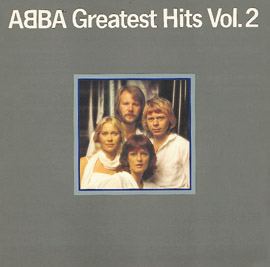
ABBA: Greatest Hits Vol. 2


(#219: 17 November 1979, 3 weeks; 12 January 1980, 1 week)

Track listing: Gimme! Gimme! Gimme! (A Man After Midnight)/Knowing Me, Knowing You/Take A Chance On Me/Money, Money, Money/Rock Me/Eagle/Angeleyes/Dancing Queen/Does Your Mother Know/Chiquitita/Summer Night City/I Wonder (Departure)/The Name Of The Game/Thank You For The Music

(“Fernando” Update: not on here either)


The story of the seventies: from campfire folkies to multinational operatives. Or, judging by Frida’s expression on the front cover photo or in her quarter of the composite photos on the inner gatefold sleeve, both of which more or less say that she’s too old for this shit, you may recognise a disillusionment with what the Swedish call “lagom.” The dictionary definition of this is: “enough, sufficient, adequate, just right.” Virtue in moderation. Make do and mend. “Just” right, “just” the right size, the right amount. The thing is, Abba want more than lagom can give – “I can’t take it for too long/My impatience slowly creepin’.”

The inner sleeve of their second Greatest Hits collection betrays nothing beyond yet more variants on the blue pyramid of Voulez-Vous - as opposed to Gary Numan’s red pyramid – and overall the record was perfect fare for casual Christmas buyers, largely mopping up a ragbag of stuff from the group’s three previous albums, not all of which were singles and the selection of which begs only the question: why only the first two parts of the Girl With The Golden Hair suite, and out of sequence? Are they trying to will into being a world where “I’m A Marionette” never happened?

Only three songs here are hitherto unaccounted for, and of these not much time needs to be spent on “Rock Me.” Why this 1975 relic of something Abba had long since left behind, with Björn growling over a stock sub-Motown backdrop as though he were Stockholm’s Alice Cooper (the answer is a prosaic and pedantic one; it was released as a single in Australia and New Zealand after the first Greatest Hits volume came out, and also was inexplicably still in their 1979 stage act)?

This leaves the two stand-alone singles which they released either side of Voulez-Vous, both of which put that record to shame. “Gimme! Gimme! Gimme!” saw them finally and firmly grasp disco and the oncoming eighties, with a vocal that exudes deep dissatisfaction with lagom. The introductory guitar line could have come off the third R.E.M. album, and then the uniquely Swedish melody – panpipes synthesised for Studio 54 reuse – makes its way through.

What is remarkable about both Agnetha’s vocal and the lyric is that she sounds obviously distressed, perhaps on the verge of a breakdown (“No one to hear my prayer”), and the lagom of watching late night TV and reading about megarich film stars isn’t nearly enough to make her feel fulfilled. But what she significantly doesn’t do is go out and try to find somebody. It is almost as if she is exulting in her misery, extolling the perceived virtues of loneliness (note how, when sampling the song, Madonna used “Hung Up” as a song about a relationship ending). Either she is sufficiently stifled not to want to step outside her front door, or it is an early manifestation of the imperial isolation of the protagonist of Leonard Cohen’s “Waiting For The Miracle.” Whichever way, as a piece of music it’s compelling and yields enough insecurity for the song and record to work as three-dimensional pop.

Whereas “Summer Night City” was, even in 1978, so ahead of the rest of the pack it was embarrassing. It notably wasn’t a particularly big Abba hit; misunderstood as an attempt to cash in on disco, it peaked reluctantly at #5 in Britain as a single. Yet its very pores show how good a grasp Abba had of the symbiotic mechanics of dance and pop, including the full-length version (sadly not present here) with its florid orchestral string introduction and a melancholy Björn chewing over “scattered driftwood on a beach.”

Then the beat fuses into action, and everything about the song, from its subtly delayed rhythms via the brilliant and naturalistic major-minor yin-yang of melody and harmony to the genuine fourplay of intermingled female and male vocals, is completely assured and sounding nothing like the seventies and everything like the eighties (and yes, they are singing “Walking in the moonlight”). Life in the day is humdrum, but come the night, the disaffected are drawn to a “giant dynamo” which gives them exactly what they want, what they maybe had always dreamed of. “It’s elusive, call it glitter/Somehow something turns me on” they sing, but then comes the giveaway:

“Some folks only see the litter/We don’t miss ‘em when they’re gone.”

Chew over that “we” for awhile and reflect as the next day dawns (the song, lyrically, is the exact reverse of “Mr Blue Sky”) – and what is there? “Nothing’s worth remembering/It’s a dream, it’s out of reach.” Perhaps there was never anything there except a beach with driftwood scattered across it; perhaps the whole thing was dreamed, like the seventies, like pop music. The unasked question being: where does everything, including “us,” go next?

But, before “we” abandon the seventies altogether, there is one slight matter to sort out.

Wednesday, 5 December 2012

FLEETWOOD MAC: Tusk


(#218: 10 November 1979, 1 week)

Track listing: Over & Over/The Ledge/Think About Me/Save Me A Place/Sara/What Makes You Think You’re The One/Storms/That’s All For Everyone/Not That Funny/Sisters Of The Moon/Angel/That’s Enough For Me/Brown Eyes/Never Make Me Cry/I Know I’m Not Wrong/Honey Hi/Beautiful Child/Walk A Thin Line/Tusk/Never Forget

”I dream a highway back to you…”
(Gillian Welch, 2001)

Have I come so far just to find myself staring at this thing again? Is life a matter of progression, or a dastardly, daft circle where no matter what happens to you or what you make happen, the same people, or records, come around again? About a decade ago, Tusk played a big part in my life, and I thought that I tried to get to its bottom – I wrote about it, both online and in print, and in early, snowy 2004 I even talked with Lindsey Buckingham about it; I now realise that I hadn’t really managed to get anywhere near it. Too trusting, yes…? But then music writers usually are.

You look at Tusk as the final part of an FMac/Rumours trilogy and, if you get close enough to it, you understand that it doesn’t even fit into that pattern, if patterns are what the record is about. It doesn’t mesh with the other two, neatly or otherwise.

What is Tusk about, then?

Radio Clyde used to do a series on late Friday nights about new albums, in that the week’s big new release would be played in full, in chronological track order, but with DJ chat and commercials to break the tracks up and dissuade home tapers (the mistake they made with Tusk in the States – one of many - was to have the album played in full, sequentially and uninterrupted, on Westwood One radio; cue armies of home tapers and resultant reduced record sales). I think the DJ was Tom Ferrie. Those were the times when commercial radio in Britain hadn’t yet deregulated/degenerated into robot Top 40-ism.

Still, one Friday in November 1979 the album featured, in full, was Tusk. I lay there in bed, listening; I was a bit baffled and Mr Ferrie, if memory serves, was severely baffled. This is the follow-up to Rumours? It sounded nothing like Rumours, indeed sounded nothing like…anything on which I could readily place a finger.

But nothing sufficiently unusual for me to want to go out and buy the thing. The closing couple of months of the seventies were stuffed with “epic” double albums, as though everyone were rushing to get the final say before the decade, the moment, expired, and there were more than enough with which to keep up. If you were Public Image Ltd. you put out a silver canister containing three tightly-packed 12” discs (which I can tell you from experience were a bugger to get in and out) and a tiny crib sheet offering only the most basic information. Otherwise there was The Wall, there was London Calling, there was even The Long Run, the Eagles’ doomed attempt to “do a Tusk” (and for me, there was the sentimental nostalgia of the RCA double reissue of Mike Westbrook’s Metropolis and Citadel/Room 315, two records which taught me a lot).

And there was the triple album from eight years previously but I haven’t got to that bit yet.

So Tusk was there, in its very odd formica/snarling dog cover – the group biting the foot that feeds it? – but I didn’t pick it up and more or less forgot about it for the next decade-and-a-half until Simon Reynolds said something about it in the Melody Maker’s Unknown Pleasures booklet. His piece was, I now see, incomplete, but very useful, and compelling enough for me to want to go and seek out one of – as he said – the many mint second-hand copies then still in circulation. I noticed the smoke and mirrors tactics of the package itself; you took the records out, only to find them encased in the most horrendously dated post-1968 hippy packaging (with that dog, which belonged to co-producer Ken Calliat, still lurking around the margins), but that wasn’t the end of it: instead of extracting the records from within those inner sleeves, you found yet another set of inner sleeves, this time in colour, depicting the group as a crazy, jerky, New Wave combo, floating around the room free of gravity.

And even then it was clear that one of Fleetwood Mac was not like the others.

I’d heard all the stories about the record, how Mayor Bradley had declared 10 October to be “Fleetwood Mac Day” in Los Angeles, about how much it had cost – the first “million dollar” album, much of which was spent on constructing a new studio to the band’s specifications – and about how comprehensively it had wrongfooted listeners waiting for the next chapter of Rumours, wanting to know how the plot was developing. About how, after going off into parallel solo orbits for a couple of years, the group reconvened, and a glum Buckingham was told that they had to get back to The Formula.

Because there is no realistic comparison to Tusk. An obscurely-packaged double album whose musicians are not really talking to each other? Well, there was the precedent of The White Album - but Fleetwood Mac weren’t the Beatles; they didn’t have that seemingly bottomless reservoir of goodwill. Essentially they were huge on the basis of one record, and there wasn’t sufficient listener-to-artist trust to ensure that Tusk would sell apart from blind instant momentum.

But Buckingham himself told me that he didn’t feel it was enough for the group to stay where they were, even with all the FUCK YOU money they had accumulated from the success of Rumours. As the ghosts of Stanley Kubrick (who coined that phrase) and real savage-like Peter Sellers (who appropriated it) would concur, FUCK YOU money can be a prison as well as a gateway to freedom. Great – you’re never going to starve, now you can do anything.

But what ARE you going to do with all that “freedom”?

New stuff was happening and time was running out and Buckingham knew both. He cut his hair and shaved off his beard. Sometime in early 1978 there was a band meeting. We’re going to go New Wave with the next one, Buckingham told them. Not be punk rock as such but utilise the energy of that music to do something different. Something no one will expect. The Clash! Magazine! PiL! It’s all happening! We have to move ahead. Whaddya think?

It was not a pleasant meeting. Stevie rolled her eyes and rhapsodised over “Quicksilver Girl” and Jackson Browne as she had done since 1971. Christine thought it was bullshit. Mick was quizzical. John stormed off to his yacht. There were raised voices, there were fights, but Buckingham was made of stronger stuff than his hero Brian Wilson and he prevailed, as the “Special Thanks to Lindsey Buckingham” production credit confirms.

Stuff went on in the studios and at home; there were drugs, there was booze and this isn’t the time or place to talk about either. The overriding question was – where were Fleetwood Mac going, and why were they going there? No easy clues in the lead title track single, a bizarre top ten hit even by 1979’s extremely bizarre standards – and the biggest UK hit single the Buckingham/Nicks version of the Mac had in the whole decade (Buckingham was extremely shocked and quite tickled when I told him this); a psychedelic-cum-Burundi marching song about sexual jealousy, sung in clenched teeth voices, most of which appeared to be versions of Lindsey. The marching band themselves, only to be suddenly broken up by a free jazz drumming workshop. And a video featuring a cardboard cutout John (he was still on his yacht) and Stevie as majorette on acid.

“Where are the chambers, Ronnie?” – the shape of eighties America to come?

I mean, who WERE these beings?

The Reynolds piece mainly concentrated on Stevie’s songs, and probably only three of the five she had on the record, and dismissed Christine in one sentence. Probably there was a need for people to remember just how much hidden power and emotion there was in her contributions, and I think when I came to write about them the feeling was still that Stevie hadn’t got her full due (and so my Uncut triple-decker review was mostly on her side; I’m sure Lindsey still hasn’t forgiven me). I got a second-hand LP copy for next to nothing – importantly so, since Reynolds advised skipping the CD edition as it only included, for space reasons, the 45 radio edit of “Sara” – and hardly listened to it until it became lost in one of many transits. In the early noughties, alone, lost and needing to listen to it once more, I picked up a cassette copy, including the full-length “Sara,” for an exorbitant £4, and eventually, when Uncut asked me to do a review, I asked for and was sent a copy of the 2004 2CD remastered edition, which remains the definitive version, including not only the complete six-and-a-half minute “Sara” (with the total running time still only going slightly beyond 74 minutes; so what were those “space reasons” then?) but also a second CD of demos and outtakes, including a priceless alternate take of “Sara” which features the following introductory studio chat:

NICKS: I wanna be a STAR!
BUCKINGHAM: (exasperated sigh)
NICKS: I don’t wanna be a CLEANING LADY!!

But what was it all for? Tusk fell on largely unsympathetic ears (was Greil Marcus the only writer to have good things to say about it at the time?) back in 1979, and was generally interpreted as a dreary, unfocused, cocaine-driven indulgence which in itself proved, apparently, why things like, er, London Calling had to happen.

Or you could look at it as the self-constructed maze of five dreadfully lost people (or four lost people plus one who knows the way out but is going to take you all around the houses rather than going straight to the exit).

Because the moment you put Tusk on it doesn’t feel quite right.

There’s Christine, reliable, reassuring Christine, to welcome us in – but how to interpret her welcome? “Don’t waste my time,” “Don’t turn me away/And don’t let me down,” sung over music that’s just a crucial little bit too slow, just that little crucial bit lacking in hooks? It’s like a warning, isn’t it – beware, what you are about to experience isn’t what you think you’re going to experience, including what you believe you are listening to right now. The harmonies are a touch too disturbing and slo-mo, the guitars too keening – it is as though the song has been photographed and come out as overexposed. It doesn’t quite reassure the listener.

Then it’s straight to Lindsey and his home studio with Kleenex boxes for drums – the epileptic two-step Sun-via-Sun Ra boogie of “The Ledge” is a particularly nasty wake-up face-slap (“You can love me baby but you can’t walk out!” – I DARE you to keep listening) with guitars sounding like Pink Floyd’s elastic bands, gurgling 62 rpm “make it babies,” lead vocal that’s hardly keeping up with itself, the whole thing over and atomising out in scarcely two minutes. You weren’t expecting THIS, now WERE you?

Back to Christine for “Think About Me,” a trying-very-hard attempt to reassure doubtful/scared listeners not to worry, this really IS Fleetwood Mac, which doesn’t really convince. The emotional table tennis match continues: Lindsey to serve, and the funereal “Save Me A Place” with its gorgeous forties/kd lang-anticipating chorus harmonies and toy drums sounding like they’re sweeping mud off the bottom of the Mississippi – in the middle you might miss:

“Guess I want to be alone.”

I want to be a rock star, but I want to be lo-fi Brian/Todd too. Can’t I be both?

Oh yes – isn’t there another voice we haven’t heard yet?

“WAIT A MINUTE BABY…”

The voice, lighting up the dark room like a thousand chilling chariots, continues:

“Said you’d give me light/But you never told me about the fire.”

A hymn to her best friend, a word to the formerly wise, and the album’s loveliest “warm” moment (there is an equivalent “cold” one that is still to come); echoes which refract off the Pacific (“Where everyone would like to drown”), a profound yet seemingly minimalist rhythm track (even on stately 4/4, Fleetwood and Mac know intuitively how and where to swing), over which are laid endless guitars, kissing each other’s lights like pregnant Catherine wheels (with heartbreaking arcs of sevenths), and harmonies plentiful and indistinct enough to power the listener to Venus.

The sun of another, better world, or is it just the North Sea coming out of the bay at St Andrews, the buoy on the perimeter fence, the shadowy figure looking at the supreme nothingness of dunes?

Words, thoughts, flying into the mind like unexpected confetti…”A great dark wing,” “Undoing the laces,” “The starling flew for days”…the profundity? “When you build your house/Call me home.”

Over garden walls, certain melodies, the love that loves to love the love that…

The way the sun shone on the northwest perimeter of the Sloane Pizza shop sign in Knightsbridge at a certain time on Sunday in July.

(Bill Pritchard’s Jolie, a forgotten classic, with blue sky and sand dunes; what the hell was he doing on the same label as the Young Gods?)

Osney Island, you had to have been there.

“There’s a heartbeat AND IT NEVER REALLY DIED.”

Lindsey belches, barks like Calliat’s dog (or maybe even like Caliban). “WHAT MAKES YOU THINK YOU’RE THE ONE?” against slippery Quality Street tin lid snare drumming.

Where is “home”?

What is “home”?

Because you can be stubbornly out there as much or as long as you like, what happens when you want to get back in and you find there’s no re-entry, or everyone has forgotten you?

If she finds and revels in love on “Sara,” then “Storms” sees Stevie slowly slipping away from love, and knowing that she is doing so. “She said: every night he will break your heart,” and so he does, and so does she leave him softly, but there’s nothing left there. Little things that call for a drink?

“I’d like to leave you with something warm/But never have I been a blue calm sea/I have always been a storm.”

The music gets quieter and quieter until there is perceived a prayer:

“Save us…and not all the prayers in the world…could save us.”

Lindsey responds with the aching (as in bleeding) anti-beauty of “That’s All For Everyone,” walking down the dying sunset-lit street where everything is different shades of yellow, a street down which he knows only he can walk. He is saying his own, warming goodbye, and it is curiously heartening that right in the middle of post-punk he is retreating back to 1966 and Pet Sounds (with the marimba from “Surf’s Up”) – hi, Dennis, is that you (the VERY low, throaty “That’s all”s)? Walking into the blue Pacific because he knows that’s the only way he’ll find…peace?

But he doesn’t like it. “Not That Funny” is more barked than sung, and is a different route to suicide, with its slam-dunk percussion and its jaunty keyboard melody, halfway between Trumpton and OMD’s “Genetic Engineering”; by its end, Buckingham has become David Thomas, the aggrieved suicide pilot at the end of “30 Seconds Over Tokyo.” “Waiting on the right time/Somebody outside the door” – is this a “friend”?

Then back to Stevie two times: “Sisters Of The Moon” is obviously set up as this record’s big “Rhiannon” scarf-twirling moment, but it doesn’t have a real hook (although Buckingham’s guitar riff is deceptively powerful and alluring). On “Angel” she is so far off the beam (her voice breaks in the line “When you walk in the room” – a reminder of younger and better times?) that by song’s end she sounds exactly like…Lindsey Buckingham.

It’s getting creepy, this game where everyone is there but pretending that everyone else isn’t, and where are the big communal sing-alongs, the easygoing tunes?

Is this really a Fleetwood Mac album?

No solution in Buckingham’s “That’s Enough For Me” which goes back to post-punk rockabilly, Billy Lee Riley out of Beckett:

“Every night that sleep don’t come it’s the same old pain it used to be”

Christine, from whom we haven’t heard for a good long while, returns for a rather disquieting triptych of songs (broken only by “I Know I’m Not Wrong,” the nearest thing on this record to a “conventional” Lindsey Buckingham song). “Brown Eyes” is maybe the most disquieting of the three; it hardly exists as a song, more as a clenched-fist tick-tock funk timebomb (and sonically the closest the record comes to Sly’s Riot). “Are you just another liar?” she asks, as sinisterly familiar guitars draw their birdlike shapes in the sky above her. “Will you take me all the way?” – and it is with no small shiver that one realises that the guitarist here is, by and large, not Lindsey Buckingham…

…but Peter Green.

No, he can’t remember whether or not he played on it, and if he did it was maybe just eight notes near the end, or did he do more than that? He had his troubles at the time, as he had done for most of the rest of that decade.

But this was the man behind Then Play On.

The man behind two of the most disturbing number two singles the British charts have ever known.

A man without whom…well, listen to Lindsey essaying “Oh Well” on FMac’s 1980 Live double album and decide for yourself.

And then “Never Make Me Cry,” a would-be “Songbird” but far more intimidating than reassuring, sung against a musical backdrop which sounds as though it is drowning in the ocean.

And “Honey Hi,” the only song on the record to feature harmonies from all three of the main voices; percussion-heavy, and still those strange, untraceable echoes, the feeling that they are still not all there at the same time.

But Peter Green

I’ve recently been looking at online fan fiction to do with The Prisoner. No mucky or dodgy stuff, just well-written stories, or in some cases novellas, which try to take the story forward. All of them centre around the question: now that he is free, what does Number 6 do with the rest of his life?

And the overwhelming answer is: he doesn’t really know.

What happens when you cut loose, or are cut loose, from what you once thought yourself to be and how you related to society in any form?

You lose a year, maybe two years, of your life; what now? Can’t go back to spying, and you might have a million (a million what?)’s worth of traveller’s cheques but where are you going to spend them?

Morecambe and Wise’s agent upon their return from an extended, not too successful stay in the USA sometime in the late fifties or early sixties: “I’m sorry, lads – I’ve got nothing for you. You’ve been away so long you’re forgotten.”

You look at everyone, every thing, with suspicion. Is it all a plant, is this freedom fake? Am I going to be taken back?

After a while of this you can feel as if you want to go back to the Village. Just to cut out this paralysing doubt. Just so you know where you are.

But what if (as in one story I read) you go back to the Village, only to find there is no Village there, but a bustling tourist resort which looks and feels nothing like the Village?

Suppose you imagined the whole thing. Two whole lost years. It happens. Everyone has their own wilderness.

It can really mess you up.

What is this – school?

“I’m not a child anymore.”

“Beautiful Child” is the key song on the record because it is the only one where Buckingham and Nicks sing together, in perfect Everly harmonies. At least, for a while. But then the voices begin to multiply, retrace the song’s various observations and the group are in danger of evaporating into nothing.

It is Stevie’s best performance on Tusk - love having been gained and lost, she realises that the past – what “they” once were, perhaps even what “rock” or “the sixties” used to be – can’t be recaptured. A fly-by-night meeting with somebody she used to know…and it’s just not there any more (note the subtle couplet of “You say it will be harder in the morning/I wait for you to say: just go” and the less subtle one of “Your eyes say yes/But you don’t say YES”).

Moreover:

“You fell in love when I was ten/The years disappeared/Much has gone by since then.”

Couple that with the “I will do as I’m told” that the voices glumly refract against each other, and we might be approaching an uncomfortable truth at the heart – if heart there be – of this history. But put this against Nicks’ increasingly hurt and agonised cries of “I wish that you were mine” and it is less the response from the “object” of “Young Girl” or “Does Your Mother Know?” than a deeper lament for something that was and…just isn’t now. Sorry, people, we didn’t come through for ourselves, we never really got back home, we missed our big chance, we got waylaid by trivia.

Or maybe it is the birthing cry of the kind of voice that is going to become dominant in the next decade; the female voice singing of and for itself, the end of this masculine-heavy girth that rock is still dragging around as the seventies lope to their finish.

Lindsey offers, in response, a gospelly chain gang chant in “Walk A Thin Line” which never seems as if it is ever going to finish.

“But no one was listening”

So now all that is left is hissing and sniping, and the dread-filled nightmare of “Tusk” (which, as Marcus correctly observed, borrows from, but does not mimic, Dub), a scarlet and yellow kaleidoscope of illusion, a crowd rumbling in the background like the San Andreas Fault, another ghost running across the screen, or the speakers, a grim, grotesque distortion of everything Fleetwood Mac in the late seventies appeared to represent (but a pain Peter Green would instantly have understood).

The nightmare fades…and Christine is back to bookend the record. “Ooh, ooh…we will never forget tonight,” she sings as brightly as she can manage, but Buckingham’s ghost has invaded the machine; we are awakening from what has been a gruesome dream – or are we? Those odd streaks of electronica in the background, the slowly dawning realisation that the tick-tock drums here are, again, Kleenex boxes. The door opens and shuts automatically, life isn’t what you thought it was and neither were Fleetwood Mac; destroying the system, from within the system. You complete the circle only to find that you’re not quite joined up with where you started.

There are only two more albums to go before we leave the seventies, and Tusk is probably the last “major” one this decade will see. It sits more uncomfortably in a seventies setting than any other seventies number one album I can think of. I don’t know whether I’ve penetrated its heart at all, or whether I’m better off tackling Bish Bosch. Perhaps I could live out the rest of my life without really knowing what the record is about. Or I could understand that, like Beverly Moss or John Drake or Lindsey Buckingham, life doesn’t end with the relief from any obligation to do something (else) with it. Or maybe Tusk is a flag of reassurance; written on the day she would have been forty-eight, it reminds me that, despite all odds and appearances, I managed to make it through the last decade, still tall enough (metaphorically) to reach for at least some stars in life’s limitless sky.

Sunday, 2 December 2012

The POLICE: Reggatta De Blanc


(#217: 13 October 1979, 4 weeks)

Track listing: Message In A Bottle/Reggatta De Blanc/It’s Alright For You/Bring On The Night/Deathwish/Walking On The Moon/On Any Other Day/The Bed’s Too Big Without You/Contact/Does Everyone Stare/No Time This Time

When I was at university in the early eighties one of my key music reference texts was The Illustrated New Musical Express Encyclopedia Of Rock. It was a paperback edition dating from, I think, around 1980, and apart from Nick Logan and Bob Woffinden being credited as editors I didn’t recognise any of the contributors from the rather more radical NME that I knew at the time. There was a companion volume, the Encyclopedia Of Jazz which I had, and still have, in brilliant blue hardback, and which was an invigorating read, written as it was by Stan Britt and the great Brian Case (broadly speaking, Britt did all the pre-Parker entries and Case the post-Parker ones), complete with excellent photographs by the tireless Val Wilmer. I don’t talk about Brian Case much, but he was one of the quieter influences on me as a writer, with the urge towards ekphrasis – to be inspired by a musician to write a work of poetry. I specifically recall his wonderful description of trombonist Roswell Rudd, who more or less leapt straight from Dixieland into the New Thing, as “riding tailgate on a spaceship.”

But enough about Mr Case for now – though do pick up his 1969 novel, The Users, if you see it going at a decent price; a work worthy of Booker shortlisting if ever there were one – and back to the Encyclopedia Of Rock (which, sad to say, I consigned to the attic some decades ago). As I say, this was written in the region of 1980, and written, I suspect, by writers of the old music journalism school who hadn’t quite got with this New Punk Thing; and so the entries on the Pistols, the Clash, etc., are composed with a degree of prove-yourselves scepticism.

Not so, however, the entry on the Police, or, as I dimly recall the book referring to them, “Police,” with no definite article, like “Buzzcocks.” Oh no; they had a huge, colourful two-page spread for their entry, were praised to the highest of heavens for being “new” yet being firmly (even then) in the lineage of Classic Rock. The entry concluded by more or less saying that “Police” were the keepers of the rock flame.

This was an attitude widely felt at the time; as Morley puts it to Ted Nugent in Ask: The Chatter Of Pop, the Police were already (in 1979) being used as shorthand by any clapped-out old rocker wanting to prove that they were still “keeping up.” “New music? Oh yeah, the Police; I LOVE ‘Roxanne.’” Although not particularly new themselves, as musicians, they looked the part and fitted the bill; anybody confused or repulsed by what was happening in 1979 music that they didn’t know before were reassured by the Police. They acted as a marker group, a buoy of rock, a point of modern reference, the rail you clung to as you ascended into unknown space.

Or maybe it was just enough to look and act new. Although on the cover of their second album the Police, even Sting, do not look as though they emerged from any decade other than the seventies (and the pre-punk seventies at that), but neither were they bearded or tie-dyed or flared. If anything, they look like a slightly less distressed Walker Brothers (stretch a narrow point for Stewart Copeland as Scott). Musically, however, they were energetic and propulsive enough to make their listeners feel like they were in the thick of the New, though clearly had sufficient chops to prove themselves to sceptics who didn’t really feel the Clash could sing.

To pop fans the Police simply became one of those acts who made far more sense being in the charts and on TV than they did playing to twelve people as support act to Alberto Y Lost Trios Paranoias (this statistic is not plucked randomly out of the air, by the way; the Police did indeed serve this function at a gig at St Andrews’ University in May 1978 – nobody at that time, of course, knew who they were, and most students were busy swotting up for their Finals). Prior to being Proper Pop Stars they were a bit of a new wave laughing stock; old fart ambulance chasers, a standing joke, A&M’s Sex Pistols consolation prize, and so forth. But then came the Wrigley’s ad (which was filmed but never broadcast; see, however, Mark Grout's comment below) and the required bleach hair and a sweep of audio clean and then, before anyone (save the Americans, who had got to them first) knew it, there they were – I remember going away to Italy at the beginning of July 1979, for a month, free from charts and music papers, only to return and discover with some shock that the Police were pop stars; “Can’t Stand Losing You,” a cheery song about self-pity and suicide threats, featuring a picture sleeve of Copeland standing on a block of ice, his head about to enter a noose, which in 1978 had struggled to reach #42 here, was, seemingly inexplicably, standing at #2, kept off number one only by the terrible “I Don’t Like Mondays.”

Those who think they know Reggatta De Blanc because of its hits may be in for something of a surprise. Fewer than half its tracks were written by Sting alone, and no less than six were either written or co-written by Copeland. Moreover, some of its songs had histories; of the five Sting numbers, two were carried over and polished up from his days in Last Exit (nothing to do with the titanic Brötzmann/Sharrock/Laswell/Shannon Jackson free-blues juggernaut of the eighties); “The Bed’s Too Big Without You” and “Bring On The Night,” the latter’s title having been changed from “Carrion Prince (O Ye Of Little Hope).” As for Copeland’s compositions, “Does Everybody Stare” stemmed from a piano exercise at music college (hence the brief Pavarotti sample in its introduction, before Sting stumbles into a honky-tonk miasma).

The reason for this unlikely recycling exercise was simple; having been somewhat taken aback by the international (though not yet British) success of Outlandos D’Amour, the Police found themselves in a fairly common second album position, namely not enough songs; and it shows. There really is little to say, for example, about any of the Copeland songs, beyond pointing out that the Police would have been taken for any dopey, jerky, “quirky” new-wavey group had “It’s Alright For You” (a “Subterranean Homesick Blues” rewrite featuring Sting as a markedly reluctant co-lead singer and co-author) or “On Any Other Day” (I can’t beat Copeland’s own spoken self-assessment in the intro – “Complete bullshit” – although I suppose its rhythm and subject matter of harassed family man ready to crack both point the way to “Synchronicity 2”) been the only evidence available (on “Contact,” despite a bridge which suggests the group must have been listening closely to Gary Numan, Sting sounds like, of all people, Jon Anderson; “Deathwish,” credited to all three members, i.e. evolved out of a jam session, does its best to disguise its Bo Diddley roots).

And yet, out of this unpromising situation, the group pulled out a couple of shots of 45 rpm genius. There is an argument that the Police, though little to do with punk, were a sort of post-punk equivalent of Cream; unapologetic and argumentative musos with an askew inkling towards pop. Through the veins of “Message In A Bottle,” you can feel coursing the same, near-reluctant but utterly instinctive bend towards pop that you find in those peculiar Cream singles ("White Room," "Badge," "Anyone For Tennis") with technical chops matching pop and emotional sensibility, as far as the latter quality can be applied to Sting. But a less apparent though perhaps more relevant point of comparison is the Jimi Hendrix Experience – although Sting is no Hendrix (even though both were subsequently admired and interpreted by Gil Evans), the key factor is the hitherto unmentioned Andy Summers, whose guitar, here and elsewhere, similarly combines hard rock bite with bluesy abstractions.

It is unsurprising that Sting not so long ago took to interpreting the ballads of John Dowland with meticulous lute accompaniment, since there is something of the medieval lay about the "o"s in the opening verse of "Message In A Bottle" - "An island lost at sea-o," "There's no one here but me-o." The swing is approximately concordant towards reggae, but Sting manages to keep his cod-Jamaican-Geordie accent under manageable rein. Underneath it all lies the familiar Bobby Vee little-boy-lost lament ("Rescue me before I fall into despair-o").

But the song's structure is immaculate. Guitars and drums clatter against and tumble towards each other in the verses, giving the air of a gritty rockist sea shanty, before everyone suddenly pulls together for the cathartic expectations of the "I'll send an SOS to the world" bridge - then, just as it's all about to boil over, the band pull back, and the title is sung astride that same uncertain major/minor key rocking horse, with Copeland's drums disappearing into dub subdivisions and Sting's stern, half-a-beat-behind-the-beat bass.

In the third verse, however, a catharsis of sorts unveils itself; Copeland's cymbals shimmer into excitable triplets and Sting's voice curdles with wonder as he surveys the "hundred billion bottles washed up on the shore." Eventually Summers' lead guitar cues a frantic extended fadeout of "sending out an SOS," Copeland champing down and clanging on the ride cymbal like an alarm clock heralding salvation. Right at the end of the fadeout the band winds up and we hear Sting winking, "sending out an Esso Blue" - so how, if at all, seriously do we take him?

In the context of 1979 pop, I would have said: very seriously indeed. The accompanying video was mesmerisingly threatening, Sting's lowering eyes and eyebrows and faintest of smiles swinging like a tempting pendulum of sex as he wheels his trolley back and forth from the camera. It was easy to understand the perceived sexiness of Sting, understanding entirely why the girls loved him, while the boys admired the musicianship - the Police at their brief best were a glorious success as popular pop, and although "Message In A Bottle" might qualify as the most rockist of all New Wave number ones, its glory is down to the fact that while it's playing, you don't notice the rockism at all.

Not all of Sting’s contributions to Reggatta De Blanc are of equal calibre. “Bring On The Night” is a good enough lighters-in-the-air concert anthem, its verse chords getting ready for “Fragile,” Copeland banging down his judge’s gavel on snare and cymbal more fervently with each succeeding chorus like a freshman Levon Helm, but Sting’s sometimes strained voice does at places remind me of Andy Fairweather-Low doing “Reggae Tune.” “No Time This Time” is a furious punky rush for the final groove as though they are frantically squeezing it onto the record, Sting’s crazily-phased vocals heading for the moshpit.

As far as the much-trumpeted fusion of hard rock with reggae is concerned – and which is only really evident in Sting’s contributions, and for which I think “hard rock” is a apter term than “new wave” or “punk rock” – I remain slightly sceptical. To these ears it sounds as though most of the time the group are trying to straighten out reggae and Dub’s myriad rhythmic detours, to take the downright strangeness of the flesh of Dub out of their fields of vision and approach. Thus, while “The Bed’s Too Big Without You” is probably the nearest the group comes to articulating what they are trying to achieve musically, it is for me far less convincing than, say, “Guns Of Brixton” or anything off the Slits’ Cut or the Pop Group’s Y because it lacks the necessary instinct that makes that music work. It functions well enough for what it is, as Sheila Hylton recognised when she did a reggae cover of the song some 18 months later, but I’m not sure it amounts to much more than its function; there is even a dub interlude with thudding, echoing toms and thwacks but no apparent desire to go into the fibre of sound – it is there, take it or leave it. In addition, it is hard to take Sting’s protestations of loneliness and desolation here, given that the song was apparently initially inspired by the suicide of his first girlfriend after he had ended their relationship (as evinced by yet more incongruous “whoo!”s dotted throughout the song) and the sentiments of “Can’t Stand Losing You.”

The instrumental title track – another jam session-cum-group composition – works better because it demonstrates greater understanding of light and shade; the introduction sounds like Sly and Robbie producing the Cocteau Twins, and even Sting’s barrage of “Ariba!”s, “Ee-yo!”s etc., which again at times makes me wonder if I’m not listening to a Yes outtake, cannot hide the empathy these three musicians obviously have for each other; never does the listener feel that these are not three people in a studio working and playing together (which isn’t necessarily the case with later Police records). Certainly one does get the feeling that the performance is saying, in an upbeat way, “welcome to the eighties.”

And then there is the record’s masterstroke, a song allegedly inspired by a drunken Sting in his hotel suite, walking round the room.

The song opens with a Coltrane citation – "Giant steps are what you take" – and few pop records have treated gravity with more defiance. The record does indeed convey the inner vision of giant spirits tap dancing across the skimming, shimmering surfaces of planets, or satellites, or humanity, with infinite grace. At this stage in pop, the Police were unparalleled in their deployment of vast acres of silence and space; yes, the dub templates and Sting’s accent are firmly in place, yet they are forever ungraspable, and "Walking On The Moon" sees them, and this particular strand of pop, at their/its finest.

The song depicts the giddiness, the floating on air, which arises from having newly fallen in mutual love; the words are minimal and haikuesque – statues of signifiers like "Walking back from your house," "Feet don’t hardly touch the ground," "I hope my legs don’t break." Throughout the song, rhythm is primarily suggested at rather than pinned down, except in the recurring section (since there isn’t really a chorus) where Summers’ guitar glistens in ambient chordality (reminiscent, in retrospect, of things like “I’m In Love With A German Film Star” by the Passions) as Sting considers the cons to match the pros ("Some may say/I’m wishing my days away") but concludes that it’s more than worth it ("You stay/I may as well play"). Having taken the plunge, the song then dives into astonishing caverns of bottomless echo, its harmonies dissolving and diffusing into its constituent elements – here, Summers’ guitar again seems miraculously hand-free, and Copeland (concentrating mainly on his cymbals) frequently either appears to be playing no rhythm at all, or else continuing subdivisions, to a level so abstract the listener has to correct himself that it isn’t Tony Williams or Andrew Cyrille playing, let alone Sly Dunbar (clusters of triplets over an elongated 4/4 beat).

That latter segment folds in on itself throughout the lengthy closing mantra of "Keep it up" – after a final verse where Sting looks forward to and swoons at the prospects of "We could walk forever" and "We could live forever" – and despite being about the Moon, metaphorical or physical, the record is so wonderfully aqueous and time-free (rather than timeless) that it makes you instantly regret that the Police didn’t really continue down this path; for a snapshot of where they might have gone, listen to side one of AR Kane’s 69. And "69," if you know what I mean, is exactly what "Walking On The Moon" suggests – and in the wider context of this record, the difference is made manifest; Reggatta De Blanc is as full, lyrically, of songs about uncertainty, insecurity and premature death ideations as Eat To The Beat but the difference here is that these songs don’t sound uncertain, insecure or suicidal; there is a deeper and more enveloping optimism which listeners sceptical about 1979 found easiest to digest.