Sunday, 27 November 2011

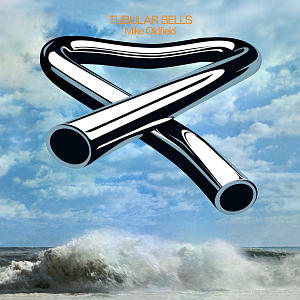
Mike OLDFIELD: Tubular Bells


(#146: 5 October 1974, 1 week)

Track listing: Tubular Bells {Part One}/Tubular Bells {Part Two}

Although many observers find it easier to consider Tubular Bells the first New Age number one album, particularly given the involvement of an actual New Age pioneer, Tom Newman, as co-engineer, it is truer to consider it the most popular offshoot of an important and under-celebrated British counterculture. Robert Wyatt summed it up best in his remarks in an Invisible Jukebox feature in the December 1995 edition of The Wire, concerning the meeting point between progressive rock and experimental jazz at the turn of the sixties:

“The connection is very simple – Keith Tippett’s personality. A West Country bloke with a great big heart and completely unlike the Old Boy Network jazz mafia that was the London scene at the time. He had all barriers down, listened to everybody, open-minded, never put anybody down, and one of his things was to get all these different musicians from different genres together – particularly the South African exiles. He would get together these bands and get us into them and then we’d meet each other. So really you could put a lot of that down to one man.”

Tippett had much the same effect on the London scene as another teenager, Kevin Drew, would have on the moribund Toronto indie scene of the nineties; he saw the possibilities, ignored the limitations and set about persuading everybody with whom he came into contact that it would be a great idea if everybody worked and developed together. And so networks developed, and thanks to astute middlemen like Joe Boyd and John Cale, these spread to the States, this time via open-minded musicians such as Dave Holland, Jack Bruce and John McLaughlin.

What I am trying to convey here is that this period – for argument’s sake call it 1968-76 – was one of the healthiest, liveliest and most creative periods for British music, and one I am truly sorry to have been too young to live through properly. In November 1970 my father took me to the Lyceum theatre in Drury Lane to see Centipede, the enormous band that Tippett put together, containing all his mates, or as many of them as he could cram onto one stage, and to say it was a formative experience is putting it far too mildly; from what I saw, heard and felt – and this would be reinforced, not just by the subsequent double album that Centipede did (Septober Energy), but also by my subsequent discovery of Carla Bley and Paul Haines’ not entirely unrelated Escalator Over The Hill - I knew that this was what I wanted from music, a true melting pot where everybody played together, regardless of genre or outside demands, where everything linked to everything else, singular pieces in a gigantic familial jigsaw puzzle.

Talk to any of the great musicians who were active at the time and are still with us – and over forty years of informal chat and note-taking with the majority of these players have provided me with much important information, which I still intend to process into book form as time and opportunity allow (as this generation is now in its sixties and seventies, and over the last few years its members have begun to pass away in earnest, it is doubly essential that this information is retained) – and they will all tell you the same story; nobody made any money out of their music, there was a constant battle with funding bodies and oppressive State radio, but the creativity stakes were never higher, the barriers never lower.

Centipede consisted of fifty or so musicians (fifty-five on the album, frequently more onstage) from all walks of musical life; rock was represented by King Crimson, Soft Machine, Patto/Timebox and the Blossom Toes, jazz by representatives from the aforementioned South African exiles (Blue Notes/Brotherhood of Breath) as well as regulars from the Westbrook/Gibbs/Collier bands, the occasional loose Canterbury cannon, old associates from Bristol whose connection with Tippett went back to the Beat Boom days, and a score of young classical graduates from the Royal College of Music. Septober Energy was a bold attempt to make this musical collision work, and was almost immediately savaged by the critics; indeed, Tom Callaghan’s sleevenote to the Beat Goes On CD reissue a dozen or so years ago appears almost to dissuade the casual browser from purchasing, so hard does he find it to summon up any enthusiasm for the music. Yet the intervening decades, and Tippett’s steady progress as a musician and band organiser, prove it to have been undervalued; the music is deceptively simple (as opposed to simplistic), largely based on slowly-evolving drones, chants and riffs over which anything from serpentine jazz-rock via Berio-esque classical abstraction and demented Irish jigs to “wa-hey” freeform freakouts is superimposed. Its cumulative power is crepuscular but immense, and the fourth side – a reworking of “Green And Orange Night Park” from the Dedicated To You, But You Weren’t Listening album – remains one of the most imposing and affecting sides of music to appear on any British record; as Elton Dean undertakes his marathon saxello solo, chants and riffs begin to build up behind and around him in a rough “Hey Jude”-type fashion before they finally engulf the solo voice and the music breaks down, or rises up, into a mass collective improvisation, miraculously held together by the iron grip of three drummers (one of whom, Wyatt, pounds merrily on his unmistakeable kit in the centre of the mix). Although not quite carrying the same impact as a concert performance – one of the saxophonists told me that the sequence in question had to be taped at ten in the morning, not the best time of the day for improvisers – the effect is mesmerising and empowering. You come out the other end thinking that anything is, and should be, possible.

If you’re wondering why I’m spending so much time talking about Centipede and Septober Energy it is because it was one of the main inspirations for Tubular Bells. This is not immediately apparent on listening; the other main influence, Terry Riley’s A Rainbow In Curved Air, is far more palpable. But the teenage Oldfield, already giving a history of folk-rock (Sallyangie, Barefoot) and toe-dipping into avant-improv-prog-pop via his membership of Kevin Ayers’ Whole World, came out of the same background and carried the same enthusiasm for adventure. Even at eighteen his invention is evident; he negotiates the treacherous slaloms of Ayers’ 1971 Shooting At The Moon, in the company of the likes of David Bedford and Lol Coxhill, with great skill and acuity; his talking bass on “May I?” already marks him out as somebody to watch. Although Ayers developed the Whole World specifically to explore further the mechanics of the pop song (which he felt that Soft Machine had somehow lost), his group is strong enough to move from song to free and back without much prompting and with a great deal of empathy.

But Oldfield wanted to develop his own music, and with some encouragement and material help from Ayers and others, he set about laying down the basic demos for Tubular Bells. Were there other influences? Apart from those stated above, yes, but it is unlikely that Philip Glass or Steve Reich (neither of whom was widely known in early seventies Britain, although Glass’ records began to be issued on Virgin in the UK shortly after Bells’ success) would have counted, let alone Bo Hansson’s oft-cited Music Inspired By Lord Of The Rings; since the latter, although available in Sweden since 1970, did not gain a British release until September 1972, by which time the main body of Tubular Bells was essentially complete (and in any case sounds much more like the Pink Floyd of Obscured By Clouds than anything by Oldfield).

Work on the piece continued fitfully, mostly in the room in Ayers’ then-home in Tottenham which Oldfield rented out, by clever manipulation of a reel-to-reel tape recorder which allowed instant overdubbing and “bouncing” of individual parts. Over this period he undertook other work to pay the rent, not only with Ayers but also as a part of the original line-up of the Sensational Alex Harvey Band (Harvey also secured Oldfield a day job as co-guitarist in the West End production of Hair). Despite all this, he remained anxious about his music’s prospects; most established record companies showed him the door, and it was only when nascent indie record shop/label proprietor Richard Branson floated the idea of Virgin Records that the prospect of releasing the music became a possibility. Engineers/talent scouts Newman and Simon Hepworth heard Oldfield’s demos, were knocked out and passed them on to Branson, who was likewise bowled over and offered Oldfield a contract and studio time to help knock the music into releasable shape (little change needed to be made to the original demos, which constituted “Part One,” while “Part Two” was composed and realised in the studio).

Released in May 1973, the record gathered enthusiastic notices, mostly of the kind which welcomed the kind of experimental rock which didn’t need to be dissonant or loud to proclaim its radicalism (which is not to decry, as many ignorant writers have since done, the important loud and dissonant work that was done in this period and write it off as “musical Marxism” – as if that were a bad thing). John Peel was so taken by the record that he spun it in full on his Radio 1 show, which in turn helped propel it into the lower reaches of the album chart; word of mouth, and particularly a BBC2 performance of “Part One" in November 1973, helped raise its popularity gradually. A concert at London’s Queen Elizabeth Hall was also organised (much to the chagrin of the then-shy Oldfield, who took much persuading to participate), involving the likes of Steve Hillage, Fred Frith and Mick Taylor, filling out the record’s many guitar parts. Eventually William Friedkin heard the record and incorporated some of its main theme into the score for The Exorcist; although in truth there is little of the demonic about Bells, the gesture worked and the record went global. By the time the record eventually climbed to number one here, some seventeen months after its release, it was as established a part of the post-Beatles rock canon as Dark Side Of The Moon.

So what is there in the record to attract the careful or carefree listener now? It remained on the UK chart for a cumulative total of 279 weeks and sold in excess of 2.5 million copies in Britain alone. Clearly this sort of achievement is not attained without some level of “comfort,” even if the record in itself is often far from “comfortable.” Although Bells sounds almost nothing like Septober, the latter’s influence is measurable in different ways – the reliance on the gradual development and building up of different themes, the rather delightful naivety of its construction (there are many “bum” notes, but these add to the charm, unlike the well-intentioned 2003 note-for-note remake, which loses in spirit what it gains in technical accomplishment), the encyclopaedic embrace that it is the music’s intention to offer.

The music is so familiar that a section-by-section breakdown is, I feel, of little use; I do note, however, that Part One in itself offers a modest flick-through history of post-1955 British rock. Developing its two major themes, one despairingly minor and the other hopefully major, the music moves through discreet but distinct emotional peaks and troughs, from delicate single-note post-Jansch acoustic figures to mass electric thrashes. Within the intervening passages there is much reference to the Blues Boom, and Peter Green’s Fleetwood Mac in particular, and a reddening sadness which never quite disappears despite such interventions as the Nasal Choir and accompanying pub piano. Eventually, just as the music is about to climb to a peak, it is cut off by bells, as though someone, or something, has died.

Out of the silence emerges a solo acoustic guitar (eventually joined by the ever-present Lowrey organ) which picks out a “Scarborough Fair”-type melody. This soon becomes brooding, however, and an angry crescendo is again abruptly stopped by a nautical line (“What Shall We Do With The Drunken Sailor”?) which turns into a long riff section sounding like Mayall’s Bluesbreakers playing with caps on their amplifiers so as not to awaken the neighbours. After a while the guitars and basses are joined by the voice of Vivian Stanshall, announcing the myriad instruments which will make up the fugal section. Inspired by, and hired because of, his work on the Bonzos’ “The Intro And The Outro,” Stanshall’s delivery works because it is done absolutely straightfaced and with tangible delight (contrast with the regrettably hammy contribution of John Cleese to the 2003 remake; he thinks he’s Basil Fawlty reincarnate, whereas Stanshall is funny because he stands stock still and makes no effort to be “funny”). The excitement builds up, and by the time of Stanshall’s awestruck “Plus – tubular BELLS!,” catharsis is released. The undertow disappears, wordless Stygian voices make the boat float, have raised the Titanic, and the music fades away to a calm sea of acoustic guitar, as though Oldfield had been in the folk club all the time, practising, the soundscapes only in his head.

Part Two is inevitably something of an afterthought, but works too in its own way; much of it is perceptibly a series of seascapes, quiet acoustic meditations conjuring up an introspective skipper, out on the ocean, gazing non-specifically at the horizon. But in the second of this sequence’s two themes there comes a heartbreaking move from minor key to major, as if to say; yes, it’s simple, but that doesn’t make it any less meaningful. Eventually high voices and rippling electric guitar begin to create waves and eddies around the music; this leads to a solemn, timpani-led, Gaelic-derived melody which steadily builds to a climax (with live timpani acting as the bassline); dissonance finally introduces itself to the picture, and a rushing “Day In The Life”-style escalation is stopped in its tracks by…

…Captain Beefheart? Well, it’s the “Piltdown Man” section, where in Oldfield has much fun grunting, growling and screaming (if such things can be described as “fun”; the screams in particular exceed those on Lennon’s “Mother”) over Steve Broughton’s drums (hence it’s a sort of “Out Demons Out” variant, though complete with bizarre touches, such as the country-and-western hoedown which appears out of nowhere midway through). Is it a parody of post-Percy cock-rock (is even Oldfield joining in the seasonal sport of outstoning the Stones?) or a continuation of “I Am The Walrus”’ joke-obscuring anguish?

Suddenly the sequence is over and we return to soft guitars, mandolins, harmonium and organ drone, improvising on the previous Celtic melody; gradually all of the instruments drop out of tempo and begin to issue seagull-like cries or oceanic ripples (here is where the Durutti Column begins). Once again the pacific Lowrey organ leads the final minor-to-major move and all settles down in a satisfactory, dying coda…or does it?

The final sequence gives the game away, and it’s a bit like having a custard pie shoved in one’s face; yes, all that you have been hearing have been clever variations on…”The Sailor’s Hornpipe”! Very classical (Elgar, Walton, Vaughan Williams) in nature, very Lord Berners in its final gesture; the original intention was to have the mix with Stanshall, as proto-Through The Keyhole narrator, chase Oldfield and Newman through The Manor, conclude the disc but it was felt safer to end with a straight reading (both are present on the 2009 Deluxe Edition 2CD set; again there is a cleaned-up 2009 remix by Oldfield himself, and again I have based this piece on the original mix, to be found on CD2). It sends its audience out, slightly baffled but oddly moved.

I do believe that the success of Tubular Bells was the definitive gesture in recognising the importance of the culture which enabled it to happen; the number of impressionable teenagers hearing this and being influenced – especially since, at nineteen going on twenty, this was a record made by somebody almost exactly their age – must be incalculable; in itself it marks the beginning of DIY indie rock – this is almost certainly the first record in this tale to be primarily conceived and performed by one person, the partial exception of Band On The Run notwithstanding. But I imagine a whole galaxy of impressionable young Brits – be they Kate Bush or Jim Kerr – hearing this and delving further, including into the other titles that Virgin was able to make possible throughout the period as a result of the record’s success; records by Henry Cow, Comus, Faust, Wyatt, Hatfield and the North, and, as a result of gaining the UK rights to the JCOA catalogue, Escalator Over The Hill itself. Certainly Bells was the record which inspired me to dig deeper into the above, and beyond; I can’t imagine anybody of the period not being affected or changed by it in some way, whether directly or indirectly. It presaged a New Age, all right, and it’s not Oldfield’s fault that the definition of that changed, or was made to change; this initial trilogy climaxed in 1975’s Ommadawn (which, since it didn’t make number one, won’t be addressed directly here) with some of Oldfield’s angriest and most pained guitar playing and writing, and an emotional climax involving the members of South African exile splinter group Jabula which is as eloquent, if far more inadvertent, a requiem for Mongezi Feza as Blue Notes For Mongezi. He moved on to other things – and there is much to consider in comparing the double 1978 releases from Oldfield and Tippett, Incantations and Frames respectively – but once you come up as part of a mutually dependent culture, it stays, I think, with you, and in you, for life.

Tuesday, 22 November 2011

Mike OLDFIELD: Hergest Ridge


(#145: 14 September 1974, 3 weeks) 


Track listing: Hergest Ridge (Part One)/Hergest Ridge (Part Two) 


Author's Note: The history of different mixes of Hergest Ridge is a complex one. Dissatisfied with the original LP mix, Oldfield remixed the album in quadrophonic sound for the 1976 Boxed set. This mix became the basis of all subsequent LP, cassette and CD pressings until the 2010 Deluxe Edition release, which includes two more remixes by Oldfield - and the main 2010 Stereo Mix is also a rather drastic edit, since over two minutes of material are lost from the original. Happily the original 1974 mix is included on CD2, and since this represents the record which people bought and made possible its inclusion in this tale, I have based my assessment on it. 


Before I get going, I should point out that I have not missed out an album; such are the whims and vicissitudes of the album chart that sometimes, not only does the follow-up to a hugely popular album get to number one where the original mostly does not, but that the follow-up can beat the original to the top. In this instance Mike Oldfield monopolised the top of the chart for the best part of a month; I pondered long and hard about whether I should have done this as a double with Tubular Bells, but on reflection the "reversed" order makes some critical perspectives possible which otherwise might not have been conceived.


Not to mention emotional ones. My father bought this album on the day of its release, and I had already been familiar with it for over a week, since it was premiered, in full, on Sounds Interesting, a late Sunday night Radio 3 programme which occupied roughly the same ground Late Junction does now, compiled and presented by the late Derek Jewell. A strange character, Jewell; middle-aged, and already a distinguished jazz and pre-rock popular music correspondent for The Sunday Times for a good two decades, he developed something of a taste for post-Beatles progressive rock and persuaded Radio 3 to run this chink in its classical armour. Essentially an Ellington and Sinatra man - he wrote more than one book about each - he also used the programme to air contemporary jazz and free improvisation releases, as well as some contemporary classical. Eventually punk came along, to which he reacted like a disappointed headmaster, and prior to his death in 1985 he was unfairly reduced to the level of "Derek Dull" caricature. 


To return to the main subject, Hergest Ridge was, as I say, premiered on Radio 3, and my father recorded it on our old Ferguson reel-to-reel tape machine (the spool still exists). Already dazzled by Tubular Bells, I was impressed by this subtle forward move. I listened to Oldfield's work intently for a further two years, following which I got distracted by other music; listening to the album anew this week was the first time I had done so in some thirty-five years, and yet every note and gesture came back to me with immediate familiarity, and not a little emotion.


I should apologise for this extended reverie in my own past, since one of the purposes of this tale is not to get too "personal"; yet the task now becomes more and more difficult since we are firmly into "my time," the period of records fondly loved and memorised at first hand (I have already intimated this to some extent with entries from 1973 onward, but this marks the point where it became, shall we say, more fervent).


And with so personal a record as Hergest Ridge it is almost as impossible to separate the listener from the music as it is to separate Oldfield the young, slightly scared twentysomething prodigy. Oldfield had not expected Tubular Bells to explode as it did, and he became extremely wary of the media attention which the record's success not only warranted but now also demanded. Richard Branson was nagging him to come up with a sequel, but there was, by Oldfield's own admission, almost nothing in reserve.


Never a city person, Oldfield searched for somewhere to live in the countryside, and found a rundown house called "The Beacon" near the Black Mountains, on the Herefordshire-Wales border. Cold, draughty and minimally furnished, the musician set to work converting one of the house's rooms into a studio. In the nearest town (Kington) he made the acquaintance of Leslie Penning, a medieval instrument specialist, and began to work with him and retrieve his muse (it is unclear who is responsible for the uncredited tin whistles and recorders which play the main theme at the beginning and end of "Part One" - possibly it is his brother, Terry Oldfield - but Penning certainly appeared on 1975's Ommadawn). From Kington there is a path, partially straddling Offa's Dyke, which ambles along gently for eight miles or so, eventually taking the walker up to the peak of Hergest Ridge, with its comprehensive, heart-stopping views of the hills of Shropshire and Wales; this provided Oldfield with his main inspiration for the record, although he has admitted that making Hergest Ridge was not an enjoyable experience ("My heart wasn't really into it"). 


Some of this precarious uncertainty certainly flows into the record. Evidently anxious not to present us with Tubular Bells II - that will come eventually, but not right now - Oldfield instead chooses to trace the same compositional structure path with more subtlety and more concentrated variation. The piece begins with a sustained drone over which various rudimentary woodwinds play the first theme (it is a bit like Eno nudging Shirley and Dolly Collins). The theme itself refers back to the climactic theme which closes side one of Bells but the harmonies and arrangement are very different; voices, glockenspiel and vibraharp make themselves evident in sundry corners of the mix before the entry of bass guitar provokes a return to lone mandolin.


The music then works again towards crescendo with military trumpet and snare drum, leading via a modulation to timpani and mild, fuzzed dissonance. A gong gives way to a Lowrey organ bridge, which in turn culminates in the side's second (minor key) theme, played by the oboe of Lindsay Cooper (Comus, Henry Cow, Mike Westbrook Orchestra, etc.). Oldfield's lead guitar superimposes an improvised top line on the basic melody.


A bell - does that ring bells? - leads to another build-up, complete with compressed falsetto voices (sounding like an army of Klaus Nomis). Rather than any outburst of temper, this falls directly into a bass riff, upon which a fugal passage is built with a third melodic theme; this immediately recalls the companion sequence at the end of side one of Bells but is more determined to reach catharsis. A pinprick shift into major key, complete with sleigh bells, introduces a Lowrey organ-dominant melody, highly reminiscent of Robert Wyatt (and I intend to get back to him before the end of this piece).


The theme becomes gradually more animated - exactly where is this leading us to? - and then the gasp, as the air clears, and we suddenly find ourselves (after a suitable rubato bridge) on top of the Ridge, and the staggering, beyond-sublime entry of David Bedford's choir as piano takes over the harmonies from guitar (again, another episode Jeff Lynne must have heard prior to conceiving "Mr Blue Sky"). It is as if pain is being laid to rest, but even here there is little time to pause; the choir suddenly dips down into the original root chord, and the primary melody, and the tin whistles, return briefly before a relatively abrupt fadeout. "Innocence."


If "Part Two" could predictably be entitled "Experience," the music bears this idea out. As with side two of Bells, it begins in a pastoral, acoustic mood with a gradual, guarded build-up of instruments, before a simple, poignant theme is developed (the similarity of many of these melodies to late period Beatles should not be unremarked upon - Picardy third specialists will have much to enjoy here). This is improvised upon by Spanish and electric guitar solos; the harmonies spiral endlessly upwards before mandolins re-enter to state the side's second theme. A short crescendo bursts into the picture before the music dies down again.


There is a return to the original theme (on Lowrey organ) but a bed of more anguished electric guitar rises in a recapitulation of the storm threat posited in "Part One." This gives way to a Philip Glass staccato organ loop, joined by a florid flute line (the latter a variation on the storm motif). Then the thunderstorm breaks for real, and thrashing armies of guitars (reputedly overdubbed one thousand times) muscle their way in for a lengthy workout. At least it sounds mostly like guitars, but the mix is subtly altered such that at times keyboards become dominant, and even the guitars themselves are mixed so closely that they virtually become machines. And somewhere in there is the ghost of punk to come, already trying to sneak in through the door.


A high-pitched organ line steadily makes its way upwards through the dense mesh, now turning into a proto-electronica raga. Characteristic of Oldfield, the music immediately drops back down as it hovers on the point of boiling over, and we are again at peace with nature. But his guitar does not sound particularly happy or quiescent; the side's main theme blooms again with the emergence of Bedford's string section. 


Yet this too offers little succour; the music ends on a suspended, restless, discordant, hushed G major seventh. This is the music of a disturbed mind, and as such its point was entirely missed by nearly all of the record's reviewers at the time. I was not able to find it online, but Ian MacDonald led the critical charge with a closely-printed two-page centrespread demolition of the record in NME; I cannot remember too much about the language but the piece's general gist was a rant against this "mentholated Vaughan Williams" (actually, as Lena quite rightly pointed out, there is a quite considerable Russian tinge to much of the music on Hergest Ridge, particularly in its second part, and it is remarkable that the author of The New Shostakovich should have missed this entirely), if not quite a plea for punk to happen.


In retrospect, this can simply be viewed as another example of MacDonald's endless self-projection masquerading as critical commentary (give him something in 1974 that he cared about - On The Beach again; strange how that record keeps turning up here as a reference point - and he transcended the dusty porthole and flew) and I think to miss the anguish and distress at work in this music is to deny vulnerability or multifocal emotionalism in any musician.


Yes, it is "well mannered," like Vaughan Williams, but like Vaughan Williams - and especially like A Pastoral Symphony, a disguised war requiem directly referred to more than once here (especially when the off-stage Margaret Price-esque wordless vocal steals into the concluding picture) - the manners are there to fool the ear. Moreover - and to get back to Robert Wyatt - Hergest Ridge is the more restrained, more concerned (and arguably darker) stepbrother of Rock Bottom (which came out at around the same time, was recorded at the same studio - The Manor - and in which Oldfield plays a small but crucial part); everything here is suggested rather than expressed (the glorious babble of Windo and Feza's horns, Wyatt's own exultation in unashamed nonsense, or should that be supersense?). Unlike Bells there is no humour, hardly any drums, nothing in the way of mischief; all replaced by a deep, consuming concern. The record's lesson, if any? You can go as far away into the back of beyond as you wish, but wherever you end up your demons stay with you. How Oldfield would address this is a story for somebody else to tell; how he got there in the first place I will deal with next.

Sunday, 13 November 2011

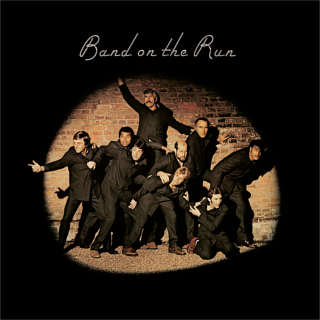
Paul McCARTNEY and WINGS: Band On The Run


(#144: 27 July 1974, 7 weeks)

Track listing: Band On The Run/Jet/Bluebird/Mrs Vandebilt/Let Me Roll It/Mamunia/No Words/Picasso's Last Words (Drink To Me)/Nineteen Hundred And Eighty Five

Observant readers will have noticed that it has been quite a while since this tale has had anything to do with Beatles band; two-and-a-half years, to be precise, since The Concert For Bangla Desh. And even Band On The Run patiently inched its way up our charts for over seven months before arriving at the top; it wasn’t an overnight success, either critically or commercially. There was little immediate talk of that then newly-minted critical cliché, the Stunning Return To Form; despite the success of “My Love” and “Live And Let Die,” I suspect most followers had resigned themselves to a life of indie Macca whimsy, not that McCartney had demonstrated any evidence of a plan or tactic in his post-Beatles life. Not that he needed to, either; wasn’t he, of all people (and especially, of all Beatles?) perfectly entitled to do as he wished? If Ram showed a contented man slightly disappointed with the outside world, and particularly with other Beatles, then he continued to drift without evident aim or bitterness; purposely odd singles (“Give Ireland Back To The Irish,” “Mary Had A Little Lamb”) and albums (Wild Life, Red Rose Speedway) which presented themselves as placid proto-blogposts, as opposed to the incensed and increasingly inward-turning proto-blogposts of Some Time In New York City and Mind Games. Meanwhile George wandered dolefully down his own road (Living In The Material World) and Ringo made the most likeable of all these records (Ringo, the only solo Beatle album to involve all four, though not on the same track). The Beatles had done their work and were dutifully ambling down their own duty-free paths. Did it matter if fewer and fewer people listened?

But something about Band On The Run burned slowly into people’s ears and they realised that, in the absence of a twelfth Beatles studio album, this would more than do. Moreover, it became clear that this was the boldest attempt by any Beatle to break free of their past, and in particular the sixties. Look at the cover of Sgt Pepper again; everyone from Huxley to Dylan, against a shining blue sky; then cut to the cover of Band On The Run, taken late at night up against a (stable) wall in Osterley Park, that rootless part of west London which isn’t quite Brentford nor quite Isleworth, featuring a ray of light in the centre of a black hole, in which we see a new seventies unlonely, hearty club, full of celebrity chums, whoever Paul and Linda could persuade to come down and participate.

McCartney was acutely aware that this was a tough and dark time, and so the album is mostly about escape in its various forms. Recorded in Lagos, Nigeria, more out of boredom than anything else, and in less than comfortable circumstances professionally glossed over in Paul Gambaccini’s essay which accompanies last year’s deluxe reissue (including a makeshift, half-broken down studio, a mugging at knifepoint which essentially necessitated starting the record again from scratch, protests of imperialism from Fela Kuti), and without Wings’ second guitarist and drummer, both of whom had quit just before the journey to Nigeria was due, Band On The Run is basically a McCartney solo DIY record, Denny Laine contributing discreet rhythm guitar and Linda contributing backing vocals and occasional Leonard Cohen-level keyboards (orchestral overdubs were taken care of in George Martin’s AIR studios upon their return to Britain, as were Howie Casey’s sax parts and Remi Kabaka’s conga part on “Bluebird”).

It is therefore a tribute to McCartney’s resourcefulness under trying (if self-imposed) conditions that Band On The Run succeeds as a “band” record. And, as implied above, it is arguably the first number one album of the seventies by a major sixties artist which physically tries to rid itself of “The Sixties” and position itself in the present. The title track makes it abundantly clear; it begins with a mournful, plodding elegy which could have fallen off the back of Abbey Road’s Long Medley and takes up where “You Never Give Me Your Money” left off; “Stuck inside these four walls/Sent inside for ever,” sings a saddened McCartney; the “if we ever get out of here” section was inspired by a remark George Harrison made at one of the Beatles’ seemingly interminable Apple business meetings.

But then guitars suddenly rev up and a large double orchestral flourish, succeeded by a sunny acoustic guitar, tells us that the wall, the prison, has been broken open, and that its author has fallen, gladly, into the seventies. The mood becomes optimistic, taunting, assured (“We NEVER will be found!” shrieks an ecstatic McCartney); we are out of the sixties straitjacket, ready to live for now. The couplet “Well, the undertaker drew a heavy sigh/Seeing no one else had come” could be a reference to the cover of Abbey Road or even a throwback to “Eleanor Rigby,” but there is no mourning here; it has been replaced by hope.

“Jet” follows immediately thereafter, and despite the lyrical obscurantism (almost certainly intended as throwaway; in Gambaccini’s notes McCartney refers to “Jet” being the name of one of his black Labrador puppies; elsewhere he has referred to a pony of the same name) is by far the most convincing of post-Beatles rockers; McCartney seems ready to push joy to the foreground and drums, piano, guitar, bass and synthesiser all appear more committed, more ravenous, than before (or perhaps since) – he too is ready and able to outrock the Stones, even including a proto-Neu!/Stereolab Moog-led motorik instrumental break (not to mention his onomatopoeic “ssssssss”s at the end of every “Jet.” But his arranging genius remains intact, and unexpected; instead of a blazing rock finale we get a takedown of a coda with Casey’s sax settling atop smooth strings.

“Bluebird” is a natural cousin to 1968’s “Blackbird” and lyrically similarly concerned with freedom, though the freedom here is more personal than political (love will see us through anything, get us anywhere). But the pace here is more relaxed, less intent on proving something, and it is among the most naturally beautiful of McCartney’s post-Beatle ballads, as well as one of the most artful; the strategically stinging cowbell which cuts through the transcendent second half of each chorus warns against complacency. “Mrs Vandebilt” is similarly like a world-weary descendent of “Ob-La-Di Ob-La-Da,” with its playground chants (the vocal call-and-responses betraying the very subtle influence of Kuti) but not emptied of hope; the song crawls to an exhausted halt after each of McCartney’s weary, exasperated “What’s the use of anything?”s, the “thing” hanging like Damocles’ sword in the bushy silence before McCartney’s shoulder-shrugging to-hell-with-it bass gets the song going again; there is an unsettling bout of maniacal laughter at fadeout.

This is perhaps the first sign that McCartney’s battle to rid himself of both sixties and Beatles may not be as easy as blasting a hole through the prison wall. “Let Me Roll It” introduces the elephant in the Wings sitting room; with a minimalist guitar riff which plays almost like the exact inverse of Clapton’s lines on “Cold Turkey,” with Elvis echo vocals on full blast against skating-rink organ and an “Oh Darling” rhythm, the song, beyond being a response or reproach to the Lennon of “How Do You Sleep?,” sees McCartney actively trying to “be” Lennon. It isn’t Stan Freberg parody level but the song’s generous openness, together with its similarly minimalist message, comes across as an extended open hand to Lennon (although, in getting his Plastic Ono mannerisms so exactly, it could admittedly be interpreted by some as a mockery; I don’t, however, believe that “mockery” has ever existed in McCartney’s working vocabulary).

“Mamunia” works through the Nigerian influences more soberly with its tribal-sounding choruses alternating with straight 4/4 medium-tempo rock verses, and although its sentiments (“The next time you see L.A. rainclouds/Don’t complain it rains for you and me”) never really rise above Guy Mitchell/Mitch Miller level, their delivery is heartfelt. McCartney is even sufficiently moved to issue a triumphant “Whoo-hoo!” after the phrase “Strip off your plastic macs”; still, the spectre of “Penny Lane” is not far removed.

“No Words” contains the album’s real open letter to Lennon; moving with as much assurance as “Happiness Is A Warm Gun,” McCartney addresses his erstwhile partner straight in the eye:

“You say that love is everything
And what we need the most of
I wish you knew, that’s just how true
My love was.”

The key words “NO WORDS FOR MY LOVE” are written in block capitals on the sleeve, so as to make things even more starkly clear, but despite the aggrieved guitar solo which is rapidly faded out at song’s end, there is no malice at work here; rather McCartney demonstrates that emotionally he has not shifted from “The Long And Winding Road” – his closing words “I wish you’d see, it’s only me…I love you” cannot help but touch the heart, and it’s only too bad that Lennon wasn’t more prepared to listen to them.

“Picasso’s Last Words,” written as an impromptu response to a challenge from dining partner Dustin Hoffman to write a song, there and then, about anything, in this case a magazine article describing the last night of Picasso’s life; giving a dinner for friends, he poured out the wine and exclaimed “Drink to me, drink to my health – you know I can’t drink any more.” At the end of the evening he retired to bed, fell asleep and shortly thereafter passed away. Back in the studio, McCartney worked on and expanded this idea into a miniature Long Medley; beginning as an appropriately drunken campfire acoustic singalong, the song then mutates into an ambient sequence, featuring some unattributed French dialogue, before breaking into a slow, stealthy, string-led revisit of “Jet” against tick-tock percussion. The strings enter in greater number for a Philly-style interlude; this in turn leads to a percussive workout (featuring Nigerian resident and studio owner Ginger Baker on tin can and shakers) culminating in a refrain of the “Mrs Vandebilt” chant, now wearing its African influences more readily. Clocking in at a shade under six minutes, it works because of its ease and patience; it is not painting an obituary for a group, but rather saying a graceful and respectfully mischievous farewell to a kinsman (as well as summing up the album itself).

The record ends by straddling no less than three decades (thus Band On The Run can also be properly described as the first “eighties” British number one album). “Nineteen Hundred And Eighty Five” is a wonderful nonsense Little Richard sex chant (or perhaps McCartney is channelling Robert Plant here) set against a varied musical background; a piano riff which anticipates Abba’s “S.O.S.,” a heavier organ/guitar-driven rock sequence and a poignant chorus/organ ballad section which provides the last link to Abbey Road and the sixties before McCartney cuts the thread; again, it sounds like he is fighting a battle, with his own history, with Lennon (note all the primal grunting and squealing leading up to the track’s climax), before whirring synths and portentous “Thus Spake Zarathustra” brass statements combine with strings to work up towards – calamity? Apocalypse? Haven’t we been here before?

A gunshot which seems to echo across the universe, then a long closing chord – E major, the same as “A Day In The Life.”

We’ve escaped. But don’t fall asleep - there's a repeat to fade of "Band On The Run" itself. The moral: we have to keep freeing ourselves over and over. Does this sound in any way familiar?

Sunday, 6 November 2011

Elton JOHN: Caribou


(#143: 13 July 1974, 2 weeks)

Track listing: The Bitch Is Back/Pinky/Grimsby/Dixie Lily/Solar Prestige A Gammon/You're So Static/I've Seen The Saucers/Stinker/Don't Let The Sun Go Down On Me/Ticking

His first studio album to be recorded outside Europe, Caribou was named after the Caribou Ranch studios in the midst of the Colorado Rockies where it was made, and was literally done on the turn of a dime, in the narrow space allotted to John, Taupin and their band between two mammoth tours where they were still expected to deliver another album, as per their original questionable contract. If much of the record sounds rushed and on a par with Goodbye Yellow Brick Road: The B-Sides then that is because the songs were written and the basic tracks laid down in the space of nine days before Elton and band headed off for Japan, leaving producer Gus Dudgeon to put them into some sort of order, do guest overdubs, etc. And still John and Taupin were able to produce at least two classics under such hothouse conditions, if indeed some pre-preparation had not already been undertaken.

While Caribou is not entirely dispensable, it is nonetheless a minor work. More problematically it raises the question of whether, in eagerly being all things to all people, Elton was not turning himself into a branded vending machine. You want New Orleans funk? English vaudeville? Cod-French balladry? Country rock? Press a button here, and it will dutifully fill up the cup. Whether any of it gets us any nearer to, or deliberately places us further from, who or what Elton John was in 1974 is another matter.

Caribou is probably best when it's being purposefully silly, and at its worst when it is simply drifting, or trying to be meaningful. I'm not sure how much a seven-minute-plus ballad like "Ticking," an onomatopoeically angry study of a good but emotionally suppressed Catholic boy (but wait, Bernie; what's with the "Grow up straight and true blue"?) who ends up randomly gunning down fourteen customers in a pub in Queens before himself being gunned down by the cops (violent piano arpeggios echoing the "rifle shells"), would have connected with British audiences, and in any case both song and performance are as mirthless and self-righteously solemn as "I Don't Like Mondays." Infinitely preferable is the dumb music hall of "Grimsby" (as with other tracks, much aided by percussionist Ray Cooper's gallery of effects, e.g. the hissing tambourine after "Strangers have found themselves fathers") with straight-faced backing vocals ("The SKINNERS' ARMS") and sudden flashes of guitar, or the deliberately daft "Solar Prestige A Gammon" (into which Taupin still manages to insert five different fishes).

For a lot of the time, though, Caribou cruises, primarily with an ear to the American market; there are ample helpings of the Tower of Power horn section, to occasional good effect; their El Barrio lines do much to make "She's So Static" more than static (along with the song's eventual evolution into a rock tango), and even within the dull blues trudge of "Stinker," Elton is still able to utter a whoop of appreciation after a particularly inventive brass line. Davey Johnstone, too, does characteristically good work on guitar; his gargles on "Static," the way his tremolo touches the "touched" in "Saucers." But "Saucers" itself is boringly "quirky," a sort of anti-sequel to "Rocket Man" where Elton finds himself kidnapped by aliens, or at least dreams about it; and when he sings "flying in formation," even Johnstone cannot do more than provide the stock effects. What does it all mean - and, more pressingly, who would care? "Pinky" is a standard issue Elton ballad which may or may not be about self-pleasure, rescued only by Cooper's rhetorical congas and some Wilsonian harmonies; "Dixie Lily" is amusing solely for the familiar spectre of Englishmen trying to be as one with American folklore.

This leaves the two classic singles, which alone prove that Elton wasn't quite yet an efficient pop machine. "The Bitch Is Back" engages in the then fashionable sport of making better Stones records than the Stones, and through its deliberately tinny transistor production it succeeds; machine gun guitar, tambourine and brass are all on the mark, and the song may itself represent a premature coming out; he doesn't give a fuck, he'll sniff glue and eat steak - though he's stone cold sober - and although he gets an intimation of his own transience ("I entertain by picking brains/Sell my soul/By dropping names") the mood is ebullient, defiant; and the coming out undertow may be amplified by the fact that partially hidden among the backing singers is Dusty Springfield, by then already someone with an eventful past and uncertain present.

But "Don't Let The Sun Go Down On Me" emerges from the record's faintly pointless bouillabase with a shocking completeness; inspired by "Surf's Up" and bearing a lyric which must have been directed at, or had been intended to be about, the 1974 Brian Wilson, Elton suddenly has to concentrate, and does so with some brilliance - he drops the camp and fake angst and abruptly sounds like a human being again (his desperate "Don't discard me"), while behind him the song builds up with an overarching naturalness (Daryl Dragon, the "Captain" of Captain and Tennille, and an important contributor to the Beach Boys' Carl And The Passions album, was responsible for the arrangement, and Toni Tennille is also on hand among the backing vocalists). Most inspired of all is when the unmistakable voices of Bruce Johnston and Carl Wilson rise like the reddest and most regretful of suns behind Elton's despair; Carl's wordless lines as the chorus reaches its climax are particularly overwhelming and affecting (and having listened to the newly-released SMiLE Sessions collection, probably even more so for this listener) - it is as if something from the promise of the sixties still survives, may yet flourish, if only we could allow it; and this at a time when the seventies were still struggling to free themselves from the apron strings of the sixties. The build-up is epic without being pompous, and if this were indeed conceived within those nine days then its achievement is all the greater, enough to provide a point for the amiable but rather directionless wanderings of the rest of the record. Caribou still did the expected business, both here and in the States; but how much more available could Elton make himself to his audience and yet remain sane and coherent? What was ahead of him but years of work, work, work? The answers, and his responses, were unexpected and often quite contradictory; nonetheless, two terrific singles squeezed out of what was effectively a contractual obligation album are no reason to go crazy, except in ways that are healthy.

Sunday, 30 October 2011

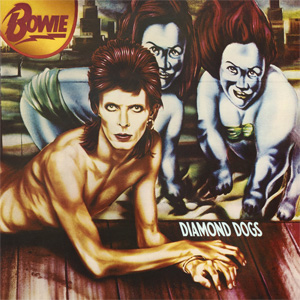
David BOWIE: Diamond Dogs


(#142: 8 June 1974, 4 weeks)

Track listing: Future Legend/Diamond Dogs/Sweet Thing/Candidate/Sweet Thing (Reprise)/Rebel Rebel/Rock 'N' Roll With Me/We Are The Dead/1984/Big Brother/Chant Of The Ever Circling Skeletal Family

I've written about Diamond Dogs before, a long time ago on another blog, and maybe it's a piece too jejeune to warrant a reprint, or perhaps its flapping spirit chimes in more tunefully with the record's curiously jejeune nature; it's hard for me, seven years and a lifetime onward, to call. Half of me says shut up and enjoy the ride, which still seems a lot shorter than its thirty-eight minutes might suggest, and the other half says, wait a moment - did any other number one album of its year, or of its time, push and challenge its audience so firmly and insecurely as this one?

The first thing to note is what a whale of a time this decomposing glitter-Bowie is having watching the world collapse. Let's face it, pop secretly always welcomes the apocalypse - think of Lydon's half-petrified, half-ecstatic tongues at the climax of "Holidays In The Sun," the impatient rush of the Annihilation mix of "Two Tribes," the bit on Public Enemy's "Burn Hollywood Burn" when Ice Cube storms into the picture with his terrifyingly authoritative "As I walk down Hollywood Boulevard"; oh yes, we pop addicts eagerly await The End, our pulses race at the very thought. "Tension, apprehension and dissension have begun," went the leitmotif of the period's most fashionable sci-fi novel, Alfred Bester's The Demolished Man, and I always secretly wanted to set that refrain to music (but somehow I always ended up in the neigbourhood of Stan Kenton's "Concerto For Doghouse"). To a ten-year-old besotted with Steve Gerber's Marvel titles and worse, caninohuman immutable apocalypse seemed a more interesting place to visit than, say, Blantyre.

Structurally the record is disjointed piffle, but that works in its favour; the main influence here is not so much Orwell (Sonia saw to any such ideas) as Burgess distilled via Lionel Bart (all these "urchins" bring Dickens far more closely to mind than droogs, but then Bowie has arguably always been far more Bart than Barthes). The lovely thing is that Bowie still, I think, feels deep down that it's 1965, or he's going to try his damnedest to make sure that it is; one of the record's key lines comes amidst the rollerball Philly-lite "1984" when he whispers "I'm looking for the treason that I knew in '65," and the non-closing loop of "Chant" resembles the Yardbirds with their legs broken, trying to relearn Bo Diddley as though relocated to Jupiter.

So much is still invested in the sixties. "Future Legend" tries to scare its listeners witless with drunken electronic pinges, "Bewitched, Bothered And Bewildered" guitar meditations and a phased Bowie growling about the end of everything but together it's a lot less authentically scary than something like "Bad Moon Rising" and a lot more like Journey To The Centre Of The Earth having taken a wrong turning in the wrong volcano. The sound of a Faces audience (complete with a distant "Wa-hey!" from Rod) brings in "This ain't rock 'n' ROLL! This is GENOCIDE!!" - startling enough in 1974, but set against a wrecked Lydon addressing a real, living San Francisco audience less than three years later at the end of "Belsen Was A Gas" ("Be a man! Kill yourself!") it sounds timid, a tad showbizzy; Bowie may well have spoken of the "diamond dogs" as so many little Rottens and Viciouses many years later, but perspective is the easiest thing to have.

Still, this is comparatively minor quibbling; the title track and "Rebel Rebel" are unstable photocopies of Stones rockers which make It's Only Rock And Roll sound arthritic (but then the latter's title track grew out of a band improvisation involving Bowie; nonetheless, "Fingerprint File" is the only thing I've ever wanted to retain from that particular mess of a record). They work because their instability is subtle; the stomps go on for just that little too long, when the ecstasy stops and the comedown and headaches start to worm their way into the listener. And also because Bowie sings them like Iggy and the Stones rather than Jagger. On "Diamond Dogs," for instance, the bridge-to-chorus dissonances become gradually more prominent, that cowbell is struck a little too hard to signify eagerness or even rhythm, and above all there is Bowie's own lead guitar (mostly; the Keef stuff on this and "Rebel Rebel" was the work of Alan Parker, who also does most of the guitar work on "1984") which manages to be both naive and commanding. Bowie's rheumatic saxes also reappear, even repeating part of the riff from "Sorrow" towards the end of "Dogs," but the message is still to leave the sixties ("Come out of the garden, baby"). "Rebel Rebel" too is much more of a gruelling grind than the 45 mix - losing the "You're so TACKY!" chuckle but not the 'ludes reference - to such an extent that it is as though Bowie is trying less to rock us than to hit us on the head with a clawhammer until we submit...and submit to what? He does sing "oh baby come unto me" before each chorus of "Dogs," nine years ahead of "Relax," and are those backing singers really singing "Bow wow wow" as though this were some unexpected midwife between Patti Page and Andre 3000?

The "Sweet Thing"/"Candidate" sequence plays like sixteen-year-old Martian Buzzcocks trying to decipher and copy the "Breathe"/"Time" equivalent from side one of Dark Side; the introduction runs backward into itself and Bowie steadily raises his crooning tone from Scott Walker beef baritone to proto-MacKenzie contralto, but still sounds dishevelled and shaken - when he reaches the quatrain "Like a portrait in flesh/Who trails on a leash/Will you see/That I'm scared and I'm lonely?" his voice quivers like Nelson marooned at the wrong end of a drawing pin. Other elements pass in and out of the song's fibres like electrocuted trains; Adam Faith pizzicato strings, a piano line in the second verse which foresees "China Girl," Bowie's wheezing palais alto, martial drums, Mike Garson finally cutting free under Bowie's careful guitar line and flooding the picture. The "sweet thing" becomes a "cheap thing" and goes straight into the babbling stream of "Candidate"; as the PR junk of the opening lines is steadily turned into the tenderest of doomed love songs (culminating in the famous couplet "We'll buy some drugs and watch a band/Then jump in a river holding hands," a dozen years ahead of "There Is A Light That Never Goes Out") the tempo progressively doubles and discordance (principally from Bowie's guitar) becomes denser. Saxes blow raspberries and at one point the song is in danger of drowning in an ocean of tambourines. Then "Sweet Thing" returns, this time as a sneer (yet set against a placid Moog/flute unison); this too eventually gives way to feedback, plectrum scrapings, the song then sloping backwards as though about to tumble off a cliff - and the penny drops; the comparable record from 1974 is Robert Wyatt's Rock Bottom (and here we think of "Little Red Riding Hood Hits The Road" which ends up doubling back on itself), a part-gibberish, part-profound response to a world no longer clearly understood or recognised (in terms of Bowie's guitar playing, see also Wyatt's languid beginner slides on the same instrument in "A Last Straw"), where expression can only be reached through multiple alter ego voices - Mongezi Feza, Gary Windo, Mike Oldfield, Ivor Cutler - in the same way that Bowie was now positioning himself as a brand, different with every new release, and distant and quick enough to ensure that his audience didn't latch onto him until he'd firmly moved on. And then, without a break, into "Rebel Rebel" and its foreshadowing of the Runaways' "Cherry Bomb" (with the latter's "Hello dad, hello mom...").

On side two he opens up a little more, just enough for us to touch the waft of his breath, if not his garment; on "Rock 'N' Roll With Me" the cheesy organ and general air of stadium rock anthem parody are mainly there to fool the ear, since this is the record's "Be My Wife" moment, the point where Bowie steps out of his self-administered straitjacket and tells it straight; his performance is too obviously heartfelt to be a put-on - listen to how he mangles the word "tears" in the first chorus, or how his cries of "I'm in tears again/When you rock 'n' roll with me" are too close not to believe. And yet, this may simply be Ziggy again ("I would take a foxy kind of stand/While tens of thousands found me in demand") taking a further step away from the crowd, and at song's end, or at least before it disintegrates under columns of dusty dancehall saxophone, he finds his own way out (after having given away the confession "No one else I'd rather be") with the line "I've found a door that lets me out." Always running away, always moving...away from what, and towards whom?

"We Are The Dead" is performed as a doped New Depression elegy (to an extent the song follows the traces of the old Busby Berkeley number "Remember My Forgotten Man," although "Baby Bankrupt" is only hinted at in the latter rather than outwardly stated). As the song proceeds - and somewhere in the background (as on "Rock 'N' Roll With Me") there is Lulu, doing her best to bring Bowie back to some kind of earth - the narrative becomes heavier, speedier, more disjointed, more pregnant with dread ("I hear them on the stairs") and the song can barely keep up, since it's falling apart with every new disintegrating barline - if glam is to die, Bowie implies, then here is the underlying, spent ugliness. The song falls apart around him, his guitar sounding more and more alien, more desperate.

But remember that "door that lets me out," and there is something in Bowie's awkwardly assured performance in "Rock 'N' Roll With Me" which gives a greater, if subtler, clue than "1984" as to where he's headed. The plastic Philly romp of "1984" - like a de-fanged "Backstabbers" - could have come from Wakeman's Journey, or, more pertinently, from Jeff Wayne's still-to-be-conceived War Of The Worlds, and Bowie races himself against the ascending bass and 'cello lines only to ram himself repeatedly into a wall built of the feeblest bricks.

The police siren electric piano at "1984"'s fade melts into the synthesised trumpet and rock opera grind of "Big Brother" - five years before The Wall, here's Bowie building glass around himself, wanting both worship and forgetfulness, a steady closedown interrupted only by a forgotten folk fragment from when times were still comprehensible - Bowie yelping "I know you think you're awful square" as though he were still fourteen, before correcting himself, and us, with the codicil "Lord, I think you'd overdose if you knew what's going down." After a high howl of "FOOL!" the backing track steadily falls out of synch; again and again, a music on the verge of collapse, and the only way out is...nowhere, a hell of Klook's Kleek, over and over ("Shake it up!" "Move it up!") which eventually slams into itself and Bowie's barked "BRA BRA BRA BRA" locked groove, that's it, you've eaten me, record off the hi-fi, cut to black, ah fuck off.

Additional notes
Bowie's supposedly suboptimal lead guitar is more punk-anticipating than anything else on or about the album, including the dog's balls; he's got enough to scrape by (and of course has Alan Parker on hand to do all the difficult bits, just like he did with Wakeman's piano on Hunky Dory) and sometimes, as he clearly tells us, scraping is the only sane response to madness, the only upright answer to collapse. Whether he meticulously thought this out is beside the point, and if you even have to think that thought, you're not the sort of person for whom Diamond Dogs was intended.

So why the top-whack session musicians rather than the Spiders? Garson's still there, but otherwise it's Herbie Flowers, Aynsley Dunbar, Tony Newman and the aforementioned Parker; does his hacking of their hackwork parallel Lou Reed's very similar approach (with some of the same musicians) on the same year's Sally Can't Dance (except that proud Lou would never admit or surrender to "technical incompetence," God bless him)? A better parallel might be what Carla Bley did a couple of years later on Dinner Music, where she hired the likes of Steve Gadd, Richard Tee, Cornell Dupree etc. - the very best to those who think in terms of "very best" - and set them against unruly playing from Bley regulars like Michael Mantler, Roswell Rudd and Carlos Ward (or perhaps "unruly" was hoped for; the record largely fails because everyone's on their best behaviour and it's only on the Carla-herself-dominant "Dining Alone" and "Ida Lupino" that the music peeks out and looks towards further abrasive disruptions of placidity - nineties Arto Lindsay, for instance).

But yes, hack it up, hack glam to death, the fucker's dead anyway and anybody alive in 1974 can see that; give it to those kids on the roof and there you go, a month at the top for a record that in its own way is as fuck-you as Metal Machine Music. But then yet another 1974 record, On The Beach - remember? - with its huge YES to life disguised as a terminal NO and in the end Bowie's going home with the grin, in case you wanted any other part of him; open the exit door next time and...how long will it take us to summon up the nerve?

Sunday, 23 October 2011

Rick WAKEMAN: Journey To The Centre Of The Earth


(#141: 25 May 1974, 1 week)

Track listing: The Journey/Recollection/The Battle/The Forest

There's a quote from a brief Q&A interview with Gilbert O'Sullivan in Uncut magazine a few years ago which has stuck with me: "Between '67 and '77, originality was rife" - the implication being that the advent of punk meant closing down more doors than it opened. Suddenly everything was absolute, year zero, black and white, and so forth, and so mavericks, major or minor, who didn't quite fit in with either camp, or who didn't bear huge metaphorical "I AM A RADICAL" postcards tied around their necks, tended to get conveyed to the reject bin. It'a also interesting that while I sat around thinking what to write about this entry, my friend Mark Sinker posted these highly pertinent comments about the small, mobile, intelligent Victorian working-class unit John Martin, and I think he's got it just about right.

Dinosaurs indeed, and so it was Rick Wakeman's fate, at least for a while, to be condemned as one; yet listening to his Journey now raises the question of how anybody could rationally (or irrationally) conceive of it as representing any kind of an enemy*. Rather it speaks to me of modest, maybe slightly foolish but ultimately harmless dreams trampled over in the snotpush of "progress," even though the record and event remain one of the cornerstones of where British progressive rock had progressed.

(*Semi-digression: This doesn't even begin to mask the hypocrisy at work in much of the year zero ground pseudo-razing; remember that Keith Levene was at the time of Topographic working as a roadie for Yes, and various stock Steve Howe tropes turn up surprisingly frequently in early PiL work. In fact I was struck, while listening to an Old Grey Whistle Test compilation on Radio 2 last week (and thinking about Wakeman and Journey) how, in terms of musical approach and dynamics, there really was very little to choose from between Steve Hackett's "Los Endos" and PiL's "Careering"; both clearly sculpted from the same block - but of course in 1979 what mattered was the context which contributed to making Metal Box one of the albums for my own desert island.)

That Wakeman sounds infinitely more at ease here than on Topographic indicates in itself that Journey was a pet project long in his mind; he'd been thinking about doing it since 1971, and even though he had in the interim scored a major solo hit with his The Six Wives Of Henry VIII project, the British arm of A&M remained sceptical about its chances. No, it's too expensive to do in the studio; fine, I'll record it live (although some sequences, including parts of David Hemmings' narration, subsequently had to be redone in the studio for various technical reasons). Can't you get better-known musicians to play the rock parts; no, these are people I have known and hung out with since the scuffling days of the late sixties, they are the musicians best able to play this music, and I want this to be perceived as a piece of music rather than a superstar jam. OK, but we're still looking at forty grand - you'll have to put up some of your own money; look, whatever I need to do, I'll do it. Call this commercial? We're not going to promote it; I've spoken to Jerry Moss in the States and he says PROMOTE it.

And, of course, Wakeman was right every step of the way; the record sold millions around the world and the green light was given for this other idea he had involving King Arthur, and some ice. Absurd? More idealistic than absurd, I'd say; Wakeman had played on the all-star orchestral version of Tommy with David Measham, the LSO, the English Chamber Choir and Wil Malone's arrangements, and (with some help from Lou Reizner) convinced all relevant parties to embark on thie next adventure. Having just negotiated the challenging bends of Ornette Coleman's Skies Of America, Measham's LSO was fully equipped to deal with anything thrown at it, and their performance on Journey is technically faultless.

Listening to Journey over thirty-seven years later, my general feelings are those of simple pleasure mixed with some melancholy, for the record is as much of a part of the lost treasure world of catch-all/embrace-all of its time as Centipede's Septober Energy or even Cardew's The Great Learning (and it cannot be a coincidence that Dick Whitbread's artwork for Frames, the great 1978 masterpiece by Keith Tippett's Ark, takes its cue almost directly from Michael Wade's work here), although ostensibly there is little "radical" about the work.

Instead, Journey is that most unexpected but most welcome of 1974 things (at least to boys of my age, or slightly older), a rattling good yarn. It came exactly a century after the publication of Jules Verne's original book, which is pretty heavily condensed here by Hemmings' velvety narrator (Richard Harris was the original choice for narrator, and was keen, though was otherwise engaged at the time of the recording; Hemmings, just eight years down the line from Blow-Up, does the story as an amiable uncle with that park still festering at the back of his mind). Tbe book is perhaps more interesting for what it implies than what it tells; it is only partly an adventure story, in greater part a disguised, if digestible, history of the evolution of man, and in equal part a long digression about the importance of talk - much of the book is occupied by lengthy, winding discussions about geological speculation, and if nearly everything that is talked about has since been scientifically disproved, that is almost beside the point; there is no real reason why Lidinbrook and Adl should embark on this trip (there are no women present) other than to speculate, fulfill or surpass notions and schemes concerning giant mushrooms, battling porpoises and sea-turtles. They get sucked into one volcano in Iceland and get flung out on the slope of "the frightening Mount Etna," and somehow that is it; some commentators have speculated on the book as a pretext for exploring the old ego-versus-id inner battle, but the remarkable thing about both book and record is the complete absence of side in either; nowhere in Wakeman's Journey does one think about their trip as being anything but a physical trip, and while there may be merit in thinking about the brown, dull stuff that fills the centre of the Earth and Britain in 1974 - and the irony of one acting as an escape from the other - the record does exactly what it says in its Disneyland Records-type sleeve.

There is probably little need to examine the music in depth; it begins with heroic Richard Strauss French horns and Moog spelling out the work's main musical motif before settling down to become a paradigm of the kind of brooding, battle-anticipating soundtrack work that would many decades later - Lord Of The Rings, Harry Potter, etc. - become lingua franca. Then Ashley Holt sings a tremulous song (the mood, perhaps logically, predicates mid-seventies American AoR pop, most pressingly "Moonlight Feels Right" by Starbuck) and suddenly, and quite unexpectedly, we are flip-flopped into Air's Moon Safari with limpid electric piano carefully traced by Malone's strings. The beat steps up to Lemon Jelly level (under Hemmings' first narrative sequence) before choir and trumpets turn the mood medieval. A cyclical vibraphone line floats under Hemmings, giving way to some Moog spider jiving wherein we are abruptly reminded that this is 1974. Plateaus of strings and woodwind cast their shadow across this picture like a slightly irritable raincloud; there are not only hints of the overture to The Lexcion Of Love here but also an unexpected glance in the direction of the later stages of the Four Seasons' Genuine Imitatioon Life Gazette. A dialogue between Wakeman's Moog and French horns introduces some mild discordance, leading into a hallucinatory drone under Hemmings' "Voices! Voices!!"

Strings cascade down into - of all things - a funky Stevie Wonder-type clavinet workout (this being the commencement of the "Recollection" sequence) leading to a long guitar solo by Mike Egan. Here Malone's strings come into their own; sinister, bitonal, cutting out from beneath (as they would seventeen years hence on "Unfinished Sympathy"), before dropping out entirely to leave the choir to chat with Wakeman's clavinet before Wonderful World Of Disney harp and flutes make their entrance. The track's central song has a lounge mood, and its frequent diversion into unexpected harmonies makes me wish Billy MacKenzie had sung it (Holt is excellent, however; very much out of the trembling Colin Blunstone school of vulnerable). Electric piano argues with 'celli and basses for awhile before hissing wind effects take us into "The Battle." Wakemsn's clavinet riff under Hemmings' "World within a world" echoes "Bennie And The Jets," before the choir ushers us back into 1974. "Save me!" shriek Holt and fellow singer Garry Pickford-Hopkins against the stoic choir, and an effective air of tension is built up, though slightly dissipated by Barney James' slightly too eager drumming.

Everything eventually breaks open into...Shaft? It's cop show theme time ("the STORM!"), perhaps denoting George Sewell in Special Branch. Again, James' drums rush the tempo a little too much, but everyone sounds as though they're having a good time, before clavinet and strings re-enter to depict the "mastodon" and the "proteus." As we move into "The Forest," the funk mood returns, the protagonists spill into one volcano and out of the other, and from nowhere we get an accelerando knees-up of Grieg's "Hall Of The Mountain King" (cop acknowledged in Wakeman's brief, breathless sleevenote). Wakeman's own Moog wobbles in underneath, like a prog octopus, and then it's time for a brassy coda, followed by a pensive strings/Moog section, and then the return of the original theme, complete with florid Rachmaninoff-via-Liberace piano curlicues, the credit-roll choir title-singing, and finally three bangs and a thunderclap of a finish, to tumultuous cheers and applause (there were visuals in the form of stage sets, clips from the 1959 James Mason/Pat Boone movie - who'd have thought Pat Boone would play such a big, if indirect, part in the development of progressive rock? - and so on). As a piece of amiable/crazily ambitious entertainment it more than does its job, and one of my greatest regrets is how little room there would be for such a manoeuvre in today's zipped-up, neatly-demographised world. An enemy? Only to our own shameful preconceptions.

Sunday, 16 October 2011

SLADE: Old New Borrowed And Blue

https://upload.wikimedia.org/wikipedia/en/6/61/Old%2C_New%2C_Borrowed_and_Blue_%28Slade_album_-_cover_art%29.jpg

(#140: 2 March 1974, 1 week)

Track listing: Just A Little Bit/When The Lights Are Out/My Town/Find Yourself A Rainbow/Miles Out To Sea/We're Really Gonna Raise The Roof/Do We Still Do It/How Can It Be/Don't Blame Me/My Friend Stan/Everyday/Good Time Gals

"How can a daydream change to a has-been?"

A successful rock band generally has two long-term aesthetic options. It can either expand and develop what it has already done, or simply carry on doing what they know they can do, and if they have any nous they will subtly tweak their music every so often such that they never fall behind the times. Among the latter I would include Status Quo, ZZ Top, the Ramones and AC/DC, and I wonder whether Slade would have been happier in this category, although they had strong ambitions to go beyond the holler-stompers which they felt might still entrap them. They had plenty of opportunity to think; Old New Borrowed And Blue was their first album to be completed following Don Powell's car crash, and I think there must have been a general feeling of, well, if we're going to go anywhere else or do anything else, now is the time to do it and go there.

This is not to say that the record represented an especially radical detour from the Slade blueprint, more that it intensifies what we already knew from Slayed? and the hits and cautiously sticks out its feelers in other directions. The group had already wrongfooted their fans with the post-crash single "My Friend Stan," which climbed with some effort to number two and which in its way was as much of a test of its audience as "Have You Seen Your Mother Baby, Standing In The Shadows"; it reappears here and remains impassively strange, Holder welding together various double entendres over a backing of tack pub piano and Dave Hill's unexpected forays into country rock (it may well have a subtler political subtext at its heart with its talk of blacking eyes and fixing ties, but I will leave that for Lena to analyse when its turn comes).

From this stem comes at least two other tracks; Hill's "Jessica" quotes on "How Can It Be" - lyrically one of the record's more wistful songs, not that you'd know it from Holder's delivery - suggest more moves in the country rock direction although Powell's flat beat and the track's general make-do-and-mend buskerdom come down more in favour of Don Partridge (but watch that odd vocal coda; CSN&Y re-orchestrated by Morton Feldman). Whereas "Find Yourself A Rainbow" is a straightforward music hall singalong, with jangling Russ Conway piano and no side ("Don't forget...April showers"), which was later covered, again without apparent irony, by Max Bygraves. In Noddy there has always been the latent need to be an all-round family entertainer, but it's worth pondering what some of the 500,000 fans who placed advance orders for this album would have made of it (is this what we queued up and paid for?).

The rest of the album is devoted to rockers and mid-tempo rock-pop lopes. The record kicks off with the group's take on Rosco Gordon's "Just A Little Bit," previously a minor hit in 1964 for Merseybeat group The Undertakers (featuring a young but already very confident Jackie Lomax on lead vocals) and covered by many other beat groups including Them and The Animals (although the latter did not record the song until their ill-fated 1977 reunion record Before We Were So Rudely Interrupted) - so Chas Chandler must have recommended the number directly. If anything, Slade appear here to be inventing AC/DC. All the elements are there: the brutally straight guitar riffs and astute use of pauses and silence, and of course Holder's Bon Scott/Brian Johnson-anticipating hoarse shriek ("TURN YER LIGHTS DOWN LOW!"). Clearly a stage favourite, the group effectively turn the volume down, to the point where they seem to be playing with muffs on their speakers, and indeed their fingers are barely touching their instruments. Holder goes down, relatively quiet, developing his mutters of "teeny weeny" into abstract grunts and purrs, before the volume is suddenly jacked up again and they aim for the Zep bravura finale ("NOT 'TIL THE END OF TIIIIIIME!" followed by a bark of "Lo-o-o-o-o-o-ove!") but land nearer a proto-punk ending of messy guitar tunings and cymbal crashes.

On "When The Lights Are Out," one of the rare Slade tracks featuring Jim Lea on lead vocals, they appear conversely (or logically) to be inventing Oasis, their "Merry Xmas Everybody" setting settling into a rolling lope ("Let me feel your warm breath on my neck/It makes me hit the sky"). Slightly too poppy to qualify as pub rock, it nevertheless seems to be a song about the group's gradual disillusionment with the crowd and with unquestioning adulation ("We'll be sitting pretty/Scream a pitiful scream"). Much the same approach is used on "Miles Out To Sea" and the music's relatively restrained arrangement works in the song's favour; such a strange, dissociated song it seems too, with its floating out to the bay, its ghostly tropes of cabaret and red-haired monks - the song is performed as though the group already knows its game is up. As with roughly half the songs on the album, it's notable that Lea's piano is markedly more to the fore than Hill's guitar.

"My Town," hitherto buried on the B-side of "My Friend Stan," is one of Slade's strongest, and in my view least acknowledged, songs - it failed even to make the 4CD Slade Box retrospective - and, also in my view, one of their most heartfelt; it begins in hard rock cliche territory with its "hot shootin' mama," but the latter is only a peg on which to hang one of the hoarsest and aggressive choruses Holder ever screamed: "THIS AIN'T YOUR TOWN! THIS IS MY TOWN!" he repeats. "GET ON YOUR WAY NOW!!" he grunts and snarls. Meanwhile the music inclines towards early Beatles but there is something about Lea's wavering, close-picked, fluctuating bassline which suggests a previously unexplored missing link between Eddie Cochran and My Bloody Valentine. The song's implications go far beyond small-town matters; this seems a clarion cry, a warning from the working class to their interfering "superiors" to stay the hell away, a proud reclamation of working class culture. Did the group consider it too near the knuckle, too close to a truth, to risk putting it out as an A-side?

"We're Really Gonna Raise The Roof" is the nearest the record comes to a standard Slade stomper but there is an unsettling extra luminosity to Holder's screech; already quoting Bob Marley ("Get up, stand up!") and spitting out those "Go, go, go!"s with all the fervour of 1969 Barry Ryan, and the band at points struggle to contain this sometimes terrible power. "Do We Still Do It" continues in the same vein, with a spectral echo in the group's shouted responses, words like "corruptible" and a mantra of "Come on!"s repeated to the point of dervish insanity, or (and I do not use such words loosely) nirvana (and feel free to capitalise that last word; there are roots here too).

On "Don't Blame Me," however, Holder is in danger of blowing himself out of this world. Offering diarrhoeic yells against some scruffily-defined wrongdoing or injustice, Holder's astonishing vocal performance - is it ADT, or multiphonics? - gets the response of a violent, frustrated, wobbling solo from Hill (the furthest out the latter ever went on record). Despite the brief Robert Plant parody near the end, the primal screams on offer far exceed those of Lennon's; this is a pain beyond rational expression. As the track plays out Holder's scream is comparable with the tenor of Pharaoh Sanders or Gato Barbieri, ululatory, completely overwhelming its surroundings; when the ending comes, it sounds as though Holder has literally squashed the rest of the band. It is a terrifying performance.

Then come the strange singles, the already mentioned "Stan" and the highly uncharacteristic waltz ballad "Everyday." The latter is a more unsettling listen than is generally acknowledged; the song itself sounds like something that Gerry and the Pacemakers would have dropped midway into their set to take the pace down (and Holder's vocal, when controlled - in the "And you know that I know" sections - sounds uncannily like Gerry Marsden), but again and again Holder breaks into his holler; and the lyric (in part made up impromptu by Lea's wife Louise) must be the most abstract, haiku-like lyric to any love song this side of "True Love Ways." "One little wave/To say you'll behave"?

Such endeavours may reveal why Slade, despite great and sustained effort, never really broke America; Holder's voice, though capable of scarifying intensity, is not the most flexible of voices. Every song, be it country rock or vaudeville or MoR ballad, involves a swift ascent to scream mode; he lacks Plant's capacity for tenderness, and in truth, even over a modest album length of thirty-one minutes, his unceasing bullroarer, because unwavering, does become more than a little wearisome; it is like standing at the other end of a megaphone of a rabble-rouser at Speaker's Corner. The closing "Good Time Gals" attempts a cowbell-driven "Honky Tonk Women"/"All Right Now"-style return to normal business but it doesn't quite convince; Holder finally dives straight into smutsville ("I wanted to suck your candy - UHH!") and worryingly beyond ("I wanted to wear your clothes"). Despite the attempted climax of four straight "GIMME!"s, the heart is, I suspect, already out of it.

On the positive side, Holder's voice, despite its sustained tone of hectoring, does appear to be slightly more comprehensible than previously; and added to this should be the fact that the likes of Joan Jett and Cherie Currie - not to mention the slightly older likes of Steven Tyler and Joe Perry - were assimilating Slade's example and using it as a template for their own subsequent adventures (the first Runaways album is almost exactly a midpoint equation between Slade, the Sweet and Suzi Quatro). If you don't worry too much about subtexts, then as a rock record Old New Borrowed And Blue is a fine, varied and lively listen. But it is pretty unmistakably the work of a group who know that they have just passed their peak and want a last, loud say before bowing out, or down. Their next move was towards cinema; Slade In Flame is a harrowing and frequently ugly (but more or less truthful) picture of a rotten music industry and what it does to people at the bottom of its bucket, but the crowds were expecting slapstick and laffs; likewise, the film's downbeat and frequently bitter songs were too cold a bucket of water for fans to stomach - despite one final big hit ("Far Far Away") and one of the best songs and performances they ever recorded ("How Does It Feel?," written by Lea as far back as 1968), the soundtrack album stopped at #6, and by mid-1976 their singles were beginning to miss the Top 50; it took a long, slow process of rebuilding their reputation on the heavy rock circuit to enable their comeback in the eighties. Now a version of Slade continues to tour, without Holder, who, sick of touring and stress, has long since switched to broadcasting and occasional acting. Their best music survives, and remains loved, as indeed do the musicians themselves; and Old New Borrowed And Blue - you decide which songs are which - is best viewed as a cheerful last wave before everyone, musicians and fans alike, goes off and gets on with the rest of their lives.