Sunday, 17 February 2013

ADAM and The ANTS: Kings Of The Wild Frontier


(#242: 24 January 1981, 2 weeks; 14 March 1981, 10 weeks)

Track listing: Dog Eat Dog/‘Antmusic’/Feed Me To The Lions/Los Rancheros/Ants Invasion/Killer In The Home/Kings Of The Wild Frontier/The Magnificent Five/Don’t Be Square (Be There)/Jolly Roger/Making History/The Human Beings

(Author’s Note: The above is the track listing of the original UK edition of the album; the US edition has a slightly different running order with “Making History” being replaced by the single B-sides “Press Darlings” and “Physical (You’re So).” In addition, initial pressings of the North American LP edition came with a bonus 7” of “Stand And Deliver” and “Beat My Guest.” The cassette version incorporated both songs into a completely different running order. To preserve sanity, I have based my comments on the UK edition.)


“Let me answer this bit, Ducky. The contemplation of me by you when a love-feeling comes leads you into that deeper, uncatastrophic madness of God-love. And when and after the whirling stuff has eased up to the surface, don’t you find me among the oozing froth and scum?...I wonder if ny feeling of need for you in me – a need for that you-quality, for you yourself, in me – is at all like your God-need, if your flesh-and-blood body was a part of my own body, like you have in some plant forms of life?”
(Stanley Spencer, letter to Hilda Carline, September 1945, quoted in Stanley Spencer: A Biography by Kenneth Pople, Collins, 1991)

“If you’re not aware of the History of Art, you’re in great danger of repeating it.”
(Adam Ant, interviewed by Mark Ellen in Smash Hits, 11-24 June 1981)

Stuart Goddard grew up in Cookham; in the fifties his lifespan would have briefly overlapped with that of one of his heroes, Stanley Spencer. Perhaps he would have been present amidst the crowds in Christ Preaching At Cookham Regatta had Spencer lived long enough to complete it. Maybe Stanley saw him wandering around Cookham High Street, one of many tomorrows, as he contemplated what to do about his series of spiritual tableaux, the church-house project, or, as he sometimes called it, “the Church of Me.”

Adam Ant, as Goddard grew up to become, was at his peak the epitome of the Church of Me in pop; with Marco Pirroni, and behind them a thousand other influences and records, they set about building a new house of worship because, well, what was the alternative? What’s the good of worship when you end up like Sid Vicious or Ian Curtis – the “big nothing” alluded to and sneered in “‘Antmusic’” is almost certainly connected to these people’s sudden nothingness.

In this house of worship, however, it was made very clear by its builders that this was going to be a church that would incorporate daftness, colour and fun. Away with dulled compromise – “Ninety eight point four’s the bore with twenty-twenty vision” says Adam in “Ants Invasion,” while “The Magnificent Five” is an extended jibe at, and gradual demolition of, the very concept of sitting on the fence.

There is not a moment on Kings Of The Wild Frontier when you are not aware, or being made aware, that this is a bold attempt to do, to create, something new. If 1980’s number one records were all about darkness and hopelessness – not all of them, maybe, but enough of them to make a difference – then Kings, at least musically, sends a bulldozer through all of it. To anyone stuck at the turn of ‘80/1, it took on the significance of a beacon, a guide out of the dark and into a new light…a New Pop.

I’ll make no bones about it; Kings, the biggest-selling album of 1981 and the longest number of weeks spent at number one since Grease, has long been a personal favourite, from the original 12-page booklet/brochure/catalogue inwards. It smelt new, never mind looked new; watching the initial performance of “Dog Eat Dog” on early autumn TOTP unlocked something in me, and I know in around a quarter of a million others, that, as the song suggested, had been long suppressed. It changed something in me that the kilts and mascara of Spandau Ballet, gusting their way through “To Cut A Long Story Short” on the same show a few weeks later, did not.

The puzzle is in what has become a rather muted long-term critical perspective towards the Ants and this album. Even back in 1985, in his reportage/elegy Like Punk Never Happened, Smash Hits reporter Dave Rimmer was rather sceptical about Adam; the book begins in earnest, as it should, with Ant and Marco in a parental semi-detached house somewhere in Harrow, somewhere in early 1980, eating cupcakes and discussing plans for a new Ant sound, involving the Burundi beat amongst other things. Also present at that meeting was drummer Jon Moss, who obligingly drove to Rockfield Studios to double up some drums for the single “Cartrouble” but turned down the job as full-time Ant. Even at that stage Ant was not messing about; ingloriously dismissed by Malcolm McLaren from his own band (which soon became three-quarters of Bow Wow Wow), he contacted Marco immediately and began to make new plans.

There was a race to beat Bow Wow Wow to get Burundi post-punk into the charts, and also a huge urge on Adam’s part in particular to get revenge on McLaren, to prove that he could do this sound and do it better, brighter and cheekier than McLaren could possibly imagine. And so it turned out; despite much press coverage and manufactured controversy, and indeed despite some at times magnificent records, Bow Wow Wow only made a fraction of the impact that the new Adam and the Ants made, and that only after the event (the cohabitation of “Go Wild In The Country” and a reissued “Deutsche Girls” in the Top 20 of early 1982 made for some interesting comparisons).

Because Adam – with the considerable help of Marco - had “it,” that aura inherent in all natural pop stars. 1979’s Dirk Wears White Sox, recorded with the old Ants, had done well on an indie basis (and has stood up with time; it’s impossible to imagine the early Franz Ferdinand not studying the record in depth), but that was no longer enough for the singer – no, what was needed was an all-out attack on, and eventual embrace of, pop, both visually and aurally. As well as conceptually.

So it is something of a surprise to find Rimmer, nearly twenty-seven years ago, being gloomily critical of Adam’s business sense and his post-stardom ways of doing business. As a Smash Hits staffer he may have been vexed by Adam’s people demanding at least twice the going rate to republish his lyrics in a magazine later decried by Paul Morley as being “glossed into a daze with their hippy parodies of teenage excitement” but since copies of Smash Hits were never given away for free, one can only conclude that Adam was firmly taking care of business – in interviews of the period, as Mark Ellen noted back in 1981, he could have given Stewart Copeland or Gary Numan a run for their money in this respect – precisely to avoid getting ripped off by another McLaren; as he got deeper into stardom, the received wisdom is that he loved showbiz far more than he had ever cared for “punk,” and ended up a symptom of the problem rather than a solution to it. Much the same argument is offered by Simon Reynolds, in his book Rip It Up And Start Again, in which New Pop is basically used as a punch bag to decry what it was presumed to have done to the spirit of punk or post-punk (whatever either would have meant).

I do think this conclusion seriously wrongheaded – it encapsulates a lack of understanding of the nature and execution of showbusiness, as if “punk” were some kind of untouchable Holy Grail of music with unassailable morals (it’s turned out to be our era’s Queen Victoria, a relentless back-harking reference point to describe times when things weren’t like “this.” Quite. The mid-seventies were, as I’ve said before, a horrible era to live through). Actually, the person of whom Adam most reminds me throughout Kings is Tommy Steele, the first British rocker to get a number one album. You may recall that “Tommy Steele” in the early days stood for the collaborative team of Steele, Lionel Bart and Mike Pratt, astute, knowing people who knew exactly what they were doing and how to make it work in the milieu in which they were confined.

(In fact, you could extend this comparison to cover The Duke Wore Jeans, that jolly nineteen-minute extended play of a Brit flick soundtrack, which I now see was Steele’s Prince Charming with its urge to take on multiple characters and points of view, to try new clothes and attitudes on, just as happened at Sex and Seditionaries and Blitz in the second half of the seventies. Indeed, in Adam’s 1982 solo number one “Goody Two Shoes,” the hook of “You don’t drink, don’t smoke – what do you do?” glances directly back at the “What Do You Do?” that two Tommy Steeles had sung at each other twenty-four years previously.)

Kings, however, is all about belonging, tribes, warpaint, identity, colour, newness – every one of its dozen songs plays like a manifesto. Yet despite Adam’s protestations that “cult” was just another word for “loser,” what is most remarkable about listening to the record now is just how uncompromising and challenging its overall sound is. In the Smash Hits interview cited above, Adam admitted to checking out completely “off-the-wall” music to absorb its influences, including jazz, tribal music and what he calls “patently dull vocal sounds.” Always looking for that one thing to take, redeploy and magnify. The 2013 listener marvels at how such extreme things as “Feed Me To The Lions” and “Don’t Be Square (Be There)” were bought, heard, loved and presumably absorbed by millions; Pirroni’s guitar is frequently so out there (despite his expressed distaste in 1981 for “freeform instrumentation”) that he makes Robert Fripp sound like John Williams.

Like the Avalanches of a generation later, Ant and Marco were gleeful pillagers, jolly scavengers, rescuing whatever they could from the smouldering bonfire of popular culture and recycling it. Much attitude from the New York Dolls, Roxy and Bowie (“Ants Invasion”), guitars from Eddy, Marvin and Morricone, chord changes from John Barry, a general fuck-you-ness from the Pistols – and it all, in late 1980/early 1981, made perfect sense.

“Dog Eat Dog” opens up the album and sounds like Mud playing Gun’s “Race With The Devil” (if you snigger at the thought of Mud being an influence on anybody, listen to “Tiger Feet” and especially “The Cat Crept In” and then try to snigger). Adam essentially tells you what they’re going to do and how it’s going to sound: “You may not like the things we do/Only idiots ignore the truth” the song and album begin, and it sounded like pop’s rebirth – coming so soon after that remarkable sequence of proto-New Pop number one singles which openly played with the notion of what a “pop single” could do (“The Winner Takes It All” – the singer subverting the song she’s been given to sing and turning a lament into a declaration of independence; “Ashes To Ashes” – a star tells his audience pretty firmly that whatever you liked before, that time is OVER; “Start!” – a record that debates directly with its listener about what a pop single can achieve, or even change; “Don’t Stand So Close To Me” – with its 26-second drone intro and not wanting to give the band’s fans the same old shit), it feels like a deliverance. Voices boom, as do timpani, and then whistles and whoops take over, just like the Ants are taking pop over.

I’m not going to say much about “‘Antmusic’” or the title track as they both reached #2 as singles, so Lena will be giving the songs a fuller analysis when she gets to them, but it’s enough here to note that the internal inverted commas of “‘Antmusic’” are probably as significant as those of “‘Heroes’” and “The ‘Sweetest Girl’.” Not that irony is an intention here - Kings may be one of the least ironic of number one albums – but that the ball which Robin Scott began to roll in 1979 with “Pop Muzik” is gathering speed, and that whatever “rock” or “punk” or even “the twentieth century” had to offer was no longer enough, if indeed it had ever been. Amongst the pictures accompanying the 2004 CD reissue of Kings is a still from the video to the title track; the five musicians are noticeably cramped in their visual field of space (and presumably also cramped by their video budget), but still the intention and bigness of the song ring out. “Kings,” the song, getting past its Chic/Sister Sledge reference (“We are family”), does demonstrate the fairly huge debt owed by the band to that Glitter thing, with its double drums and call-and-response routines; but both music and philosophy here are far more multidimensional and complex. Laments about whiteness and taming; who was really listening?

Getting past the hits, “Feed Me To The Lions” quotes the Lawrence of Arabia theme, while over a grind that recalls 154-era Wire, Adam questions the idea of “emotion” in pop (“Too emotional, am I?” he sings, accusatorily). “Los Rancheros” sees the Eddy-Morricone lineage being coloured in, with some great deep chants of “East-WOOD!” and “CLINT!” and Adam musing about “a new breed [who will] say welcome tomorrow instead of yesterday.” It’s been a long time since a number one album was this playful, or this sinister.

“Ants Invasion,” with its hapless protagonist endlessly searching for followers, or recruits, or perhaps just a new audience – note Adam’s recurring “wrong decision”s – reminds me that Kings wouldn’t, I suspect, have had the impact that it did have without the example of a parallel album from 1980, Searching For The Young Soul Rebels by Dexy’s Midnight Runners, another group led by a driven individual sick of what he’s been spoonfed and looking for newness and solidarity in unexpected quarters, regularly interspersed with comments, and at one point a monologue, directed towards the audience. The degree of commitment in Adam Ant and Kevin Rowland is certainly comparable – and so “Goody Two Shoes” could justifiably be said to be about both of them – but whereas Rowland looked to old Stax and Northern Soul 45s and used his low-set horn section (trombone, alto and tenor saxes, no trumpet) as, effectively, a lead guitar, Ant and Marco looked to everything and everybody else. This song follows most obviously in the steps of Bowie, including a ruminative acoustic interlude, but the expressed desperation (or elation?) is new.

Side one ends with “Killer In The Home,” with Adam again pondering the nobility of Geronimo over the riff from Link Wray’s “Rumble” – with some extraordinary guitar feedback in the middle section – before concluding that, actually, the killer IS the home. A complete rebuttal to the endless questing for home that has dogged number one albums these last dozen years. To achieve and change anything, you have to leave “home” – as I knew was very much the case in early 1981.

The title track opens side two, before moving to the magnificent “The Magnificent Five” which manages to paraphrase both Nietzsche (“He who writes in blood/Doesn’t want to be read/He must be learned by heart”) and Orton (“Prick up your ears”). Musically the song is schizoid, veering between almost insultingly jangly indiepop and vast protean irruptions of thrash.

“Don’t Be Square (Be There)” is one of the album’s best songs, scooting along on a proto-Orange Juice chassis of indie-funk before being thrown off course by Pirroni’s discursive guitar which gradually escalates to a tirade of white noise that would not have shamed 1970 Sonny Sharrock. All the while, unforgettable phrases pop up – “Music for a future age,” “Antmusic for Sexpeople, Sexmusic for Antpeople,” “You may not like it now, but you WILL!,” “We go like THIS *SKKKKKKKRRRHHHHNNNNNPPPHHZZZZZKKKK!*,” even “Dirk wears white sox!,” and, most crucially, “Get off your knees!” Rather than the huddled Abba masses doing sing-alongs in the nuclear bunker, closing down and in on themselves, the Ants want to break OUT, go OUTSIDE, and FIGHT BACK – and that is what 1981 audiences wanted; all of 1980 having built up steadily towards it.

Kings is also probably the most universal number one album since Pepper; kids would get things like “Jolly Roger” straightaway and sing along (and dress up), while grown-ups would smile at its metamorphosed Pistolisms (“It’s your money that we want, and your money we shall have!”). Although you could interpret this as Adam playing the double-bluff card – I note that on “Ants Invasion” he sings, “You want a thrill!/So you come and see me/A cheap line in fantasy” – it is more a joyous reclamation of punk, and its reduction to second childishness that had always been inevitable (the song plays like a punked-up Dave Dee, Dozy, Beaky, Mick and Tich, and there is some delightful atonal whistling to see the song out); for some reason “Blow High, Blow Low” from Carousel springs to my mind.

“Making History” goes by on a custom-based Bo Diddley beat and partly revisits “Dog Eat Dog” but its lyric is among the gloomiest on the record, all about bad guys with varying degrees of authority killing good guys for their own good and not knowing who is who; there were enough 1980 suspects for the song’s subject(s) here, which may be why the song was nervously pulled from all US editions of the album (“and we call this making history”). “The Human Beings” ends the record with a nervy Adam, whose yelp sounds remarkably like David Byrne, solemnly intoning the names of various Indian tribes; no more needs to be said, and so it isn’t.

Kings Of The Wild Frontier is, as far as this tale is concerned, the official starting point of New Pop (it might also be the starting point of New Pop’s funny cousin, New Romanticism, but that’s another argument for another time). It sets down pretty firmly how things – ideally – are going to be, and at the time it was unanswerable. Michael Jackson was listening, and ‘phoned Adam to tell him so; many exhausted and impatient others were, too. It succeeds magnificently in feeding high art and higher philosophy to its eager, predominantly teenage audience – did any pop star hitherto have such determination as to create an entirely new audience for themselves out of scratch? – and also, as Jon Savage commented at the time, at leaving its century, looking simultaneously back, to pre-industrial times (worship of the noble savage, tribal rites, etc.), and forward, to post-industrial times, such that even when computers would put everybody out of a job, there would still be a societal umbrella (of “rejects”) for people to shelter under (and this nearly three years before the Smiths).

Moreover, I think that no number one album since Please Please Me had managed to convey the immediate impression that This Is The New Thing and You’re All Welcome To It (you certainly couldn’t have said the latter about Never Mind The Bollocks). No number one album since then had drawn such a decisive line between the past and the future and called it the present. It is as if this record had somehow been summoned up, spirited up, by common, unheard prayer. It is the explosion which 1980 had predicated all along.

That it was also Adam’s only number one album is almost incidental in this context. As New Pop gathers pace, it will become customary for its leading lights to get just one number one album (if they are lucky) and nothing else. In truth Adam was unlucky with Prince Charming, released in November of the same year and if anything a more uncompromising album (“Ant Rap” remains one of the most extreme singles ever to go top ten; “Flowers Of Romance” gone pop), which unfortunately came up against entry #256. Perhaps there were seeds of suspicion in his audience even then; exactly where are these Ants taking us (no matter that, in the video for “Prince Charming,” he effectively invents vogueing)? In his subsequent career(s), the world was not uniformly nice towards Adam, but he has survived and recently released a new album, still raging at injustices, looking askance at his, and rock’s, past, still trying to find ways out of settling for mediocrity.

As for 1980’s legacy to 1981, the former year did arrive at two conclusions. One was that, if this was “the end,” it was necessary to fight one way’s through and find, or create, a new “beginning,” even if from songs which lyrically and schematically weren’t always optimistic.

The other conclusion, or the other lesson to be learned from the end of 1980, you may discover in the next entry.

Wednesday, 13 February 2013

ABBA: Super Trouper


(#241: 22 November 1980, 9 weeks)

Track listing: Super Trouper/The Winner Takes It All/On And On And On/Andante, Andante/Me And I/Happy New Year/Our Last Summer/The Piper/Lay All Your Love On Me/The Way Old Friends Do

She stared at the songsheet in open-mouthed disbelief. They hadn’t been speaking or socialising much of late; how could they, having divorced the year before – any association was now purely professional. As professional as she always was, however, even she found it hard to be compelled to spend so much time with people to whom she was no longer that close – days in the studio, months on the road – and yes, it did hurt.

Note how in the film Citizen Kane the camera is consistently drawing the viewer in through a miasma of darkness to focus on a central ring of light. It is a simulation of the spectator walking into the cinema and realising, too late, that they are sitting in the dark, perhaps alone.

There is the ring of light, slightly north of the centre of the cover picture, and although the spotlight is not a “Super Trouper” as such, it is shining very firmly on the four musicians, all obligingly dressed in white (this is one way of interpreting 1980’s number one albums, a constant battle between dark and light). The women are smiling, but rather grudgingly so, as if they had to smile; the men are not smiling at all. None of them is looking at us.

Who are these people surrounding them? Acrobats, jugglers, fire-eaters, possibly a soldier (where did he come from?) In front of them is what might be a velvet rope, or perhaps the boundaries of a boxing ring, or maybe even a primitive stocks. They are all applauding the musicians; on the rear sleeve, the positions are reversed, and the musicians are now applauding their audience. The rope, or whatever it was, appears to have been removed.

Although this scene is highly reminiscent of a music video which is still some time in the future – in 1980, not even the song has been imagined – it was actually a compromise; the original idea was for the musicians to be surrounded by circus performers in the middle of Piccadilly Circus, but Westminster Council said no and thus robbed us of what would undoubtedly have been one of the great London album covers. Hence the group retreated to a film studio in Stockholm, rounded up the members of two local circuses, and the pictures were taken.

They could therefore be in the middle of nowhere. Or in the middle of the road, which puts you at far greater danger of being run over.

The fun seemed to have disappeared from their music, too. It was hard to believe that it was less than five years since the glee of “Mamma Mia”; harder also for the men to cope with the fact that it had now been well over two years since they’d last had a number one in the country they called “the home of pop.” Oh, all the intervening singles had gone top five, of course – they’d hardly vanished from pop – but there seemed something stilted about the treading of commercial water, as though they were forcing themselves to go disco. Well, where else could they have gone? A punk Abba? How sad a joke would that have been? So they’d tried different gimmicks – their first 12” remix (“Voulez-Vous”), giving Björn a lead vocal on a single (“Does Your Mother Know?”), even trying to conjure up the Hootenanny Singers ghosts of old youth with “I Have A Dream.”

If the twenty-one albums which went to number one during 1980 tell us anything, it is that there were two distinct, perhaps opposing tendencies among two distinct, perhaps opposing groups of record buyers. The Woolworth’s types who didn’t really buy records as such but wanted something easy, familiar and reassuring, and the more exploratory, impatient types looking to break the mould of complacency and reach out towards something they might call a future. It’s hard to imagine who would have bought both Sky 2 and Back In Black, or The Magic Of Boney M and Telekon.

But Super Trouper sold more and stayed at number one longer than any of them, and I suspect that not only is it the record that brought these two factions together, but it might also be the year’s most frightening and disturbing number one album.

Now, the “I Have A Dream” thing, the guys had been particularly upset about that one. It was a return to the nicer old days – or so they’d hoped - and there was the children’s choir and here was the irresistible chorus to a song designed to be number one at Christmas. But then those bastards Pink Floyd, who NEVER released singles, suddenly put one out with their own children’s choir without warning! They shouldn’t say that about groups like that, they knew; still, it was difficult to maintain a straight face after reading Roger Waters saying that he’d gone off Abba about five seconds after he’d first heard them. That was a kick in two heads, but still they had to grin and settle for second place over the season.

Abba in second place to anything or anybody! The crass impertinence!


Let’s start, as the album does, with the title track, which, as a single, became their ninth and final UK number one. The last wave of the old, jolly Abba – at least until you listen to what they are singing.

“Super Trouper,” the song you think you know so well.

A song which, from the off, warns that the beams of the titular spotlight “are gonna blind me” and goes on with words of the calibre of “I was sick and tired of everything,” “Wishing every show was the last show,” “There are moments when I think I’m going crazy,” “The sight of you will prove to me I’m still alive.” A song which alters its musical backdrop, so that the verses are predominantly acoustic and introspective, while the choruses are brilliantly shined and outgoing.

But you can sense the group are struggling to keep, or make, things the way they had once been; the Glasgow namecheck ensured that the song was especially popular in Scotland (and, as a minor bookend, the most famous Scottish version of “The Way Old Friends Do” is by the Alexander Brothers, who in 1964 sold more copies of their “Nobody’s Child” single in Scotland than anybody else, including the Beatles) but I wonder how well, if at all, Abba knew the dim and dismal Glasgow of 1980; eight months later, another single inspired by the same city would go to number one – “Ghost Town” by the Specials.

Nevertheless, who is this “you” in the crowd? It can’t be the singer’s lover; wouldn’t he be backstage, or sidestage, watching her sing close up? “Facing 20,000 of your friends,” sings Frida, “how can anyone be so lonely?” If we are not far away from Gary Numan territory here, the song at least admits the possibility that it’s the fan, the listener, who keeps the musician going, wanting to breathe, and so reaches out in a way that a 1980 Numan couldn’t or wouldn’t.

The key line, however, is: “All I do is eat and sleep and sing,” and I wonder whether Voulez-Vous wasn’t simply a red herring or a delaying tactic; you may recall that the preceding album concluded with the horrifying “I’m A Marionette” and Super Trouper, the album, appears to be taking its lead from there. This is what happens when musicians turn, or are turned, into mocking puppets; this, Abba imply, is how we really are, what we truly feel.

And it’s not pleasant.

They’d started recording the new album that February, and both she and Frida were concerned about the vaguely depressing nature of many of the songs being scheduled – “Our Last Summer”? “Happy New Year” with its cold final warning of “May we all have our hopes/Our will to try/If we don’t we might as well lay down and die…you and I”? “Me And I,” with its conclusion of “Everyone’s a freak”? There was no doubt; the shadows of Samarra were closing in on them. She still carried on gamely, posing with the reluctant rest of the group for photographers, but really they were growing older, and growing apart. She could barely stand to speak to her ex-husband. No third party on either side; they drifted as extremely rich, hardly intimate couples have a tendency to do.

“On And On And On” is, fittingly, a grind, and an unending one; the overall feeling is one of a For Your Pleasure Roxy Music thrust into the midst of the affluent society they were then still mocking – one can sense Eno or Mackay itching to go crazy over the song’s top – with a chorus that peals like a nightmarish inversion of the Beach Boys’ “Do It Again.” They are at this party; somebody, perhaps a minister, comes up to them to talk of impending doom; another man tries to chat them up with a philosophical subtext (“Who are you and who are we?”), and to both the resolution is “Keep on rocking baby” – i.e. fuck off – “’til the night is gone.” Or: to hell with the end of the world, let’s dance.

Remembering that, in 1980, more than one group of musicians were making and releasing albums, convinced that it might be their last.

Still, this was something of a shock. Now she knew her husband didn’t write the words; that had always been Benny’s job. But of course he would have read them, set them to music – perhaps even sniggering in the back room at the suffering they intended to put her through? No, surely not; they weren’t exactly strangers to doing yearning ballads of lost love. Yet this one seemed ominously final. She thought briefly of the stories she’d heard about Ronnie Spector; kept a prisoner in her husband’s mansion while being forced (at gunpoint, some claimed) to sing things like “I Wish I Never Saw The Sunshine.”

“Andante, Andante” sounds like a milder “Ruby Tuesday,” while the lead guitar makes like Mike Oldfield doing a medley of tracks off String Of Hits, but really, the humiliation of it all; a song sung by a song telling its singer how to sing it (HUH??!!?). Little wonder that Frida finishes it with a final “DOWN” on the line “Please don’t let me down” which is harsh, extended and threatening.

Even the grannies-in-Arbroath songs aren’t quite coming out right, now.

But no one was holding her hostage in Polar Studios. If she didn’t want to sing the song she could just refuse; if they pressed her she could always just walk out and quit – it wasn’t as though she needed the money. Besides which, she reminded herself through internally gritted teeth, you’re a professional. Just sing it. But turn their words back upon them; sing them as though you’ve never meant anything more fervently in your life.

As for “Me and I,” a song explicitly about “split identity,” citing Jekyll and Hyde – “Sometimes when I scream,” “Good old Dr Freud” – which musically goes to Simple Minds land with chunky synth lines and teeth-chattering guitar before encompassing the middle eight of “You To Me Are Everything,” involving a vocoder and whose final conclusion echoes “Le Freak” by Chic (another way of saying “fuck off”), is this Gabriel’s intruder again? The Numan who sings in front of faceless faces by night and keeps them out of his sight by day?

Where the hell – or to what, or whose, hell – is this record taking us, exactly?

She donned headphones and waited for the backing track to start up. A dolorous piano treated with echo and Wurlitzer, just like that odd “Video Killed The Radio Star” thing they’d heard in Britain a few months earlier. It plays the mournful chorus harmonies, and then stops, pauses.

“Happy New Year” sounds as though coming from the underground bunker; a song to a world which they know in their bones has vanished (“…I see/How the [brave new world] thrives/On the ashes/Of our lives”; “Ashes To Ashes,” anybody?) and they sing – the voices are mixed forward, and harshly so, throughout the record, as though admonishing the world – not just about their world, where blue habitually turns to grey, but…well, try this:

“It’s the end of a decade/In another ten years’ time/Who can say what we’ll find?/What lies waiting DOWN THE LINE/In (sic) the end of ’89?”

Listen to how the singer bites down on, and roars out, that “DOWN THE LINE,” and it is as if Abba are laying the whole of the twentieth century to rest, angrily pulling down the curtain on the world. It is like – well, why even bother carrying on, if 1989 is only going to be as shitty as 1979 was? It’s a far more dramatic and convincing curtain-drawer on an age than “I Was Only Joking” even if only because its very structure implies that there is neither happiness nor newness – nor, maybe, even another year – on the horizon.

Abba, in the slow, procedural act of closing down the planet.

She takes the biggest breath she has ever taken in her life, and begins to sing:
“I don’t wanna talk about things we’ve gone through.
Though it’s hurting me, now it’s history.”


“Our Last Summer” acts as a sort of sister song to “Happy New Year” except that it concentrates on shutting down – or shutting up – the sixties, and everything that might once have represented. The setting is 1967 Paris, full of Notre Dame tourist jams, walks along the Seine, “the flower power” and “morning croissants,” and the song seems as resolutely forlorn as Roxy’s “Song For Europe,” because the listener is never allowed to forget that this scenario, this Camelotian ideal, is now gone, extinct, wiped out. Lasse Wellander’s guitar solo is played like a presumptive Brian May. But the undertow of hissing hatred with which the following verse is sung is genuinely disturbing, just as it is hurtingly regretful:

“And now you’re working in a bank/The family man/A football fan/And your name is Harry…/How DULL it seems.”

Hang on, the listener may wish to interject at this point, wouldn’t he have been named Harry back in 1967?

Or is there nobody left to call him Joe?

That verse is, I think, absolutely crucial to any understanding of this record, because it speaks of a deeper betrayal; that we went through all this once, that you believed it, or told me that you believed in it – but you ended up selling out like all the rest, like everyone we laughed at…

(“Well, listen Mr Average YOU’RE A JERK” – oh yes, that’s coming down the pipeline…)

…like everyone we hated, like our PARENTS.

Because, “Harry the Hippie,” something in you DIED then, or you cut something off, or let somebody else cut it off, and you’re a ghost, just like Jack at the end of Revolutionary Road - making out you’re doing fine, but you know “they” got to you…

YOU’RE ANGRY, HARRY, BECAUSE YOUR LIFE DIDN’T TURN OUT TO BE AS GOOD AS YOU THOUGHT IT WAS GOING TO TURN OUT IN 1967.

Is that who bought Super Trouper? The disappointed floating voters of 1979 who imagined Mrs Thatcher was going to “change” everything for the better but now maybe hate themselves more than they’ve ever done? Who see their lives being mortgaged down the toilet pan? Who loathe themselves because they settled for being twelfth best?

But you bastards won’t let it lie, will you? she thought to herself. The song was one about a cuckolded, humiliated lover, forced to hand over the keys to her life to someone else. This wasn’t the noble, selfless grace of “Make It Easy On Yourself”’s self-sacrifice. No, the song is, she discovers, all about the necessity to grit one’s teeth as one’s life and purpose are being destroyed in front of her, defenceless.

From the title inwards, “The Piper” sounds as though it’s going to be a final flourish for the appealing campfire singalong side of Abba, but even this sounds out of focus; the song’s subject appears to be the Pied Piper, luring its hypnotised victims towards a dance of death. The recorder feels much more like Gryphon than James Last; the vocals are overcooked, the arrangement not quite right. It is like a lost song from The Wicker Man (well, didn’t that feature a Swedish woman as well?).

Clutching at straws, they find that the old game cannot be played any more.

The song builds up in intensity, as their ballads always tended to do, and she rides its waves – “I was in your arms,” “Building me a fence,” “Building me a home” are all sung as succeeding ascending steps of a spiral staircase leading to nowhere except a huge fall. She noted the Thomas Hardy allusion of “The gods may throw a dice/Their minds as cold as ice,” and all the while she is finding it less and less easy to control her flood of feelings, her surfeit of sorrow – “It’s simple and it’s plain! Why should I complain?” she nearly cries.

“Lay All Your Love On Me” revisits, briefly, the disco age, but its scope is wider than anything on Voulez-Vous and its lyric and delivery much more hysterical, perhaps in the gynaecological sense of the word, as it sings of a love, or possession, that inspires jealousy, paranoia, self-hate…anything but love. The music veers from its basic “Don’t Leave Me This Way” template to synths and voices rudely being turned off at the wall socket in the fashion of “We Don’t Talk Anymore,” before vocoders and overdubs materialise at the choruses to give a catholic grandeur that conveys the mood of a remix of Rachmaninov’s Vespers (via “I’m Not In Love”), echoing stately and mournfully. The 1980 Brotherhood of Man must have listened to this and wept. The people of 1981 and 1982 who would follow Abba’s lead must have listened to this and been inspired.

Then, the song pauses and lowers down to knee height for the difficult bit, the most bastard bit for her to sing. She feels as though she is stabbing herself as she sings it, quietly:

“But tell me, does she kiss like I used to kiss you? Does it feel the same when she calls your name?”


And then the song segues straight into applause, the group finally facing their audience, “The Way Old Friends Do,” recorded live at an unspecified location.

A woman divorced by her husband being asked to sing a song co-written by her husband wherein she asks her ex-husband whether his new partner is as good as she was. “But what can I say? Rules must be obeyed.”

They huddle in the shelter, they know they have had their bad times (“After fights/And words of violence”), but they will stay together, “we all” will stay together because, as 1980 hastens towards its dying light, there is nowhere else for “us” to go.

Maybe one of these lovers of today weeps for reasons that are not entirely clear.

Then the song fills up again, with distant echoes of keyboard and backing vocals – Frida is practically a poltergeist on this song – and as she reaches the penultimate chorus it feels like the end of everything. Again the quiet piano to give her a final, doomed chance of defiance:

“I don’t wanna talk if it makes you feel sad.
And I understand – you’ve come to shake my hand.
I apologise if it makes you feel bad
Seeing me so tense.
No self-confidence.”

She looks at him on the other side of the control booth, eyes burnished with hatred, visibly shaking, audibly trembling.


“OH I DON’T CARE WHAT COMES TOMORROW/WE CAN FACE IT TOGETHER/THE WAY OLD FRIENDS DO.”

Not for one second do you believe them.

Not even when the bombastic “Faithful Hussar” fanfares lurch out; all these people gathered in a single, spotlit place in the dark, perhaps the last place to exist on Earth, to sing an anthem, one which might unnerve or inspire.

The only way to end this bitter, harsh and aggressive record. A record which says: “the façade is gone; WE are Abba, and ladies and gentlemen, we are in trouble and probably falling apart. You have been privileged to witness our collapse.”

“But you see,” she says, “THE WINNER TAKES IT ALL!” And with that the job is done; she removes the headphones, is out of the door before the song has even ended. She will have to come back to overdub some backing vocals but at that second she never wants to come back into that studio again. And also the professional in her takes over; as a horribly real weepie it is likely to be one of the biggest hits they’re ever likely to have, even by their own standards, and, well – it has to be promoted, contracts must be honoured, taxes paid. It is still very far from over. But, just as she reaches the studio door, she catches in the corner of her eye Björn and Benny, sitting there, open-mouthed at what they’ve just recorded and listened to and watched; maybe even thinking this is far too raw to come out even as a B-side. Her performance is, she knows, genuine and candid and shrivelling and accusatory; she has sung her hate disguised as regret and gamesmanship right back at them. Yes, Agnetha, she tells herself, that was the greatest performance of your life, maybe even the most emotionally naked vocal performance on a pop record by anyone – and you didn’t even need to perform. You showed them, all right.

The cover. All these performers, these outcasts.
You’re not implying…?
Who are you?
And who are we?
It’s obvious, isn’t it? 1991, a music video set in a gymnasium, all done in slow motion.
My God!
Some people thought that.
So “We will always see it through…”
Leads us to “all in all is all we are.”
It was quite an adventure, this 1980.
I couldn’t have done it alone. It tired me out, it exhilarated me, it contains some of the most challenging music to appear in any year this story is covering.
People will not find 1981 such a comfortable ride.
Especially as it begins with two important hangovers from 1980.
Ah yes. This album managed to stay at number one right through…
Don’t give it away just yet. Perhaps that emphasised how conclusive and colossal this record was.
The “Winner Takes It All” stuff…
…was slightly remixed from what I wrote about the song on Popular. But it was always my intention that it would end up here. Who did you say you were again?
Later. You have to give the readers something to look forward to.

Sunday, 10 February 2013

Barbra STREISAND: Guilty


(#240: 8 November 1980, 2 weeks)

Track listing: Guilty (Duet with Barry Gibb)/Woman In Love/Run Wild/Promises/The Love Inside/What Kind Of Fool (Duet with Barry Gibb)/Life Story/Never Give Up/Make It Like A Memory

What is it with Barbra Streisand and her need to snuggle up to tall, beardy men? At least Guilty does not feature hamfisted attempts by Barry Gibb to be Jim Morrison or Alice Cooper, but in all other senses it is the musical sequel to A Star Is Born - “Make It Like A Memory” indeed. This is also the third Streisand album I’ve had to write about in as many years and I have to come to the conclusion that Streisand, try as she might, cannot do pop. Pop music is beyond her ken. The singing of pop music involves taking the listener into your confidence, persuading you to believe in them. Whereas Streisand hectors her listener, demanding that she be believed.

I am not sure whether this represents much of an advance on Spirits Having Flown or her second Greatest Hits volume; in a lot of ways Guilty may signal a regression. At the time it must have felt like a clash of some sort of titans, Barbra and the Bee Gees, both intent on finding their own ways out of disco (Streisand having come off a US number one duet with Donna Summer), but the clash here feels more like an extended yawn of overcooked melancholy. Note the billing on the cover: Streisand, the surname alone, like Sinatra, or Olivier, or God. One’s credulity stretches as neatly as the white silk in which she and Gibb are dressed.

The Bee Gees let it be known that they were more than keen to work with Streisand; Streisand’s people read that and considered. Robert Stigwood was brought in for negotiations: well, he told Streisand, there are three Bee Gees, so they’ll want 75% of royalties. But they all sound the same, protested Streisand, how much would just one cost? So it was agreed that she would work with Barry alone, although the writing credits tell a different story; four of the nine songs (including “Woman In Love”) were co-written by Barry and Robin; the title song was co-written by Barry, Robin and Maurice; three songs were co-written by Barry with co-producer Albhy Galuten. Only “The Love Inside” was composed by Barry alone.

But there is another kind of temporality at work; both sides start off with a Streisand/Gibb duet, but while Barry is audibly very much in evidence throughout side one, hovering in the background or middleground, he essentially disappears from side two after “What Kind Of Fool.” And the album, which I suppose constitutes some kind of song cycle, follows this same path; a relationship that quickly goes wrong, with bitterness, recrimination, aloneness, and so forth.

What can it all mean; and, in late 1980, after what we’ve been through, who really cares? Maybe it’s a coupling of uncertain origin – the title track suggests it’s maybe not straight up – and they don’t agree, or they see other people, or they have “obligations,” or whatever…but the performances in particular don’t encourage me to want to find out more. Silken and, yes, smooth, performed by Premier League session players, the best anybody’s money could get…but it all sounds so empty, so glossily vacant, that one’s mind drifts to Steely Dan’s contemporaneous “Glamour Profession” (and Gaucho and Guilty have several players in common; maybe each record needs the other to make full sense) where the vacancy is brilliant enough to blind or obliterate the listener; such careful replicas of ebullience, such delicately-placed lines and changes, all to illustrate a story of superstar drug abuse and cocaine running, as firmly closed a door upon the past – and the seventies – as Joy Division’s “Decades,” and some of the saddest and profoundest “pop” music you are likely to hear.

A Streisand/Becker/Fagen collaboration would probably have been rendered unlistenable by the singer, always insisting on spelling out and projecting the minutest emotions of a song, as unlistenable in its own way as a Streisand/Chic hook-up would have been (think of the hysterical mess Streisand would have made of “I’m Coming Out” and you’ll see what I mean – both Diana Ross and Johnny Mathis, the latter of whom you may recall cut an as yet unreleased album with Chic in early 1981, knew better, and knew not to let their voices override the songs). But Guilty is a sad example of a performer being more or less unwilling to learn her collaborator’s language. Everything on it has to be filtered through the performer’s own Streisand-ness. It’s as if she were keen to prove what an inept actress she might be.

The title track works well enough, Gibb careful to restrain himself and therefore provide an adequate counterpoint to Streisand’s sparrow-like swoops. But the music is too upmarket, too seamless, to allow any notion of guilt or loneliness to bleed through.

I don’t think, however, that it’s the fault of Gibb’s songs, as such. He quickly recorded a set of demos for Guilty - ten songs in little over a week – and these eventually became available via iTunes in 2006. I have listened to his demo of “Woman In Love” and it is quite startling. He doesn’t bother to change the song’s gender, indeed sings it in his trademark falsetto which in this context sounds rather scary. Accompanied by just the keyboards and drum machines of Galuten and Blue Weaver, and his own guitar, Gibb somehow seems to get deeper into the song’s marrow than Streisand manages. Moreover, there is an air about Gibb’s performance that suggests that by 1980 the Bee Gees were sick of disco and were actively striving to get back to being the Bee Gees who were once capable of songs like “I Started A Joke” and “How Can You Mend A Broken Heart?” You can hear him trying, but, as with the rest of this record’s songs (of the ten songs demoed, “Never Give Up” does not appear, but “Carried Away” and “Secrets “ do, although these songs were ultimately given, respectively, to Olivia Newton-John and Elaine Paige), he doesn’t quite return there; too much has happened to too many people in the interim.

Likewise, the Streisand “Woman In Love” acts like nine-tenths of a knockout pop record while only being one-tenth as good as it might have been had, say, Agnetha Faltskog or Cher, or Olivia herself, sung it. The opening lyric may be regarded as one of the most desolate in all of pop, or, if you’re me, irritates with its clumsy BabelFish imagery (what does “Life is a moment in space” mean outside the context of a Carl Sagan documentary?). Yes, I understand what Streisand is trying to do here – stand up for the woman, maybe approaching middle age, who demands that her needs be taken seriously - but again it is the demanding that throws and turns me off. “It’s a RIGHT I de-FEND!” she proclaims, over and over again, and in the process sounding like Linda Lavin or Cheryl Ladd in the courtroom at the end of one of those dysfunctional TV movies. She has to play every scene like Scarlett O’Hara; nowhere throughout the song is there any evidence of her being needful or vulnerable or even particularly alone, but more another declaration that she is Barbra Streisand in love and that should be enough.

As a song, however, and despite its characteristic Gibb-erish lyric (“With you eternally mind/In love there is no measure of time” – so how come it’s “eternal”?), “Woman In Love” is far from bad, and neither is “Run Wild,” another ballad and a song of slightly detached regret that the one she loved, or thought she loved, cannot really be reached (“No one can hold you now/For you are an island” – in the stream, presumably). There are two particularly breathtaking chord changes in the bridge – under the lines “Like I care for you/Oooh, I care for you” – which border on genius. But Streisand is still not making me believe her. “Promises,” meanwhile, is hack midtempo MoR disco, the kind of thing Hoops McCann might be listening to while waiting for his shipment.

But “The Love Inside” threatens something else. Placid, but not undisturbed, electric piano and partly synthesised strings, a vocal sung as though standing in the middle of an immense cathedral, the song is not that far away from what David Lynch and Angelo Badalementi would be doing with Julee Cruise in around half a decade’s time. Streisand nearly pulls it off; keeps herself in check, pays attention to what the lyric is saying – but she can’t, finally, resist stomping down on the loud pedal and so the promise melts and it becomes just another grandstanding Streisand ballad.

Side two may be all about running away from that promise. In “What Kind Of Fool,” she and Gibb trade resentment, sadness and betrayal and there’s good structural architecture in that the song begins as a hushed joint unison, as though they were quietly singing a hymn. Gibb, again, is a model of self-control, never overegging the emotional pudding, whereas Streisand hams; see the accent she gives to the “cut” in “when I cut you down.” She yodels and yelps all over the shop and you finally wonder why it took him so long to call it off; he knows she has failed to catch any of the song’s signifiers, which have stayed over from “First Of May” (“Someone else came in from far away”).

“Life Story” is a complete miscalculation, from its stupid opening verse onward (“Don’t want to stay here/Not very nice/You boiled me over/Now you’re cold as ice”). Given a sleazy Marc Almond performance, it might have been a successfully camp 6/8 barnstormer of a torch song, but Streisand thinks torches are for the Olympics, and so we get a performance which sounds like a parody of all the albums that have recently appeared here (“I’ll be somebody else,” “Dog in the manger”). She bites down hard on that “somebody else” and flings it as far around the room as she can see, over and over again, until the listener realises that she might be singing to a mirror.

If you wondered why Barbra doing disco would never work, you don’t have to venture much further than the dismal “Never Give Up.” As she did on A Star Is Born, she fatally acts the song; every number, no matter how trivial, has to be the final act of Death Of A Salesman. She tries to grasp the concept of being “sassy” but the song just sounds like something the bartender would put on the cruiser stereo in The Love Boat.

And so to the final, “epic,” “Make It Like A Memory,” which hysterically tries to be all things to no people, which endeavours to be the goodbye song to end all goodbye songs, including “If You Go Away,” and ends up falling between so many stools it’s a surprise the barman doesn’t just throw the tune out in the street. Michel Legrand piano chord changes? They’re here. Guitar solo (by one Pete Carr) which goes for the David Gilmour vote? Present. Overblown last act of A Doll’s House masquerading as a pop vocal? Right here (actually the song sounds like a far inferior prototype of “Stop” by Sam Brown). And if that weren’t insufferable enough, here come banks of horns and strings for a seemingly endless “MacArthur Park”-type coda which ends on a single, cliff-edge note which is neither “Bridge Over Troubled Water” nor “Save The Country.” Gibb is clearly trying to get back to Odessa but it’s not really happening, not while Streisand is loudly sinking the boat.

However, I cannot ignore the 300,000 copies it sold or the eighty-two weeks the record spent on the album chart in Britain, nor the five million it shifted in the States, nor indeed the twelve million it sold worldwide. A lot of people were perfectly happy with this sort of numb emotionalism, just as they had been earlier in the year with Boney M or the Shadows (and few, if any, of these people would have been seen dead buying a Peter Gabriel or AC/DC album). But to me Guilty feels like a desperate rearguard action, a possibly doomed attempt to get back to the way things were before all these records from McCartney II onwards changed everything. And now, as this year draws to its unpleasant close, the record feels as completely out of time as a 1980 Beverly Moss would have done. It feels like an accomplished singer of show tunes boiling over to try to prove herself “modern.” These are songs which really call for a Celine Dion to come and magnify and make art of them, but as Celine was only twelve in 1980, Streisand had to be settled for. Guilty, however, was demonstrably not enough. Not after what we’ve been through. Nowhere near.

Next: the final, and biggest-selling, number one album of 1980. Is there anything more to say?

Wednesday, 6 February 2013

The POLICE: Zenyatta Mondatta


(#239: 11 October 1980, 4 weeks)

Track listing: Don’t Stand So Close To Me/Driven To Tears/When The World Is Running Down, You Make The Best Of What’s Still Around/Canary In A Coalmine/Voices Inside My Head/Bombs Away/De Do Do Do, De Da Da Da/Behind My Camel/Man In A Suitcase/Shadows In The Rain/The Other Way Of Stopping

Followers of Hemingway will know that at the beginning of chapter seven of Death In The Afternoon he writes: “At this point, it is necessary that you see a bullfight.” Similarly, I am now going to say to you that, at this point, it is necessary that you go and read a book before continuing with this story.

Not any book, but a specific book, although really if you want to try to get to the nub of what Then Play Long is all about, then I can only recommend that you read as much as possible, books, pamphlets, newspapers, magazines, blogposts, anything from Cortazar to Popjustice, and also try to listen to as much music as possible, since behind each of these entries lie at least seventy-four or ninety-nine other albums (as far as the charts are concerned) and beyond those, probably about a thousand apiece. Where do you think you are going to learn more – from watching a jaded television nostalgia show about a non-existent “golden age” or from reading me?

Actually, the book you should read before progressing any further with TPL is Ask: The Chatter Of Pop, by Paul Morley, published by Faber and Faber in the late spring of 1986. Essentially a collection of Morley’s interviews with various (mainly pop and rock) notables, remixed, boiled down and boiled up anew with much late 1985 rage, it is also the first part of his disguised autobiographical triptych, the other two being Nothing and Words And Music. It is not an easy book to find on the high street; it has never been republished and is, in the words of a Faber and Faber man, probably “unrepublishable.” This is because one of the interviews is with a performer who is now routinely referred to in newspaper articles as a “disgraced rocker,” who took the unusual downhill slide from National Treasure to one of the most hated men in Britain, and in it the performer in question more or less admits to (some of) his misdemeanours.

That is too bad, since the rest of the book is a useful pointer to just how Morley, one of the architects of New Pop, viewed the Frankenstein monster that he was in part responsible for creating. How we got there and how we might have got stuck there, and unable to get out. This is not to say that it is a great book. The book (with the exception of an extended South Bank Show/Grace Jones prelude) begins fifteen months after it ends – the timescale is variable, ranging from 1977 to 1984 – with the one interviewee who has nothing to do with pop or rock, Quentin Crisp, interviewed in his dusty Beaufort Street bedsit, clearly charming the writer with his practised anecdotal verbosity and cavalier attitude to life.

I am not sure that either the book or Morley really recovers from this initial impression. Reading it now, I feel that some of the musicians are being confronted with the crime of not being Paul Morley – the Richard Cook wisecrack in the Phil Collins piece would probably now be a sackable offence – or not being Anthony Blanche, grand, blowsy raconteurs. The hapless encounter with Wham! reads like two bored schoolboys being sarcastically told off by their House Master. Fish bores him, Jerry Garcia is politely bored by him (and pretty much defuses his Fire Engines firecracker before he has a chance to launch it). Jim Kerr’s imagined internal monologue holds up better, mainly because we get a chance to look inside Kerr’s mind and also see very clearly what Morley makes of him and Simple Minds.

But the book effectively ends in March 1980, in the city once known as Bombay, where Sting and the Police are on tour and Sting, still, just about, has the time to sit down with the writer and muse, brightly, about where pop might be going. Sting is articulate, thoughtful, just before the world does things to him, and he talks about the Beatles and “that whole heavy punk thing” and that it’s not healthy that the old superstar rota is coming back and about Gang of Four and Joy Division and the responsibility of the pop star not to give his fans the same old shit: “…the next single has to be an alternative, a direction that we really shouldn’t take, that the forces around us say we shouldn’t take.” About the next Police album, he says: “I want something that I can’t actually put my finger on.”

And Morley and Sting see poverty and deprivation all around them, but somehow Morley comes out of it convinced that pop music is more, not less, important because of this, that it has to affect people from the inside out without becoming an instruction manual. That pop, against all the odds, still has a future.

So, you’ve read the book – what did you think of it? Provocative? Funny? Tough to follow? Firmly in and of its time? You had to be there?

Whatever you thought of it, I hope it will give you a better idea of what Sting and the Police were attempting with their third album, which at the time of Morley’s piece had not been recorded. In fact the album was taped more or less concomitantly with their second tour, over a four-week period, in Holland for tax reasons (although Nigel Gray, at no small cost, was retained as producer). The group were never satisfied with the results – indeed, they will go on to re-record two of its songs some years later, one of which will be written about here, the other as yet unreleased – and the reviews were at best lukewarm.

I think they were being a little too hard on themselves. Zenyatta Mondatta is an uneven record – a song about the apparent meaninglessness of lyrics is followed in fairly quick succession by two instrumentals – but is never less than an intriguing listen. Its lead track was also its lead single – the one Sting wanted to be “a bit off” – and as a single, “Don’t Stand So Close To Me” outsold everything else in 1980 Britain.

What engages our interest is that it marks the first occasion in this tale when explicit tribute is paid to Joy Division. Ian Curtis was still alive while the majority of Zenyatta Mondatta’s predecessors were being recorded, but had gone by the time the Police reached Hilversum, and the 26-second drone introduction far outdid the three seconds of polite feedback on “I Feel Fine.” Joined by a stalking, sustained second bass drum, scratchy guitar and solemn rimshots, the scene is almost set for a cousin of “She’s Lost Control.”

In fact, as Sting makes clear, it is he (although he refers to the protagonist in the third person throughout) who has lost all nerve. The subject once again is forbidden love, or at any rate unhealthy infatuation, but I think that all the teacher’s pet and Nabokov stuff is a smokescreen; although Sting was once a schoolteacher – he denies any autobiographical intent – this seems to be more a song about his relationship to his fans, his extreme nervousness at their nearness, and so really isn’t that far away from…

“A lot of groups have an image that is very hard to adhere to, like the stony-faced idol who can never be approached. I think Gary Numan has this, and it looks great at times, but how long can you keep it up?”

“Keep it up, it up…/Keep it up, it up…”

…Numan fretting about all the people looking at him but not seeing him. Synthesisers harshly slash into the instrumental break like serrated popcorn. Sting’s emphasis on the “WANT” and “BAD” of “She WANTs him, so BADly” – and when the band eventually break into a stock Police chorus, it isn’t quite believable, doesn’t provide warmth, makes one freeze.

Still, I don’t think it was the Police’s intent to alienate or intimidate, but to guide their fans into things they maybe hadn’t considered before. “Driven To Tears” marks the genesis of Sting’s Social Conscience, and instead of being dour and low-key, is musically lively and perhaps even angry, like a hyped-up “Roxanne” (complete with metaphorical band pauses). In Morley’s interview, Sting admits that crying at deprivation is “a bit of a futile, useless gesture anyway” – the song came into being while Sting watched starving Biafran children on the news while eating his dinner (see also the third verse of Gilbert O’Sullivan’s “Nothing Rhymed”) – and the music makes it clear that his tears will be nowhere near enough. Live Aid this way lies, amongst other things, though not propelled along by a brief but startlingly angry Andy Summers guitar solo in which, not for the last time on this record, he channels the spirit of Robert Fripp.

While the record represents a clear advance from Reggatta De Blanc - musically it is much more assured and confident, and Stewart Copeland’s multiheaded drum manifestations are never less than inventive; though still fundamentally a jazz trio, they are plainly on their way to the stadium – the reggae genie still remains, although even this is more fervent than previously; both “Canary In A Coalmine” and the obligatory touring’s-a-drag song “Man In A Suitcase” sprint along like 2-Tone B-sides. However, while Sting tells the unnamed subject of “Canary” that they are suffering from delusions, by the time he gets to “Shadows In The Rain,” his doctor tells him that he’s the deluded one.

“Voices Inside My Head” is effectively an instrumental, with only a very minimalist lyric, but its clipped funk, Summers’ Nigerian hi-life guitar figures and gradual arrangemental build-up put one very firmly in mind of Byrne and Eno’s contemporaneous work (Remain In Light or Bush Of Ghosts; you take your pick) as well as, in the longer term, a stripped-down Broken Social Scene. Too bad that this excellent first side is marred by Copeland’s dull Afghanistan war/sex fantasy “Bombs Away” (“Guerrilla girl, hot and sweet”; erm, thank you, Stewart) which is the album’s “Student Demonstration Time” moment, i.e. skip it.

“Behind My Camel” is instrumental and mostly Summers (who also plays bass here, as Sting manifestly did not like the piece) and it’s not a bad John Barry Goes East attempt, although Summers’ tortured, distorted lead guitar puts one more in mind of Alan Rankine on “The Associate” (you expect Billy Mackenzie to pop up, making silly noises, at any point). Summers’ big moment, though, is on the album’s major workout, “Shadows In The Rain,” which gets as close as anything here to Sting’s expressed desire to take his listeners as far out as possible. Over a melancholy, hugely echoed vocal and a stealthy rhythm track, the guitarist is as loose and free as I’ve ever heard him; with discontinuous discordancies and putting his effects rack to full use, he steers the Police remarkably near to AR Kane/dreampop territory. If one remembers that the Police were, in some ways, their era’s One Direction (as well as potential Beatles) – this being an album bought by hundreds of thousands of screaming girls (don’t stand so close to Sting!) – then this is a remarkable push to the left and a remarkably brave demand being made of their audience. After that there is nothing to say, and so Copeland says it with his closing instrumental, clearly enjoying the Sandy Nelson echoes and obviously working up towards soundtrack commissions; you can hear both Rumble Fish and The Equalizer waiting in the distance.

But I have kept two songs aside, and for important reasons, since they provide between them both the key to this record and to why it mattered at this late stage of 1980. Christgau considers “De Do Do Do” the Police’s masterpiece, and it’s not unreasonable of him to do so, since it’s Sting’s clearest declaration of why pop matters. Not just in Summers’ continued inventiveness (the same, stubborn guitar riff throughout the verses, the echo chamber blossoms of the instrumental break) but, more importantly, Sting’s insistence that nothing matters more in pop than nothing. He grew up hearing “Do Wah Diddy Diddy” and “Da Doo Ron Ron,” and these records were no less great because their titles and choruses were meaningless (or metaphors for getting it on), and so here it is; it’s all he has to say to us, and it hits harder and more lastingly than “Driven To Tears” because we, as listeners, can get it immediately and think about it for longer, while still enjoying it as a finely honed pop song. This is all, Sting seems to say, that pop has, or needs, to say; anything else is window-dressing – this is pop’s essence.

”Or is rock music the stuff that creates the new nostalgia that helps us settle into the control state with no care for protest?”
(Morley, from the prelude to Ask)

”How can you say that you’re not responsible?”
(“Driven To Tears”)

“When The World Is Running Down” is my favourite track on the album, and a song to which I could listen all day long, with its lovely ascending-but-sounding-like-descending C9/D9/E minor seventh chord cycle. Summers plays it forever with just the right amount of echo delay and sustain to make it sound like a precursor to the Cocteau Twins; paired with the adroitly minimalist approach of bass and drums, and Sting’s skysearing vocal, it sounds, as much of this record does, as the light of the sun streaming in through the now open window. I cast my mind back and think of the North Sea at St Andrews, a blue shimmer in the distant yellow haze, of the openness of fields and seashore, and how this record once made me feel that I was out in the middle of the bluest ocean, on the brightest yacht.

But we have had all this ominous darkness, building up and up, most of the way through 1980, and it is time to reach the end of the tunnel, come out and see the sun BREAK up the clouds. Listening to the Police in this context, you cannot help but feel that, somehow, the air has changed. Things are not as they were. The funk chassis of “Voices Inside My Head” points an upbeat and playful path to Haircut 100 and early ABC. Those drums at the climax of “The Other Way Of Stopping” – what are they, in themselves, ANTicipating? Don’t Follow Us, We’re Lost Too was the title of an album by the long-forgotten Pearl Harbor and the Explosions, but seems to be the motto with this record, the addendum being: “…but that’s OK!”

“When The World Is Running Down,” though…what a song, and what a manifesto. Sting has said that his idea was that he would be the last man on Earth, after an unspecified apocalypse – so there’s another factor he shares with Numan – slowly winding his life down with what has been left behind and is still standing, and working. That works to a degree – the “I ain’t been out in years” and “can’t go out in the rain” remind us that nuclear fallout is about – but its implications seem to be far, far greater. Is this really a World War III survivor, waiting for the last candle to burn itself out before quietly doing away with himself, like Peter Sellers’ schoolmaster in The Blockhouse - or is this some seriously messed-up person who has decided to shut himself away from the world?

“Pick up the telephone, I’ve listened here for years/No one to talk to me, I’ve listened here for years.” You get the impression that even the Speaking Clock has lost patience with him. “Don’t like the food I eat, the cans are running out.” What sort of a mess is this guy in, exactly? An Otis Redding single, videotapes of James Brown and Deep Throat…is this all that’s left when history is all spoken out?

I’m not so sure that it’s about the apocalypse. Given the bright, open air (and not at all ironical) jauntiness of the music that accompanies these lyrics, it sounds like the group are trying to coax, or pull, the singer out of his hole to see, not atomic waste, but a brilliant new morning. But he has convinced himself; and to me he sounds much more like a jaded old man for whom rock finished in 1968, or 1975, living on his own, declining and imperfect memories, glaring through dusty portholes.

Yet the song sets up an aural war of its own; the music, representing the future, or maybe just the present, against the voice, glued to the past. It does seem to me that the song, and this album as a whole, act as a rebuttal to door-locking nostalgists. They suggest that the only alternative to slow, miserable, self-imposed death – that you can’t just deteriorate inside yourself, thinking that your time was the ONLY time - is to GET OUT and stride into the sunshine. And MAKE A NOISE about something, and have fun while you’re doing it. Zenyatta Mondatta represents the road out of the darkness. Perhaps even a New beginning for Pop.

Next: 1979 again, so soon?

Sunday, 3 February 2013

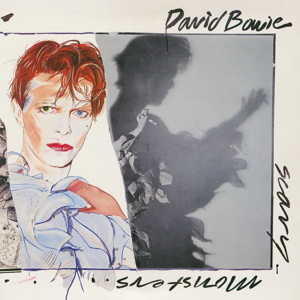
David BOWIE: Scary Monsters And Super Creeps


(#238: 27 September 1980, 2 weeks)

Track listing: It’s No Game (Part 1)/Up The Hill Backwards/Scary Monsters (And Super Creeps)/Ashes To Ashes/Fashion/Teenage Wildlife/Scream Like A Baby/Kingdom Come/Because You’re Young/It’s No Game (Part 2)

It had been six years since he had last been there. Six years; he noted the number with some satisfaction. At the same time, he shook his head in profound dissatisfaction, disappointed that, although he had come back to get on with the end of the world from exactly where he had left off, nobody had learned any lessons from the last one, and he was sure, even as he was making the record, that even fewer people could be taught anything by this one. They took the self-disgust, the aura of destruction (without the necessary creation obverse) and 1984 from the last one – but nothing else.

He’d known that at the time, too, which is probably why he had decided to “resign.” Just as he had done several years earlier.

When he got back to London, that first time, he knew he’d have to do something, even though things had been arranged so that he wouldn’t need to do anything if he didn’t want it.

Details were sometimes hazy, at other times clear, and among the clarity in that subterranean cavern he remembered that they had paid his way out. “Traveller’s cheques…a million…Passport…valid for anywhere…” And so it had proved.

He didn’t always remember how he got out but he did recall it involved guns, strangely-dressed soldiers, carnage and a rocket of some kind. When you’re drugged, retrospective memory isn’t always reliable; least of all to confirm that you’d actually escaped.

But he knew London all right when he returned there…and it was London, not a studio-built or chemically-induced fantasy of London. Virtually the first thing he did was drive to his bank in the City and get those traveller’s cheques converted and paid in; a million wouldn’t cause even the merest eyelid flutter there. It was a lot of money in 1968, and still was, such that he could, if he’d wished, live very comfortably off the interest on the interest.

But what to do? Of course he couldn’t go back to his old job, seeing as how he’d left it. To his mild surprise, he didn’t worry nearly as much as he expected to about being recaptured, or about his “freedom” being a chimera. If they’d wanted him, they could get him at any time; right there in the middle of town. He could do anything he wanted. If he wanted to do anything.

Janet wasn’t an option. Virtually the second thing he did was drive to her apartment block, only to be told by a nice young Australian woman that she was very sorry, but no Janet Portland was known here, and was he sure he had the right address, and you know he had been out of touch for a long time. He started, briefly; how could she have known that?

He didn’t blame her for getting out, and as far away from him as possible. He vanishes for a year and a half, another man turns up insisting he is “him” and kisses and embraces her as such…nobody could have put up with such things and remained sane. That is, if Janet had even been there in the first place. It seemed too suspicious; 1949 Young Debutante of the Year, much more interested in Ray Conniff than the Grateful Dead, expense account at Harrods – they never could have matched. He was not overly sorrowful about this.

Still, there is a limit to how long you can wander around London and not go mad. So it was that he grew his hair out a little – partly to avoid being recognised by casual acquaintances from the Village (not that he had seen any) – started smoking again and again took up the guitar which had lain dormant and untouched in the far corner of his study for several years. He went to Cecil Court, got art and fashion books, read up on things at the British Library – nobody blanched at his still unexpired membership card – took out subscriptions to the weekly music press and read the countercultural magazines that Number 48 sent him in the mail.

Eventually he began writing songs, or bits of songs, and in time they were found good enough to warrant a recording contract. He also played some arty clubs in and around London, and – remembering his kosho sessions in the Village – got some professional training in dance and mime. He was noted to be different, and before long, to his surprise, found himself on the charts with what was surely intended to be a novelty record, about a rocket – not that rocket, not the same 1? – going into space and the guy in the spacecraft. Writers thought it heralded the end of the decade, or some such.

Did they really think he’d written that song with the American GI in mind – whether in Vietnam, or aboard Apollo 11? He gave some cheery, non-committal interviews to the press, partially expecting to be unmasked by his former captors at any time (though nothing happened). Didn’t the song’s general subtext, not to mention his own closing paraphrasing of the guitar solo on “See Emily Play” – a song he would eventually record himself – suggest another subject…another “prisoner” of London who couldn’t find his way out?

Then that time passed and the first album was reasonable-grade Donovan and so it was back into the arty clubs, but he used that passport to get around – not once was he stopped at any airport – and travel a bit, and when he got back his music was tougher and more focused, and eventually he became one of the most popular people in Britain.

Not bad, considering he wasn’t using his real name, nor letting anybody see his full, unmade-up face.

But being big is sometimes as suffocating and bad as being invisible, and so it was that he felt he had to “resign” again. Some high chairs stirred when that happened. Unsatisfied with his self – his “One”ness – he was apt to hide behind a succession of masks, each more distorted and less recognisable than the last.

Who was he supposed to be again, today?

Where was he supposed to be?

And so, after announcing the end of humanity on his last record to go all the way, he began to travel again, and to explore his selves more deeply. How deep could not be fathomed, since the drugs were taking hold again.

Where am I supposed to be today? Philadelphia? Berlin? The Tower Ballroom? Victoria Station?

Do they even know it’s me?

It’s a nice idea, he had initially thought; the rebel (rebel!) who got on Top Of The Pops just to show he could. But then, what – glam star, ballad crooner, ballet dancer, leading actor, courtesan, impresario, free jazz saxophonist WHAT??!!??

He remembered cutting some disco sides about America, in America, which had gone down quite well.

He remembered Berlin better than you thought.

How there was nothing, but then he fought to pull something out of it.

Which is exactly why he couldn’t go with the punks – for them (as he saw it, from another country and in another state of mind/being) it had been all dogs, no diamonds, all lows and no heroes. Wallowing in the bad shit instead of using it to pull themselves out of it.

He resigned for this?

But he knew he’d have to come back sometime. Three records in Berlin, with Brian, and these had been great, cathartic even, but Brian was now playing pop with another David – remaining in the light – and he couldn’t just leave the skeletal family circling into extinction indefinitely. He had to resolve it somehow, and anyway there was the not small matter of steadily declining record sales.

So…another album as “himself,” with proper, pre-written songs. No matter that most of them were improvisations from scraps he’d thought about maybe a decade earlier, if not for himself, then for some girl groups he’d briefly had high hopes about; he reunited the old team (even though they weren’t very different from the Berlin team) and knew he could splash back down again.

He remembered the Corn Flakes packet from perhaps a year before, with its offer of free “Scary Monsters and Super Heroes.”

He knew that the cover would have to act as a self-destructive photo album; designs and sketches…”Glamour” said one such…and, in the background, discarded images of his former selves, all the ones people were alleged to have “loved.”

This is, he knew, the record where he had to come back and say “And now, this is me…but I’m not who you thought I was a few years ago. Be careful.”

Set the tape deck and there is this rancid fucking BLAST.

It could be called “Anti-Heroes.”

What’s happening? A Japanese woman barking, closely miked, at the listener (words, according to Japanese linguistic custom, normally used by men – so genders are already being bended), while he, neurotic and exhausted, sighs and moans his way through the lyric, as disappointed and affably exasperated as a post-apocalypse Noël Coward (“To be insulted by these fascists – it’s so degrading”). But Bob, churning his guitar from Planet Zonk-Ex(posure)…

…and the singer remembers seeing Bob on stage at the Lyceum, a decade before, as part of Centipede, and how people were disappointed by the album because Bob only produced it rather than played on it, but Bob and Godding AND Halsall were up there on the stage, with Pete and Brian and their VCS3 synthesiser things, and yes you had to have been there; it revealed to him a real model of how different civilisations could get on together. Not the scrubbed-up version they had tried to sell him on the Pembrokeshire coast…

…and he will just not shut up and the singer, now ending his tether, screams and SHOUTS (and lets it all out) “SHADDAP!” Twice. And the tape op has to cut off the song at its stem.

This is going to be a number one album????

This song – 7/4 Bo Diddley with vocals recorded as though it were the Family Dogg in 1969, and like “A Way Of Life,” the song is a list of crucifying placebos. Over and over, reaching out to the world but “It’s got nothing to do with you.” “We’re legally crippled,” they/he sing, It’s the death of love.”

The one age that was missed out of their Seven Ages of Man brouhaha.

Bob plays the changes but makes his solo sound like no guitarist was ever more radical.

And the moral of this song is a Village placebo; this shit is going to keep on happening because we say so and that’s the way things are and nothing you do can ever change it…

(“I walk, and walk/Do nothing”)

…so settle down in your lovely Village and just let it roll over you, like that big white balloon if you have any awkward questions…

The title track, oh it’s the story, isn’t it, about how he takes this girl and fucks her up – was Marianne and someone else ever in mind here? – but however far he drags her down, he’s going down with her; the general thump is derived from Monster Movie-era Can, most obviously with the closing sequence of “Noise!” chants, yells and screams, but the Cockney-isms anticipate somebody else, as does the “Waiting at the lights, know what I mean?” part of the bridge; bending his voice down low and conspiratorial, and twelve-year-old Damon and Graham, of Cheltenham, Essex, are listening and learning.

“Running scared,” just like Roy Orbison.

The trailer single had put him back at number one, and he was ambivalent about that, and about the whole space scenario; at the end of the previous year he had reworked the space song for television and it was now stripped, monochrome, the singer in the Embryo Room with food supplies for six months. With this he was happy that the video alone be shown; the eighties come walking towards the viewer, closely followed by a giant bulldozer.

The piano was Roy, whom he used before on Station To Station, and he was in the next room – for they were all in New York; it was cheaper and asked fewer questions than anyone or anywhere in London – to Springsteen’s band, who were making The River, and hi Bruce, can we borrow Roy for a little while (“Independence Day” is the present record’s “Be My Wife”)? Roy brings out this flange thing, or at least notices it, and so his piano riff is unlike anything this side of Joe Meek, possibly unprecedented, and alongside and behind it is the Spy Who Couldn’t Get Back In The Village, telling us what has happened in the intervening eleven years; the little green wheels which won’t stop following him, the “valuable friend” whose habit is too expensive to keep but who he knows he can’t, and won’t, shake off, the reduction of everything to throwaway newsprint good stories (“Sordid details following”)…and the nightmarishly opulent bridges with its spoken rebound of voice (“Oh, woe”?) lead to a chorus of what can only be described as resignation…resignation from “leading” pop, from being a “Face,” from being an example or avatar to anybody…

But we carried you in our arms on Independence Day!

The seventies are over, for sure, but with this song he sounds like he’s burying the sixties, too…all this over-romantic ideal(isation) of “home” (which invariably has revealed itself as nothing of the kind – “Many happy returns!”), all brushed away…and at the end of a song more eighties than anything in the eighties that has preceded it, a memory of “Mother’s Little Helper.” “My mama said to get things done…”

(Keep that “get things done” in mind; we’ll be needing it later…)

…”You’d better not mess with Major Tom” – so the junkie is now his own drug.

He went down Blitz, of course he did, wouldn’t let Jagger in but why should they, wouldn’t old Grandpa Mick just spoil our fun, all of us insecure nogoodniks who get routinely turfed out of all other clubs, so why shouldn’t we be allowed to have our own? Got some people together, brought them in to appear in the video, that strange dress inversion of the cover of Abbey Road - but was he convinced? Possibly the need to escape from his own past – that need which never really abandoned him – was the principal driving factor.

The ending is, unsurprisingly, similar in type and impact to that of Simon and Garfunkel’s “The Boxer”; the constant building up of layers, the sublyrical urge NOT to step down.

And there is of course the elephant in the 1980 sitting room, or on The Wall on that sitting room, apropos giving up on the present tense; yes, there’s Syd, still, in his blue electric room, watching the TV, if it’s plugged in.

But, make no mistake, “Ashes To Ashes” represents his resignation from being any kind of Number 1. The dream is over, now I’m John…wait a minute…

…who am I supposed to be, again, today?

“Fashion” is about not knowing who you are and not having the style to perpetrate the non-knowledge. Part “Golden Years” retooling, part song once called “Jamaica,” the song dwells on the close resemblance of “fashion” to “fascism” – from whatever side (“Turn to the Left! Turn to the Right!”) with a sinisterly recycled old radio jingle (“We are the Goon Squad and we’re coming to town BEEP BEEP!”), its brutalist futurist boot stomp is the link between Slade and “I Travel,” the theme is similar to “Games Without Frontiers,” the lovely “Talk to me” bridge is a flashback to side one of Low…but Bob’s guitar argues with the singer rather than agrees with him (as Mick was once wont to do); with practically every line, there is a sardonic, noisy guitar rejoinder. How anyone could ever think of using this as the music for a beauty pageant is beyond the singer’s understanding, except that it would again prove that no one was actually listening.

Side one, then, which everybody knows.

Side two, which never gets played and which nobody knows.

Not that there’s a lot to say about side two except that it’s Ziggy rearranged in very odd and disturbing new shapes. Who’s he trying to be on “Teenage Wildlife”? Oh – not that Billy Mackenzie guy, but Ronnie Spector. OK, now it’s making sense.

There was a conversation. The young man came to have a word with him.

-I’m big now. Bigger nearly than everyone. But I’m not happy.
-Mm-hm.
-
-
-It’s the fans, you see. One giant solid mass that makes me feel claustrophobic and that I can’t communicate with them.
-
-It’s not what I wanted. I feel trapped. I’m not letting them in. I couldn’t. You, of all people, should know that.
-
-I’m not as happy about this as I thought I would be.
-
-You’ve been there.
-
-David, what do I do? They wait for me in the hallway.
-Ah, Gary…
-
-Gary, I don’t KNOW any hallways. Not apart from my own.
-
-Look, I like your music. A lot. But…
-But.
-That’s not what I meant.
-
-When I made Low, my intention wasn’t to stay there.
-
-You know…I fought BACK. Made Heroes. Came out of hell and faced the world again.
-David…
-Whereas you don’t even allow yourself the possibility of escape in your music, except for turning into a machine – and you see how far that got you.
-*sigh*
-You’ve CONFINED yourself, Gary. Painted yourself into a corner.
-
-I’m sorry, but, you know…
-I know…
-…I can’t do anything for you. Can’t help.
-
-There are other things in this world to be concerned and worried about than pulling your own blind down in front of your face.
-That’s not what I’m doing, though.
-You are, and you don’t know it. Look, it’s like cutting your own arm off, I know, but you need to get about a bit more, Gary. Travel places. Meet people. Get out of the house, away from your gadgets.
-
-I feel for you but I cannot help you. Only you can do that.
-Just because my problem is trivial doesn’t mean it erases itself.
-That’s not what Neil Young will mean, either.
-?
-I just…I can’t be responsible for anybody else who chooses to follow my path. I’m no shining example to anybody. No matter what “The President” said.
-I don’t see.
-I figure you’re going to end up being you, anyway, no matter what I say to you.
-
-
-
-One tip. Learn to fly. Might be useful. I know somebody.

“Scream Like A Baby”: a projected (desired?) future. It’s in the near future, or it’s now, and people are being rounded up for being…different. So he imagines this guy…or maybe it’s just a “gun”…called Sam who gets carted away to prison, or camp, but can’t bear it, so decides to end things for himself anyway (“…he jumped into the furnace/Singing old songs we loved”). An air of ’Til The Band Comes In fatalism here (“But I never knew his last name/And we never had no fun”).

Or is it yet another delayed memory?

Note how on the line “And I’m learning to be a part of society” he cannot quite bring himself to enunciate the word “society.”

“Society,” he remembers being told, “is a place where people exist TOGETHER.”
-Yes, sir.
-That is civilisation.
-Yes sir.

Stupid, lovable Roland Walter Dutton, strung out in heaven’s high; that’s what you get for “cooperating.”

So why should he have cooperated?

Memories, now firmer in mind:

Climbing the inside of the rocket; reaching Number 1’s office.
Knock on the door.
-Come in, Big Bill.
He glanced at the seat’s occupant.
-I knew, of course, he said.
She was pleased to see him.
-Then you know we all have to get out of here.
-I had guessed.
-This was your idea. The Village. Everybody knew that.
-And that the idea would necessarily be used by another side for less than humane reasons.
-As ludicrous as it sounds, I’m also here to try and destroy this place.
-Even Number 1?
-Even I am answerable to someone.
-I’m not astonished.
Looked at the dial.
-So where’s this rocket headed?
-Out of here, that’s all I know. But downstairs…
-It’s all bullshit.
-Yes. They mean to kill you as well as the other two.
-Or send us into space, which amounts to the same thing.
She worked at the dashboard for a fevered minute or two.
-There. I’ve set it to take off in three minutes. We can get out of here by then.
-Really?
-Don’t worry; reinforcements are coming. Now let’s get down and get out of here.
They went down, and set the two prisoners free. Overpowering the guards was easy. Dressed in obfuscatory robes, and armed, they returned to the place of ceremony, where they were somewhat surprised to see that a one-sided battle was already taking place. Village soldiers were being ruthlessly gunned down. The “President” was in the process of being taken into custody.

A familiar-looking man in military uniform rushed to the figures just as they emerged.
-John!
-Well, James. Fancy seeing you here!
The Colonel grinned.
-When your ‘plane didn’t come back we did our own reconnaissance and tracking. Found the place pretty easily. Then it was only a matter of organising a force to come down here and liberate everyone.
-Thorpe?
-Oh, he’s in the helicopter. Complete coward but he has a head for facts and faces. Now let’s head out of here – the route is clear! Come on, Sir Horace, don’t be a tortoise!
He had safe passage, as did Nadia, Sir Horace, Alex and Sancho. He noticed other helicopters waiting to pick up other Village residents; also a container ship a mile or so out to sea to take some residents to – he guessed – Southampton.
-A tidy ending, the Colonel grinned.
-Almost too tidy, John chuckled. –Put this on television and nobody would credit it.
-It is a bit drab on that level, the Colonel agreed, -but as long as we’re all safe and alive, that’s the important thing!
-The rocket?
-Thirty minutes, Big Bill. Patience is a virtue.
He never read anything in the paper about a rocket taking off in North Wales. Nor was he ever tempted to revisit the area.

He remained golfing chums with the Colonel. At the Hammersmith Odeon in 1973 he spotted Nadia, three rows back from the front, singing along to “Rock ‘N’ Roll Suicide.” He sometimes spotted Sir Horace striding determinedly through the City and was happy to have him as an occasional drinking partner (Sir Horace had correctly surmised that that drink had drugged him into unconsciousness, rather than “killed” him; resurrection being the individual’s business).

Alex became the Godfather of Punk and he produced three popular albums by him. He particularly enjoyed Lust For Life - the title track being a “Dem Bones” for its time.

Then he sings a song written by a former Television personality.

Tom Verlaine, a guitar hero for an age that needed none. Tom Verlaine, whose failure to die in 1977 meant that Television carried on to a not-that-bad-really/but not as good as the first one second album and then a much-respected, non-record selling solo career. From his eponymous 1979 debut came “Kingdom Come,” a song about breaking rocks and working for the man until death do everything part – it’s as close as anything on this record gets to a Springsteen song – but here it is sung in that same quasi-hysterical Ronnie Spector/Tony Newley exaggerated vibrato, as if the singer is going to fall apart at any (gun)point. At one point he sings, “The Wall’s a mile HIGH!” and there is a fadeout chant that resembles “Don’t Go Breaking My Heart.” It is understood that Verlaine himself turned up at the studio one time, testing out various amplifiers and guitar lines, but that none of his work remained on the finished record (hence no credit for him).

Whereas Pete Townshend, a man who had once laughed sardonically at him for ripping off a Who song, turned up for “Because You’re Young” and sounded like…Lee Ritenour, or any session guitarist doing the gig for a buck. He was, as was his wont in 1980, pissed to fuck, but obligingly rolled out windmill chords. Meanwhile, the singer once again abnegates any responsibility for his spiritual descendents; he sees a girl, knows she’ll meet someone and fall in love but that they’ll end up like the protagonists on the title track and that, as per “Up The Hill Backwards,” everything’s just going to end up repeating itself regardless and so, like Leo Sayer but unlike Bryan Ferry, he’ll just dance his life away:

“They’re people I know – people I LOVE,
They seem so unhappy – dead or alive.”

And the last song is a subdued repeat of the first one; slower in tempo, more measured in delivery, though hardly less angry. It is as if he has acknowledged the fucked-upness of it all but he’s far from ready to accept things as they are. Not so long as there are (as he sings) children round the world putting camel shit on the wall, making carpets on treadmills or garbage sorting.

He listens to the tape running off its spool, and thinks: yes, that’ll do.

And the other John, the one he worked with five years previously, before he himself “resigned,” who kept coming into the studio and hanging out; he was a key influence on how the record turned out. “It’s No Game (Part 1)” as a new “Instant Karma”? Makes perfect sense. Don’t know how I would have got through the record without him being there.

And the record comes out and does pretty well, though not as successfully in the USA as he had hoped. But things are up and moving again and he takes the lead role in this off-Broadway production of The Elephant Man - he always had a secret penchant for acting - and a couple of months after the record’s release he’s in this theatre just uptown from the Dakota and one night there are these six fucking loud BANGS and he runs home to this apartment, except it’s a house, and when the door opens he cries: “WHAT THE FUCK IS GOING ON IN THIS WORLD?” over and over.

“It’s about time,” she says. “He’s upstairs, waiting to see you.”

* * * * * * * *

He rushed upstairs and knocked patiently on the bedroom door.
-Come in!
He entered and realised that he was no longer in New York, but in Bothwell, a few miles southeast of Glasgow. In the room he could see many rows and shelves of books, records and tapes, as well as some rather less neat piles of typescript. Sitting on his bed was a sixteen-year-old teenager, a Smith-Corona typewriter by his side with a piece of partially typed paper still in it.

He glanced over to read what the sheet said:
It had been six years since he had last been there. Six years; he noted the number with some satisfaction.
He turned to the boy.
-What the fuck is going on in this blog?
The boy, looking somewhat older and sadder than his sixteen years might have suggested, replied:
-Blog? What do you mean, “blog”?
-You bastard! You’re using me as convenient shorthand to try out yet more of your stupid crazy theories!
The boy pointed to a magazine on the bed. It was the seventh issue of The Face (subtitled “ROCK’S FINAL FRONTIER”). He recognised the person on the cover.
-You see, David, it’s only December 1980, and I’m afraid “blogs,” as you call them, don’t exist yet. That look, David! Really I don’t deserve it! In fact, I shouldn’t be here at all because actually I’m in Oxford, having my pre-entrance interview, but I don’t think that a future generation of readers is going to be particularly worried about that wee bit of discontinuity.
-It’s a good piece, that Jon Savage article about me.
-Are you as worried as he thinks you sound?
-More so, since the album is about not really knowing who I am, or who, or what, I want to be.
-So…what’s it all about? This Then Play Long thing?
-At this moment, it’s only a vague idea in my head. I already have more of the records than you think, and I would like to do something with them, but how to do it and get people to read it…that’s the problem.
-You’re sixteen, it’s a novelty…bound to work if you tried it now?
-You’d think, wouldn’t you? But the writing really wouldn’t be good enough. Even thinking about it now, I know that when I eventually get round to doing something about Then Play Long I will by now have covered barely a quarter of what will need to be written about.
-Why wait so long, then?
-As I say, my writing would let it down. At this point I am able to marshal facts but not yet able to manipulate and correlate them into a valid argument. If I published now, it would be a rota of dull data, full of history and information. It would be like publishing a bus timetable.
-I disagree. I’ve heard about some of your early work.
-So be it, and I have to tell you – because, thanks to convenient time loops, I can – that one of the pieces on Then Play Long will be a verbatim transcript of something I wrote when I was fourteen. It’s already up, and I’m not saying which one it is. But most of the writing would be pretty dreary.
-What’s the game? Making me out to be an extension of Number 6’s overactive and underemployed imagination?
-Because it allows me to undertake a major step forward in terms of how I want this blog to be perceived. That it’s a story about somebody writing a blog about number one albums, rather than a blog about number one albums…
-You’ve said that many times.
-And will continue to do so, since it’s true (apologies to the shadow of BS Johnson). And there’s something else I want to say, too. Something that needs to be demonstrated. There’s a point that I’m trying to prove.
-Which is?
-I haven’t got there yet.
-There’s gratitude for you!
-Look, I nearly stopped this blog because of you!
-Don’t blame me for building your own hallways.
The boy paused, uttering a remorseful sigh.
-I felt it was going to be vitally important to keep the blog going because of this incredible, and really when you think about it, even in 1980, pretty damn scary string of records…
-All of which are linked in one way or another.
-Most of them, anyway. Even Back In Black, half the songs on which are about death. But this string, it keeps piling up and up, higher and higher, in intensity, and your record is kind of the culmination of the whole thing…
-What you’re saying is that the string is about to snap.
-What I’m saying is that I’m rather scared about where this is all going, how it is going to culminate. Your record opens with a Japanese woman screaming…
-Well, she was on the cover of Kimono My House
-…and ends with a song in which you sing, “Put a bullet in my brain/And it makes all the papers”…and I really don’t want THAT to be the brutal fucking quietus to all of this.
-I see.
-It’s like a prophecy.
-Indeed.
-
-
-There are, of course, other ways out.
-Such as?
-Accept that you can only do so much about the state of the world from where you are and that if you’re going to be able to do anything more about it you’re going to have to come towards the world and look it in its eye.
-
-Or that this is as far as you can go doing this sort of thing, and you’ll need to re-adapt.
-
The boy pointed to a corner of the room. “Look at all these records I’ve done so far,” he said, “two hundred and thirty-eight of them, including yours. The thing I’ve learned is that…”
He interrupted. “When does it all end?”
-That’s a good question. I don’t know, but have a look at these magazines here.
The back page of The Face; huge white type on black background with a (then) reassuring sky blue and vermillion logo:

“More
records.
More
tapes.
More
discounts.

the HMV shop”

“I have a feeling,” said the boy, “that sometime in the future HMV are going to wish they’d stayed with more records and more tapes.”

He then pointed to an article in the then current NME, all about the home taping boom and how homemade tapes were going to bleed the record industry dry until only an incredibly contracted record market would ultimately exist, for the benefit of collectors and specialists only. It seemed prophetic enough, and he reckoned it would come to pass, but not via homemade cassette tapes – no, these would themselves be rendered obsolete by a new, as yet unforeseen development, which in turn would be wiped out by something else, probably to do with computers. A time when you could pick songs out on a computer without having to go and buy any records; a natural reversion to the original state of things where people wanted to hear songs and songs only. He figured that most of what went to number one in the eighties album chart would be convenient compilations of lots of singles, or greatest hits packages. The sort of albums which make it unnecessary to buy albums. And that when enough people decided that the song alone was good enough for them, the album would dwindle towards obsolescence, a reminder of a more opulent, indulgent age where musical thoughts could be extended to fill forty-five or sixty minutes of the listener’s time.

So his belief was that albums as such were bound to have a limited lifespan, and therefore it was possible that, no matter when he decided to start Then Play Long, he could foresee an ending.

The Spy listened to all of this with interest, then added: “So where would that leave me?”

-I was coming to that. The thing I’ve learned, as I say, is that going through all these number one albums, it’s always the ones which look out of place which tend to have the greatest long-term impact. Take this one, for instance.

From one pile the boy fished out a twenty-year-old copy of Down Drury Lane To Memory Lane by 101 Strings.

-As improbable as it looks – and sounds – this record is actually the way number one albums are going to go. There will, in the future, be a book called Elevator Music, and it will include a chapter on 101 Strings where it says that they are “responsible for what is essentially the original world music…giving Middle America an exact replica of the world it wants.” That is to say, there will be nothing about ethnomusicological “forgery” or “fourth worlds,” but a careful and very studious and astute broth made out of those elements of “the world” most likely to appeal to Middle America’s very conservative ideas about what it wants and what makes it happy. The image of travelling the world, even aurally, without ever having to get out of one’s armchair. You must know the record; it is such an important influence on the second side of Low - ask Brian if you get a chance.

He continued: -The Drury Lane record never even made it to the States; it was a compendium of performances from previously available albums tailored specifically (including its sleevenote) to appeal to a British demographic of a certain age and bearing. “A macrocosm incarnate,” Mr Lanza writes, “now gobbling up nations and customs; now regurgitating them into easily recognizable sounds and symbols; now grooming, duplicating and selling them in the discount racks of Woolworth’s, K-Mart, and other mainstream emporia at bargain prices.”

-But it sells. The world recognises it. You may not feel it now, but I assure you that in time this is the path that you will follow.
-I don’t believe you. It sounds like a nightmare inversion of utopia.
-At the time of writing you have another four number one albums to go. Perhaps there may even be a triumphant late period comeback before too long. One of these is a compilation. The other will find you happy, rekindled, ready to take on the eighties and nineties, all pain and doubt nullified.
-You mean…I will sell out?
-All three records contain a relatively high proportion of cover versions.
-Or I could stop here?
-Except you won’t. You didn’t in 1968 or 1974, and you won’t now. It’s not in your nature, Number 6.
-What did you call me?
The boy rose. “Our time is nearly up. When you leave this house you will find yourself back in New York. Back to your life. Don’t worry about me or this ‘blog.’ I see my future before me, and there are elements of it that I wouldn’t wish on anyone, just as there are elements of it that will justify there being a future. The same as with most people.”
-You’re very talky and smartass for a sixteen-year-old.
-That is because this is my current 49-year-old self speaking through a useful literary conduit. As I say don’t worry – the point of this blog will make itself known, given time.
The Spy turned towards the door.
“Oh, and just one more thing,” said the writer. “Why did you resign?”
“So that I wouldn’t get six-and-a-half-thousand-word blog posts written about me.”
“More idols than realities…it’ll be alright.”
“What was that?”
“Oh, and as you’re leaving,” added the writer, who The Spy now noticed had pulled off his usual irritating trick of appearing to tell the reader everything but actually telling them nothing, “please could you ask Gordon to come up. Even though it’s only 1980, I can already tell that this story has been dark for too long; we need some light, some springtime, something to look forward to.”

* * * * * * * *

He walked back out onto 72nd Street.

He recognised her immediately.

“Hello, Alison,” he said.

“You’ve been reading my mind again,” she said.

“It’s in our nature,” he smiled.

“Who are you really?” she asked.

“Does it matter, as long as I am who I am?” he replied, and they strolled off happily.

When it comes to resurrections, there is always room for one more.