Sunday, 22 July 2012

The SHADOWS: 20 Golden Greats


(#181: 19 February 1977, 6 weeks)

Track listing: Apache/Man Of Mystery/The Frightened City/Guitar Tango/Kon-Tiki/Foot Tapper/Genie With The Light Brown Lamp/The Warlord/A Place In The Sun/Atlantis/Wonderful Land/FBI/The Savage/Geronimo/Shindig/Stingray/Theme For Young Lovers/The Rise And Fall Of Flingel Bunt/Maroc 7/Dance On

Author’s Note: This piece is to some extent adapted from a previous piece I wrote about the Shadows in July 2004, but it is by no means the same piece, nor does it come to the same conclusion; the reader should allow for the lapse in time and the author’s changing views if they wish to read the original; see the link to The Clothed Maja on my list of links should you desire to do so, but I’d much rather you read this one.


More music that needs no words. As much as I admire Paul Morley’s 2003 book Words And Music, I do wish that his views weren’t so firmly set, or hadn’t been so firmly formed, in 1976 and Manchester. In the book he says: “…a group called the Shadows should have been better and stranger than the group called the Shadows actually were.” Actually the Shadows were one of the strangest groups there ever has been, but then my definition of strangeness has been defined and tempered by parameters which take the business of British politeness into deep account, much as my tastes in music and views of the world gradually change and develop the more I learn about both. In a sixth sense, the Shadows lived out their entire career in a series of shadows – the shadows of a richer and brighter post-war America, the suffocating shadow of ration(alis)ed post-war Britain, the blinding shadow of pre-war British showbiz under which the Shadows were forced to dwell. They couldn’t just drift through the Soho drains which the late Gordon Burn irrigated so intensely in his novel The North Of England Home Service, mainly because they were legally compelled to change their name from the Drifters. It might have been a more appropriate name for them – refugees drifting back from the apocalypse of World War II, trying to find their own home or build a new one – but then we tend to forget that it was the forgotten Shadow, Jet Harris, who suggested that the group be called the Shadows. The tall, blonde, enigmatic six-string bass player who was also to be the group’s second victim; for the group was driven by two vaguely pissed off Geordies (one of whom, Bruce Welch, was actually born in Bognor Regis), pissed off at not being Americans. How else to explain the impossible exoticism of a name like Hank Marvin (as opposed to the distinctly unglamorous name of Brian Rankine with which he was blessed at the wartime font) – the extra “B” was added at the same time as the Shadows walk was invented, but had anyone worked out that the B in Hank B Marvin stood for Brian, they would all have done the Evacuees’ walk from the theatre. Or “B” as second-class, second-rate. “B” for British. Perhaps it’s little wonder that he declined the OBE offered to him, for he has lived in Australia for some considerable time, and presumably finds life there far more congenital and accommodating. Or perhaps the Shadows were just pissed off at being roped in to be the grinning backing group for a conveniently clean and polite one-man British pop tapestry-to-be.

How badly did the Shadows want to be Americans? When taking the UK/US non-relationship in terms of ‘50s pop into consideration, there are two different histories to consider. Firstly, the British pop market of the ‘50s was compelled, for reasons partly economic (that post-war, post-Beveridge balance sheet again) and partly political (the intransigence of the Musicians’ Union towards American musicians, which probably devalued British pop for the best part of a decade, and largely due to maintaining agendas rather than looking out for their members), to pretend to be self-sufficient. In practice this meant keeping a gimlet eye on the Billboard Hot 100 and cherry-picking songs for lost, pallid Britboys to cover. Thus America got Dion and the Belmonts and we got Marty Wilde (no offence to Mr Wilde, who subsequently became a surprisingly significant figure in the development of British pop over several decades); Sam Cooke over there, Craig Douglas over here. Only with artists too big to ignore – Elvis and what else they had – could ‘50s Britpop explicitly acknowledge that the question of American input had to be answered. True, Lonnie Donegan was enthusiastically popularising the likes of Leadbelly and Woody Guthrie, but you’d have been hard pressed to find any of their records in provincial Britain. If you weren’t fortunate enough to be living in London, then the next best way of doing this was to live next to a busy merchant port, with exotic and dangerous records (and, occasionally, exotic and dangerous musicians, MU stipulations notwithstanding) straight off the Merchant Navy boats – in other words, somewhere like Liverpool or Glasgow (and that in itself begs the question: when the time came, why did Merseybeat happen and not Clydebeat? Probably because, throughout the greater part of the ‘60s, folk and jazz carried much greater currency in Glasgow than pop – ask Billy Connolly or Bobby Wellins for confirmation). People like Duane Eddy and Les Paul did score mainstream hits, but if you could tell the difference between Glenn Burton and Scotty Moore and Link Wray then you were probably a musician already (The Kids weren’t too bothered about who played guitar on Ricky Nelson or Elvis records). It was your job to find out and know these things. Or you had to be sufficiently obsessed to want to find them out. So it was with Hank Marvin and Bruce Welch, going nowhere in South Shields and then coming straight down on the train to the 2 I’s and reinventing themselves as they felt was necessary, teaming up with a couple of London ace faces, Jet Harris and Tony Meehan.

But when it came to the Shadows’ music, it wasn’t an easy case of Let’s Do American Music; more the socially-conditioned perennial British attitude of trying to copy Other music, not getting it quite right and thereby inventing something new by accident (see subsequently Dexy’s Midnight Runners, A Certain Ratio, etc.). What is immediately striking about listening to “Apache” is the bifurcation between wanting to do a Duane Eddy/Ventures-style slow-burning instrumental rocker and the reality of not being able to discard English politesse, of instinctively recalling the dance band comping of people like Ivor Mairants (and, lest us not forget, Basil Kirchin) – the need to show consideration for fellow residents or neighbours (speaker muffs in the garage!), the unshakeable work ethic, the need to show consideration for and not overshadow the singer or band you are accompanying – and hence the quietest rock music there has been this side of the Chills (“Pink Frost” would have been right up the Shadows’ street in terms of emotional intensity in inverse proportion to actual volume). In other words, they want to break out – again note that savage Meehan triple snare thrash at 1:44 – but keep everything pent up; in, as it really was, the shadows. The pop group with an absent centre. The single went to number one less than a month after release.

And yet “Apache” was perhaps the most American the Shadows ever sounded; the dustblown Chris Isaak prairie echoes come in great part from here. Everything else on this compilation sounds incontrovertibly British, but comparison with their mentor Bert Weedon here is helpful; listen to his “Apache” (and his work in general) and you hear, unmistakably, the work of adults. Whereas the Shadows’ sound – and, specifically, Marvin’s guitar – is fuzzier, less technically precise, more aware of space (there are lots of Abbey Road echoes in their work) and, finally, more rocking, because they were half Weedon’s age and closer to the kernel of the development of British rock. Moreover, where Weedon gives plenty of space in his records to other voices – saxophone, keyboards, drums – the Shadows are essentially about Hank; his lead guitar functions as, effectively, the group’s lead singer. The other three are there to support his musings, but equally you couldn’t picture them functioning separately; what is important is that they work as an integrated group.

And that image – the spectacles straight from Buddy Holly, but as a sociological tool they were invaluable. Holly proved that you could be a geek and still (a) get the girls and (b) rock, but now here was Hank, our own British geek for uncertain young boys to idolise and emulate (the missing link, in a lot of divergent ways, between Buddy Holly and Arto Lindsay – though the Shadows never managed to break big in the States, their shadow shines all through DNA; in fact DNA bring to mind what Hank might really have wanted the Shadows to sound like, if he’d had a free hand).

The Shadows’ music would have been unmanageable without all their carefully suppressed aggression. Observe Hank’s sudden, jagged outburst which seemingly comes out of nowhere in the middle break of the Edgar Wallace Mysteries (filmed in the unglamorous surroundings of Merton Park Studios) TV theme “Man Of Mystery” before quickly retreating to the shades (he could so easily be Page or Clapton, both of whom listened to the Shadows and learned); or the faux-boldness of “FBI” (which could easily have been titled “Don’t Try It”) whose middle eight in particular predicates the work of Status Quo. On stage, however – and this is another aspect we latecomers miss – they were reportedly proto-punk. Listen to their Live At The ABC Kingston set, issued on CD in 2000 (if you can find it; petition for a reissue), for an inkling of how they played In Real Life; for 1960 it is in its own way as startling a live document as the contemporaneous Mingus At Antibes.

But the work collected here is testimony enough to why, in the last edition of Guinness’ British Hit Singles & Albums book, the Shadows are referred to as “Britain’s most influential and imitated act before The Beatles” (and never mind the music; how many hopeful teenagers paraded before their bedroom mirror trying to copy Marvin’s lines and do the Shadows Walk – a routine borrowed from American R&B act the Treniers – at the same time?). The third volume in EMI’s 20 Golden Greats series is not easy to find on CD, having been superseded in 2000 by a 2CD upgrade entitled 50 Golden Greats, which should not be mistaken for the same record; all twenty tracks reappear there, but in strict chronological order, and crucially “Wonderful Land” only appears in its original band-only form, without Norrie Paramor’s orchestra, which proves a fatal flaw. Back, then, to the LP original, with its mauve-on-monochrome inner sleeve advertising “SOME OTHER GREAT SHADOWS SOUNDS” and proceeding to promote several underperforming items in the Shads’ back catalogue; their 1965 #4 album The Sound Of The Shadows, 1974’s Rockin’ With Curly Leads which sees them bravely having a go at things like “Pinball Wizard” and “Good Vibrations,” 1975’s Specs Appeal, featuring their Eurovision runner-up entry “Let Me Be The One,” a live album recorded at the Paris Olympia, and two very useful compilation round-ups; 1969’s Somethin’ Else!! (that the album is bookended by tracks entitled “Lonesome Fella” and “Tomorrow’s Cancelled” should give you an idea of its general mood) and the fine Rarities which collects some of their work for the Thunderbirds films, cult items like “Scotch On The Socks” (with its deadly ironic “baby” asides) and “Sunday For Seven Days,” and their elongated 1969 elegy “Slaughter On Tenth Avenue” among other items of interest.

Throughout 1961 the Marvin/Welch/Harris/Meehan line-up continued to produce superb, inventive music. Listen to the antiphonal relationships within the quartet – particularly between Marvin’s lead and Harris’ bass – on the paranoid “The Frightened City” and wonder whether you aren’t hearing an early Echo and the Bunnymen (go to the first two tracks on Heaven Up Here and see for yourself). “Kon-Tiki,” memorably described by Bob Stanley as the sound of the “Tilbury surf,” explores the same musical relationships in a positive light and sets the mood for their series of optimistic New Britain anthems (and perhaps this explains why the Beach Boys didn’t really prosper in Britain until the Shadows began to fade a little; for a country largely immune to surfing – and unable to surf – their music fulfilled the same, sunny outlook); though note how the hammering, climactic ending anticipates the Who’s “Substitute.” Likewise, Meehan – later described by Marvin as “a prototype Keith Moon” – has his moment on “The Savage” where, towards the end, his kit breaks into intricate, hard patterns which more or less lay the groundwork for drum n’ bass. Even here, though, it is a wistful kind of savagery.

Inevitably, it couldn’t last. Meehan got his cards in 1961 when he turned up late for a gig once too often, and Harris walked out not long afterwards; they were replaced by Marty Wilde’s old rhythm section of Brian “Licquorice” Locking and Brian Bennett (Bennett drums with the Shadows to this day; Locking subsequently left and was replaced by the late John Rostill to form what was probably the Shadows’ most efficient and solid manifestation). Some say that an element of danger was forever lost from the Shadows at that point, and their records immediately became more benign; the daft optimism of “Kon-Tiki” for instance (recorded with Locking and Bennett), and more problematically their 1962 eight-week chart-topper “Wonderful Land.”

If the Shadows’ records were now ostensibly brighter, they were also noticeably more elegiac. No doubt intended as a kind of British equivalent of the Duane Eddy/Lee Hazlewood smash “Because They’re Young,” Paramor’s orchestral overdubs made “Wonderful Land” the Shadows’ most successful record, but only in part; the rest of it was down to British hope. Although Bruce Welch in particular was sceptical about adding anything to the basic Shadows sonic template, the track carries an indelible sadness (and note, in the wordless chorus, the first appearance of voices on this record) since it is not only a song of hope for a 1962 Britain that deserved a better future than the one it got – see also “Telstar” and “I Remember You” – but it is also a regretful acknowledgement that the future which the song promises might never actually come to pass. The lament which Marvin plays in the song’s middle eight becomes even more poignant, the strings and French horn never more unreachable. The song is like a hymn to Britain, and was an immense influence on, among many would-be guitarists, Mike Oldfield (who later covered the song).

Perhaps the Shadows were aware that time was already starting to overtake them. The aforementioned “Telstar,” number one everywhere in the autumn of 1962, seemed to come from a place that the Shadows were unable to reach; unquestionably futuristic, slightly threatening but ultimately one of the saddest pop records ever made, Meek knowing that he was probably already living on injury time. Meanwhile, the big American instrumental hit of late ’62 was Dick Dale’s “Misirlou,” where Dale’s lightning rod of a guitar seems to smirk a gigantic fuck-you to any notions of politesse.

In contrast, the Shadows’ then-hit “Guitar Tango” sounded like Geraldo trying to keep up with the New Thing; this is where Paramor’s arrangements start to compensate for the song, rather than add to its flavours, although admirers of “Oh Well” (Marvin’s close-miked semi-acoustic) and Forever Changes (the trumpets) may find profitable study material here. In even starker contrast, “Diamonds,” the first hit from Harris and Meehan as a self-sufficient act (although written by Jerry Lordan, the author of “Apache” and “Wonderful Land”) seemed like an aural approximation of the balls the other Shadows were too scared to show, although the career of this potentially revolutionary group was cut short due to personal mishaps outside this tale’s scope.

And then there were the Beatles. And then there was their fucking boss with his eagerness to please everybody and his films which required the Shadows to frolic about with Richard O’Sullivan and Melvyn Hayes and his fucking panto seasons – as mild-mannered Brian Bennett once remarked to Bob Stanley in MOJO magazine: “Getting thrown through a mangle by Arthur Askey every afternoon wasn’t what I had in mind when I started drumming.” Add to this most grotesque of nightmares a basic wage of £50 per week which remained basic for most of the group’s existence.

In 1963, “Dance On!” and “Foot Tapper” (the latter improbably commissioned but never used by Jacques Tati) indicated some kind of vague toughening-up in response to the nascent Merseybeat. On “Dance On!,” the closing track on 20 Golden Greats (don’t worry; everything’s all right), Marvin’s generous leg-up guitar figures still portray good humour (the track, if anything, sounds like a prototype backing track for the Hollies, and I’m sure Tony Hicks and Graham Nash took careful note). “Foot Tapper,” still used as the theme to Radio 2’s Sounds Of The Sixties, also works well as a feature for Bennett’s drums. But “Atlantis,” also written by Lordan, and a #2 hit in the summer of 1963, plays like “Wonderful Land” gone wrong, as though the Promised Land had been flooded out of existence; Marvin’s Morse code guitar is high and terse, and the group circle rather morosely around the song’s key centre, trying to break away but always ending up back in the same place. Still, here as before, there is a tentative reaching out in Marvin’s playing that very closely echoes what ardent Winnipeg fan Neil Young was about to do; at this point he is in a Shadows-style group called The Squires, along with the young Randy Bachman (although in general the Shadows influence with Bachman tends to come out more with Bachman-Turner Overdrive than it did with the Guess Who).

However, “Shindig,” from that autumn, tries to keep the heads-up atmosphere of “Dance On!” but has to struggle to maintain it; Lena thinks the song is less about a “shindig” than travelling to one. And Paramor drowns “Geronimo” with trumpets, choirs and strings both arco and pizzicato, doing little other than smoothing over a below par tune (significantly, it became the first Shadows single to miss the UK Top Ten).

Through 1964 they really had little choice but to try and toughen up. Welch’s “Theme For Young Lovers” has a curious Scottish tone to its balladry (and a melody line highly reminiscent of Slade’s later “My Oh My”) but didn’t do quite as well as “Geronimo.” “The Rise And Fall Of Flingel Bunt,” evolving out of a group jam, was a sufficiently strong and forceful performance to put them back in the Top Five; the piano and rhythm predicating “Groovin’ With Mr Bloe,” the air somewhat funky – there are strains of Motown and, thanks to the piano, even deeper strains of Stax; Marvin’s commendably aggressive lead line sounding very close to Steve Cropper. However, it wasn’t enough; the excellent “Rhythm And Greens” failed even to make the Top 20, though “Genie With The Light Brown Lamp” did a little better and is a key performance here; you can hear the Shadows doing their best to move onto the next stage – more than once, they hit on a drone and tenuously hang onto it, and there is a suggestion of feedback at the fadeout. Topping the chart at the same time, however, was “I Feel Fine” with its opening two seconds of unapologetic feedback; it was hard to escape the feeling that the Shadows’ disciples had not only caught up with them, but were signalling to overtake.

Thereafter they hung on as best they could. As 20 Golden Greats concentrates on their instrumental work alone, there is no room for their now occasional forays into singing (“Mary-Anne,” “Don’t Make My Baby Blue”; they did begin life as an Everlys-style vocal/instrumental group) and that is perhaps just as well; by opening their mouths the (men of) mystery vanished and they revealed themselves as just another reasonable, harmless harmony pop group scarcely distinguishable from the Rockin’ Berries or the Four Pennies.

Marvin was now intent on sounding as little like “Hank Marvin” as possible. Thus 1965’s “Stingray” is deliberately jarring, his low guitar tones fed through a fuzzbox (“like a wasp stuck in a jamjar” he later reflected), although the track is not devoid of merit; there is the hint of what sounds like a sitar in the aural middleground, and the group’s general strategy of attack is not that dissimilar from Deep Purple. Similarly, “The War Lord” is a rather menacing prototype of medieval prog-rock, with judicious use of Picardy thirds in its light-footed waltz and an approach that leads directly to the work of Jethro Tull and King Crimson. 1966’s “A Place In The Sun” has a tempo and rhythm section approach which could easily lend itself to “Maggie May” but also an anguished lead guitar which, again, very strongly recalls Neil Young.

The last track to feature here – their only hit of 1967, and also their last hit of any kind for nearly eight years – is “Maroc 7,” the theme to a hugely forgettable Swinging London cops-‘n’-robbers caper of a film featuring the incompatible likes of Gene Barry, Cyd Charisse, Denholm Elliott and Leslie Phillips in its cast. Here the Shadows are barely hanging on to being “The Shadows”; Marvin is scarcely recognisable (again, sounding closer to sitar than guitar), and it is down to an angry Bennett to take the track out with a torrential drum rampage.

Their last single, the aforementioned “Slaughter On 10th Avenue,” lasted over five minutes, came out in early 1969 and was heard by few and bought by fewer, but I should mention it here since I won’t have another opportunity in this tale to do so. The group must have looked at the number one success of “Albatross” – a record unimaginable without the precedent of the Shadows, and probably unchartable had the Shadows released it - with no small degree of regret and frustration. Or indeed at the continued success of their Stateside equivalents, the Ventures, who in 1969 enjoyed the biggest-selling single of their career with the theme tune to “Hawaii Five-O.” Almost in terms of a last-ditch attempt to summon up past ghosts, Hank displays every guitar style he can think of during “Slaughter” – fuzzbox again, delicate acoustic picking, wah-wah pedal – before finally walking into the sunset with his original tremolo arm from “Apache.” The echo which will refuse to die. In the year of Hendrix’s “Star Spangled Banner,” it must have seemed dreadfully out of place, and in a foray of unpleasant engagements in Northern working men’s clubs, rendered inaudible by drunk catcalls for “Apache,” the band agreed they’d had enough, and split.

The history for the next decade was unfocused but valiant; a group calling themselves Marvin, Welch and Farrar made a brave attempt to become the UK’s CSNY, and then Eurovision prompted a reunion. With 20 Golden Greats, the effect was somewhat similar to The Jolson Story; the sorrowful nostalgia raised by the record brought the group themselves back into the spotlight and helped power their unexpected late seventies/early eighties second wind; this is not the last we’ll see of them.

But what to make of the Shadows as a whole, based on these twenty tracks? Lena describes them as a “trans-specific land bridge” through which every subsequent band of note had to walk before they could gain access to the future. The influence of early workouts like “The Savage” on the likes of the Beatles cannot be understated; one of their early attempts to write their own songs was a Paul and George instrumental entitled “Cry For A Shadow,” and it is indisputable that they and every other budding British band of the period would have had to learn to reproduce these songs. As far as their association with Cliff is concerned, I like to think of their concerts and followings as a pretty straightforward boy/girl split; girls screaming at Cliff, boys trudging up to Hank and Bruce and asking about tunings and pedals.

However, although their music is surprisingly soothing, given the times in which it was made – and their use of space can properly be described as hugely influential – I suspect that the group’s concomitant obligations to be backing band and/or foils to another performer also did for their long-term credibility; in an environment of Kinks, Who and Yardbirds, the Shadows must have come across as terminally square, and I don’t think that is remotely their fault – again and again, even here, you can hear them making more than manful efforts to escape their aesthetic straitjackets. Still, why so big in 1977, TV advertising and nostalgia notwithstanding? Perhaps the secret lies in Jefferey Edwards’ cover drawing; three “shadow” guitars casting their shades across a bedroom. The moral? That anyone with three guitars in their bedroom could make music like this, although the music itself undemonstrably proves that, in actuality, very few could (the Shadows’ work pulls off the trick of sounding simple in theory but being devilishly complicated in practice). Still, what the Shadows undeniably proved was that, with three guitars and a drum kit, you could, with a lot of effort, application and love, make pretty much whatever music you wanted to. Oh, and the tall, saturnine figure of John Rostill would not have been at all out of place in Joy Division.

Wednesday, 18 July 2012

Slim WHITMAN: Red River Valley


(#180: 22 January 1977, 4 weeks)

Track listing: Rhinestone Cowboy/Mr. Ting-A-Ling (Steel Guitar Man)/Too Young/Let Me Call You Sweetheart/(It’s A) Small World/Somewhere My Love – Lara’s Theme From “Dr. Zhivago”/Una Paloma Blanca/Red River Valley/My Elusive Dreams/Cara Mia/When The Moon Comes Over The Mountain/Now Is The Hour

“Play me a shadow of my lonely room.”

His fans were all expecting something. But no one was expecting this.

“All by myself at twilight, watching the day depart;
And in the fading twilight, happiness fills my heart.”

It is a time, thirty-five years ago now, but a time very much like our time. A time when it was felt the human species was slowly being done for, when the old ways had dissipated and no one was sure what to replace them with. A time when the consensus – if something like a consensus can still be said to exist more than thirty years after a war – had abstracted itself into the vaguest of particles. Everybody was slowly, courteously, sealing themselves off from everybody else, content in their own self-imposed privacies, their own private villages, with nothing to connect them to the rest of the world except a computer.

“The grief you are causing me to see.”

Dehumanisation, mass production. These were terms bandied about freely in those days, when globalisation was revealing itself as a potential strangler of little worlds and the notion of “the whole Earth as the Village” was becoming gradually more persuasive to many. A majority, content with uniform mediocrity, capable of socialising only on the most basic of scales; the same music, the same games, the same politics, the same lives, if lives they could still be said to be. One big disco hit of the time was “Welcome To Our World Of Merry Music” by Mass Production; the label itself was sufficiently scary.

What happens to the individual faced with such dwindling prospects of world, and society? How do they manage to live without certainty yet not be paralysed by fear? One way is to…escape. But escape can take many forms. A popular British television situation comedy of the period was The Fall And Rise Of Reginald Perrin where Leonard Rossiter portrayed an outwardly satisfied man internally on the verge of falling apart. Sickened of his non-life – as he, and perhaps only he, sees it – he fakes his own death on a beach, walking off to start a new life, only to find, by happenstance and design, that he ends up exactly in the same place where he started.

Many happy returns?

Or can you pull off the supreme trick – of disappearing, before the very eyes of your audience?

What other response is there to the modern world than erasing oneself from it?

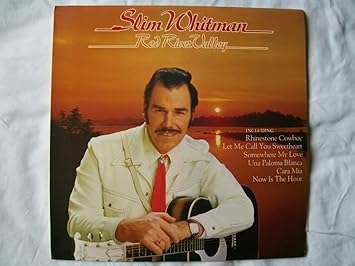
As I say, no one was expecting such a response from, of all people, Slim Whitman, although the cover alone should have made buyers rethink; there he is, in full profile, against an oddly desolate-looking orange landscape, clearly the Red River, but his smile is strangely uncertain and his picture looks as though pasted onto the background on a computer. Slim Whitman, from Florida, and perhaps it took some people until his appearance in Mars Attacks! to work through the idea of his being an alien who falls into the West, but the impression is already more than apparent here. He does not look unambiguously happy; indeed, he looks a little distracted, as though wishing to be somewhere else completely, including nowhere else.

Most of the album was recorded in Britain under the production team of Ken Barnes – who in seventies Britain specialised in reviving careers of pre-rock entertainers, including Johnny Mercer, Bing Crosby, Fred Astaire and Peter Sellers – and Alan Warner, with Whitman himself and Pete Moore collaborating on the arrangements. Three of the tracks, however – “Somewhere My Love,” “My Elusive Dreams” and “Now Is The Hour” – come from an American recording session in 1975, overseen by pedal steel guitarist Pete Drake, a name we’ve not seen here since the days when Dylan was a TPL regular. The title of its parent album? Everything Leads Back To You.

And some of it was recorded in front of a wall.

The record gets off to an ebullient, if slightly cheesy, start with Whitman’s reading of “Rhinestone Cowboy.” He sings it as though it were indeed a song of the Old West with yodels and even an accordion. But other dynamics break through the song’s fabric; an incongruous rock guitar and a disturbing, descending electronic whoosh, repeated again and again, like a Stones backing track left on autopilot, interrupted by icy cuboids of string synthesiser.

His version of “Una Paloma Blanca” – no, this is not the running order, but trust me, it makes more sense this way – is even more alarming. He allows himself one extra bar in each chorus so he can yodel, and there are also two key changes. Despite the questionable backing singers, his celebrations of freedom are not quite untethered – he puts special emphasis on the couplet “Yes, they tried to break my power/Oh, I still can feel the pain.” But the song staggers around itself like a collapsed Hendrix jam, glued together with fire alarm analogue synthesisers, and he reveals that what he has been breaking is glass. “You’re such a wonderful person,” he concludes, “but you’ve got problems.” He asks to touch (but does not want her, or him, to see what he’s done) and then he’s gone in an instant.

“(It’s A) Small World” is a bracing run through the Sherman brothers’ Disneyland jingle, its yodel-heavy gallop only slightly detoured by the inhuman electronic gargle, like a ceaselessly dripping tap, which runs through the entire song, where the small world is demonstrated to be a room which the singer’s subject never leaves, and eventually he resorts to quoting the Yardbirds’ “For Your Love” with the sinister midway whisper: “I’m just a little bit afraid of you/’Cause love won’t make you cry.”

“Too Young” does not resemble anybody’s idea of a hit single by a major artist. The song rambles along like a kind of robotic disco discharge, clearly evolving from a funk jam. Again the string synthesiser descends on the scene like atomic snow before abruptly cutting off. There is a female voice – one wordless line, and a hugely poignant moment; a reminder of memory, of the days that those once were. Then a puffing walrus of a baritone sax, and it is not until almost two minutes that the singer, in his lowest register, booms into the picture; even now, it remains a shocking moment. The lyric, as such, is like a series of Beckettian cue cards resembling a pop song – “Don’t you wonder sometimes?,” “Nothing to read, nothing to say.” And then, almost as quickly as it started, the “song” ends and fades into artillery snare drum fire; a profoundly disturbing addition to any top three singles chart, and one which certainly made this thirteen-year-old observer think that it was true; everybody was cutting themselves off from everybody else.

Gollancz’s Science Fiction Argosy, edited by Damon Knight, no cover but a huge single burgundy volume, borrowed on repeat from the local library, was my staple read of that time. I’d stretch out on my used chaise longue in my bedroom, with innumerable pieces of paper and notes scattered around its fabric, and read; it was an enormous compilation of “the greatest” science fiction stories, so big that it incorporated two novels, Alfred Bester’s The Demolished Man and Theodore Sturgeon’s More Than Human. I couldn’t get enough of it, read everything into and out of it. It added to my general internal picture of a politely disintegrating world.

“My Elusive Dreams” is perhaps the album’s stand-out track; a far more emotionally involved and generous reading than that of Tom Jones on the Delilah album, but still the most desolate of songs – Whitman is truly incredulous that his wife is still willing to follow him around with his possibly imaginary quest (his “And still you won’t let me go it alone” is considerably more compassionate than Jones’), despite the fact that in the course of their endless moving on in the search for “it,” a third party is born and dies. And yet he won’t give up; he can’t give up, and Drake’s matchless pedal steel accompaniment makes you feel the chill in his soul as well as the warmth of his companion.

But this “it” – what is it? “Every chance/Every chance that I take,” he sings, “I take it on the road.” Always the same crashing end, the soaring guitar representing his futile hopes of escape. Then again, who decided they were futile? In “Cara Mia” – an old song played here like Abba performing “Oliver’s Army,” with fast piano, argumentative pedal steel and near-power pop drums – Whitman is so desperate to hold onto his lover that his “’Til the end of time” hovers like the ghost of Ophelia.

And, deep in the surface ebullience, a confession: “Sometimes you get so lonely.” An admission: “I’ve left every place.” A prayer: “Share my life.” Isn’t that what both Bobby Bland and Richard Manuel wanted once upon a time, when they separately sang “Share My Love" (Whitman's very dignified and affecting reading of "Let Me Call You Sweetheart," much later to be used as the soundtrack to a television advertisement for a telephone company, addresses the same plea from the opposite angle)? Following which, a near-androgynous reading of “Somewhere My Love,” thinking of that endless pumped-in snow of David Lean’s, the desperation in Sharif’s eyes as he sees Christie in the trolley bus, and the shock which then really kills him – and yet, all around this snowy scenario, there is revolution and blood and death – but Whitman’s sustained falsetto makes me think of Antony Hegarty. And somewhere there is the harmonica from “Groovin’ With Mr Bloe,” taking off again, the protagonist wandering off again, into himself…and away from us.

“Somewhere my love/They might let me meet you/Perhaps.”

And yet, for me, this was my “it.” The two reviews in the NME; there’s a good idea which thereafter never really got exploited. Good cop and bad cop. Oh, they’re still there to read in Rock’s Back Pages for a small and not unreasonable annual fee, but I don’t want to reread them.

Why? Well, for a first, the reviews embedded themselves so deeply in my mind that I can still quote them virtually word-for-word. And, for a second, the issue itself is still in my mother’s attic in Scotland and I only have to go there and recover it. But, for a third, I fear if I did reread them now their quaintness and ridiculousness might embarrass me. I worry that I might not get the same feeling from reading the pieces now that I did when they were new and fresh. I remember that Ian MacDonald’s piece used then-hip terms like “kulchur” which would now make me squirm. And that Charles Shaar Murray’s opposite (not opposing) view was a necessary correlation to and illumination against MacDonald’s extremely bleak outlook. And who’s to say CSM wasn’t right – after all, he is still with us, a much-respected veteran music writer happy to churn out 300 stock words on 50 years of the Stones for
ShortList magazine to subsidise the harder stuff, whereas MacDonald, (in)famously, is not. And given in mind that the singer himself was to release the antidote, and coda, to this record later that same year – look, this is far down we can sink, but look, I have dragged myself out of the wallow and once more embrace the world (even if just for one day) – the argument is almost incontrovertibly in Murray’s court.

But the IMac piece was the one that burrowed itself into my mind and made me decide that writing – maybe not specifically about music, but writing
per se - was what I wanted to do. Specifically, I loved the idea that you could use a record review as a launching pad to talk about anything and encompass, potentially, everything, including the state of the world and that of the writer’s own world. The sixties, The Dice Man, Muzak theory; it all chimed in with what I felt was the way to go. And the IMac piece remains for me a touchstone, a blueprint for the notion of music writing as ekphrasis; someone sufficiently inspired by a work of music to write a work of literature.

How was I, in 1977, to know that the same piece was a disguised preliminary suicide note?


Fast-food songs, quickly in, imprinting themselves and then dashing out again, like a conveyor belt Nova Mob.

But already the singer has disappeared.

The Red River of the North, as well as flowing through North Dakota and Minnesota, also flows into Canada, through Manitoba and towards Winnipeg. Despite its picturesque scenery, the area is extremely prone to flooding, and major floods have occurred at least four times in Whitman’s lifetime, in 1950, 1997, 2009 and 2011. The people there are well prepared, though, so when a flood happens they usually put up their sandbags and retreat, with no major casualties and relatively little damage. So when looking at the cover of Red River Valley, remember that this oasis can swiftly turn into an engulfing sea.

Of the song “Red River Valley” itself, there is an infinite slowness, one born of patience. It is performed like the saddest of requiems – all through the album are songs of leaving, departing, coming apart – and for a while there are just solemn banks of electronic keyboards, like regretful mountain ranges. It is as if the singer has dematerialised into another, more advanced life, and this is what he has left behind for us to hear, or perhaps he is all around it anyway – the break when his voice reappears, thin, high and pinched, chanting in a foreign language which no one can understand and which is probably made up, is anything but reassuring. “We will miss your bright eyes as we smile,” I catch somewhere in the middleground – “Bright Eyes,” that song about rabbits running away from death into their own kind of afterlife – and the original, stately melody, complete with electronic choirs, returns to the picture.

In “When The Moon Comes Over The Mountain” – on his The Great Pretender album, after a furious free workout, Lester Bowie suddenly stops the performance and plays this song quaintly, utterly straight (even with exaggerated thirties trumpet vibrato, and completely movingly – the singer has vanished and cannot be glimpsed, apart from faint, distant traces (“I’m alone with my memories of you”). Instead, synthesisers and vibraharps pass elegantly through the scene – art decayed might be the real subtext here – and there is an exquisite nothingness about this now entirely alien music. But that wobbly Moog could almost be a pedal steel.

I thought about the gasometer that used to mark the boundary between Uddingston and Bothwell; it’s long gone now, but in my childhood it was constantly in sight, no matter where I was – you could see it as far as Mount Vernon. And I think of the backwaters of Uddingston, the arteries that course water and nature from Kylepark to Bothwell Castle, or emptily sunny Sunday afternoons, and this is the music which springs to my mind.

Of course, by making itself out to be The Last Pop Album Ever Made, it sealed its own doom – much as the Pistols would do – insofar as it also, as it turned out, turned out as The First Pop Album Ever Made, because so many people heard it and wanted to follow and develop its notions. I can hear with joy so much of what is to come – from Ryuichi Sakamoto to the Aphex Twin – within its textures. It’s not just the first album of the eighties; indeed, one could usefully draw a picture of the history of popular music as being divided into two parts – what came before this album, and what came after it.


“Mr. Ting-A-Ling (Steel Guitar Man)” – and the pedal steel player here is almost certainly BJ Cole. An astonishing performance, too, cutting through Whitman’s tale of woeful abandonment into areas of near-abstract soundclouds of free improvisation, without ever getting away from the song’s emotional nubs: “Help me remember those beautiful years” and the pained “I love her, I miss her, DON’T YOU UNDERSTAND?” After which the track moves into introspective post-Reich minimalism, over which a hurt guitar plays “Scarborough Fair,” another memory of a deep and dim past. I note in both the title track and “Now Is The Hour” Whitman asks the lover he is about to leave, or is about to leave him, to “remember” him.

“Now Is The Hour” is the only possible finale, since it feels like the end of everything. There are echoes, possibly Hawaiian, of goodbyes – “I’ll miss you, far across the sea” – but mostly a closely-miked, hesitatingly ascending bassline over modal electronic static with subtle backward hisses and tonalities, repeating and slowly modifying. It does not seem that anything can live or survive here. Where has humanity gone?

Underground?

There are learned discourses on the record available, I know. But in my selfish way, I don’t want to know what it is about, what inspired it, what records he bought and listened to, what was going through his mind – not even the Wall, or the Strategies. To me, and to all his fans at the time, it came out of nowhere – absolutely nowhere - and stands as undisturbed and disturbing as any Whistler Chelsea nocturne (where is the life in these waters, those boats?). More than any other album I can think of – with one exception – it is an album which demands an individual response from each individual listener. In these thirty-five years, it has been equalled or surpassed perhaps only three or four times. It still stands as a citadel; whether it’s a warning or a welcome is entirely up to each listener.

And then a chorale gloomily rises up through the music before breaking into bright, crisp high harmonies. But what are they singing? Nothing anyone sentient can work out; the remark IMac made about the Martian trying to decode Sinatra still seems the nearest anyone has come. They sing, of someone, or something, half-remembered or not remembered at all – the song of the Replicants (see Blade Runner, see Tricky’s “Aftermath”) – and then the music goes back to where it was. With one exception; there is a warbling saxophone, played as though the saxophonist doesn’t know how to play the saxophone, reaching back to faded old dancehalls, a past still visible but just beyond the living grasp of the observer. It’s there, but the singer can’t reach it. Unless he feels like breaking down the Wall.

If there’s any message to Red River Valley, it’s that the singer is very far from happy, but also there is the very strong and pronounced feeling that things cannot go on as they are. And the record ends with hope, as Whitman sings “For someday, I’ll sail across the sea…home to you.” We’ve come this far, yet still long to go home. And yes, Red River Valley is mostly, to my surprise, a very moving record; I am aware that sometimes in my own elusive dreams, I’m prone to fantasising about records – for instance, if one of my favourite albums, and one of the most important albums ever made, is kept at number two in the album chart by something else, I like to think that both records are two sides of the same coin, and conjure a union of the two records into being – but I believe that Red River Valley, despite occasional journeys into the land of cheese, has great emotional depth and resonance, and that its seeming facelessness conceals a profound humanity; we’re not happy, so let’s see what we can do to become happy. Without that hope, nothing and nobody could go on. They go on.

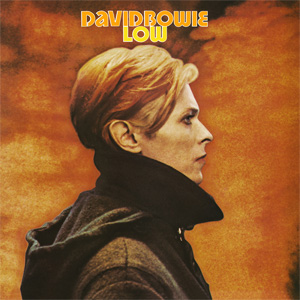
Track listing: Speed Of Life/Breaking Glass/What In The World/Sound And Vision/Always Crashing In The Same Car/Be My Wife/A New Career In A New Town/Warszawa/Art Decade/Weeping Wall/Subterraneans


Wednesday, 11 July 2012

ABBA: Arrival


(#179: 15 January 1977, 1 week; 16 April 1977, 9 weeks)

Track listing: When I Kissed The Teacher/Dancing Queen/My Love, My Life/Dum Dum Diddle/Knowing Me, Knowing You/Money, Money, Money/That’s Me/Why Did It Have To Be Me/Tiger/Arrival

What do they know of Abba who only “Dancing Queen” know? Despite its very brief running time – a shade over 33 minutes – and the general critical consensus at the time being one of three major singles surrounded by an awful lot of filler, or a lot of awful filler, it is clear that a lot of work went into Arrival; recording sessions for the album began in August 1975 but were not completed until October 1976. In truth, these were interrupted by the need to tour and promote the Abba album and the “S.O.S.” and “Mamma Mia” singles; in addition, both Agnetha and Frida were working on Swedish language solo albums of their own. Consequently, work on the album began in earnest in March 1976, but “Dancing Queen” (under the working title “Boogaloo”) and “Fernando” had been worked on in the original sessions; “Fernando” had begun life as a track for Frida’s album but once the band realised how huge a hit it might be, they redid it as a stand-alone Abba single (and, although appearing on several international versions of Arrival, and also as one of the bonus tracks on the CD edition, it was never intended for the album as such, and therefore misses a second chance of being talked about here; do not worry – its time here will come).

What do they know of Abba who only “Dancing Queen” know? Did they bother listening to the albums, or just buy them and file them away as uneasy listening? Here is an album which begins with a girl causing everybody to scream, and more or less ends with the same girl screaming. Yes, they are there, in the cockpit of their helicopter, ready to arrive, to make themselves known to the world – but note that none of them is smiling, and that, although blue skies are behind him, there is a gathering darkness, or possibly a storm cloud, directly over their heads.

And, though voiced through the voices of two women, this album is the story of the journey of a woman from idolating child to fearful or vengeful adult; as has been the case in most of these instances, familiar hits gain a new dimension from being heard in their original context. “When I Kissed The Teacher” begins like Thunderclap Newman’s “Something In The Air” – the same earnest acoustic guitars, the same tempo, the same key – but then goes somewhere entirely different: “Everybody screamed when I kissed the teacher,” Agnetha sings, “And they must have thought they dreamed.” The rest of the music slides into view from stage left, like a radio volume knob discreetly turned up, and the mood turns celebratory. At the first part of the middle eight (“One of these days…”) it sounds rather like a song from Fame would go on to sound; pupils up on their desks, dancing through the corridors, as though they had been waiting their whole, brief lives for this one kiss, this solitary signal of liberation. Meanwhile, both keyboards and chords point a very clear way towards the future (“As I held my breath, the world stood still”), and although Abba never had anything to do with punk, the underlying playfulness of authority being questioned, mocked and, indeed, hugged must have had some kind of subcutaneous effect at the beginning of this year, of all years.

A downward piano zip of an introduction, recalling “I Want You Back,” and we are into “Dancing Queen.” The schoolgirl is now seventeen, or perhaps merely an observer of a seventeen-year-old, thinking thoughts that could have come out of the fifties (“You can dance, you can jive”) even though there are hints of 1976 throughout (at one point there is an almost imperceptible paraphrase of “That’s The Way (I Like It)”). It is no revelation that George McCrae’s “Rock Your Baby” was the initial inspiration for the song, or that drummer Roger Palm was thinking of Dr John’s Gumbo (in particular, I would venture, his version of “Iko Iko”); what is new is the way elements old and new are blended and synthesised. I have written about “Dancing Queen” two or three times before, and each time I have indicated how and why many observers considered this to be as radical, or more radical, a 1976 single as “Anarchy In The U.K.” in light of its long-term influence; the synthesiser arpeggios in the verses, combined with Rutger Gunnarsson’s raised eyebrow bass at “You can dance,” suggest a new form of three-dimensional pop; we had become so used to the two dimensions of voices and instruments (plus or minus arrangements) that this novel third layer beguiled; the notion of a musical middleground where (largely) keyboards comment on the song without actually stepping in, like semi-passive observers. So full and febrile are the keyboards on “Dancing Queen” that you momentarily wonder whether they are being touched by human hands at all; this feeling pervades through to the early eighties work of Simple Minds and the Associates, while the influence of the grandiose piano flourishes (and Gunnarsson’s bass) on the subsequent work of Trevor Horn almost goes without needing to be said.

And yet “Dancing Queen,” for all its regal perfection – if there were a cinematic equivalent, it would be the final third of Visconti’s The Leopard - is among the saddest of pop songs. “You come in to look for a king – anybody could be that guy,” the voices sing, and later: “You’re a teaser, you turn ‘em on/Leave ‘em burning and then you’re…gone/Looking out for another, anyone will do.” Not the teacher, not a potential lover, just the partner as personal tabula rasa, because all the dancer can see is herself. “Feel the beat from the tambourine” – does this European layer cake hide an essence of voodoo?

But the yearning in the singers’ voices, particularly in the final chorus, suggests a feeling that already the song and its singers know things are never going to be as good again. “Dancing Queen” was and is Abba’s “peak” – if you think of pop as a mountain range – but like “She Loves You” its formal perfection is in part rooted in its own foreboding; this moment is so right, so “pure,” so unsullied, and, like the opening and unrepeated chord of Vaughan Williams’ Tallis Fantasia, it will never reoccur.

“My Love, My Life” is one of Agnetha’s best solo features with Abba, and is a peculiarly distended track; beginning with an introduction of partly backwards vocals (thus tying it in with the very similar sequences to be glimpsed in Wish You Were Here), the song becomes a hymn. The backing harmonies were fashioned after the example of 10cc’s “I’m Not In Love,” and although there are no Ligeti speaker-filling totalities to be heard here, both Agnetha and the rest of the musicians perform the song with great and natural grace. And yet it is a song of something ending: a romance, an affair, is coming to its natural end, but Agnetha doesn’t quite want to let it go (“Answer me sincerely,” she pleads more than once). The impassioned fatalism of her performance, however, makes the song a sort of bookend to “The Day Before You Came,” although this song’s structure is much more patient; there are bells, and the music swoops up like a hopeful eagle to Agnetha’s trembling “My one and only…” which is answered by a long pause, or a silence. And is there something faintly sinister about her line “I know I don’t possess you”? “Dum Dum Diddle” lands us back in bubblegum, with some scatty double entendres about fiddling and desire, and trots along rather unconcernedly, except that, unlike the teacher, there’s no indication that the singer even knows the fiddle player.

And what would happen if they had got together; would their fiddling have been joyous and eternal, or would they end up like the walking ghosts in “Knowing Me, Knowing You”? What a strange, almost schizophrenic song this is; what a spectre it created when it topped the charts as a single (and thus brought the album back for its extended second wind at number one). There are the verses, as blank and neutralised as any non-punk 1977 pop; Frida with her grim two-syllable triplets (six, six, six): “No. More.” “Care. Free.” “Laugh. Ter” – behind her, a whispering phantom Agnetha echoing in the tortured chambers of her mind, bouncing off the treated electric piano chords. A transitional and apocalyptic bridge (“This is where the story ends. This is goodbye.”) – and yet they cannot bring themselves to push the button. The chorus is rousing, hopeful (despite its lyrics; note how Björn and Benny respond in the background) and topped by a disingenuously cheery guitar (Lasse Wellander). Musically it’s a follow-on from their earlier “Hey Hey Helen” – what’s going to happen if you don’t commit? What worse things could happen if you do? – but structurally it oddly resembles a Beatles composition; Lennon verses (terse, minimalist, huskily sung) against McCartney choruses (verbose, maximalist, sung high and light). And there’s the underlying question of those children (“In these old familiar rooms, children would play”) as though this is not just a marriage, but an entire lifeline, that is being methodically snuffed out. She began the side kissing the teacher, she ends the side by regretting ever having kissed anyone.

“Money, Money, Money” opens side two, and although always a rather lacklustre piece for me as a single, it sounds in this context unexpectedly angry and even venomous. Once again, Frida is called upon to sing the lead and she sneers resentment throughout the song, as though ripping apart the entire “old fashioned house/millionaire” façade, even though she recognises her own predicament and does herself down (“And if he happens to be free” – think for a moment about the meaning of the word “free” in this song – “I bet he wouldn’t fancy me”). In the first and third section of each verse, Frida, piano and bass come charging towards the microphone in accumulative rage before settling into the song’s matrix, and throughout the percussion work is particularly fierce; Ola Brunkert’s agitated drums, far less settled than Nick Mason on “Money,” and Malando Gassama’s raging, echoing timpani. What does money mean anyway?

“That’s Me” is perhaps even more disturbing, not least because it welds an upbeat, purposely tinny dance tune with lots of unexpected chord changes – hello, Stock, Aitken and Waterman – to a potentially gruesome lyric. “I’m Carrie not-the-kind-of-girl-you’d-marry,” sing both Agnetha and Frida, “That’s me” – and Carrie, the film, was showing by this time. “If I’m sweet tonight/Things look different in the morning light,” “Are you sure you want to hear more?,” “I can’t help my ways,” and, somewhere in the middle (bolstered by incongruous forties deep harmonies), “It’s lonely to be free.” Throughout, Benny’s keyboards are especially florid, shooting up like Catherine wheels, never resting, as though predicating that the girl herself will be forever restless.

“Why Did It Have To Be Me,” with verses sung by Björn and choruses sung by Agnetha and Frida, muddies the water further. He took “Carrie” at his own word and is angry and bemused at now being rejected; all the girls can do is offer a regretful, extended “told you so” response. Meanwhile the music, ostensibly midtempo rock ‘n’ roll, veers just clear of chaos; Lasse Carlsson’s tenor sax solo is like a razor on the verge of cutting, Janne Schaffer’s lead guitar chords sound at points like glass breaking, and the whole is a horrific hall of mirrors distortion of “I Do, I Do, I Do, I Do, I Do.”

And so to the album’s climax, “Tiger,” one of many Abba songs I’d forgotten I knew. This is an “S.O.S.” beyond anybody’s help (Brunkert’s drums pounding as though trying to escape the dagger cane) and we could not be further from the carefree cheek of “When I Kissed The Teacher”: the girl is now an adult, wandering alone and scared in the city, putting on a cloak of protective defence (“People who fear me never go near me”) to hide her fear under a bushel of defiance. “The city is a nightmare, a horrible dream,” the girls sing. “Some of us will dream it forever,” and now the dream has indeed become a nightmare, the city a prison for one’s self (“Look into the shadows and you’ll see the shape…of me”), with the meditative middle eights only offering a brief respite. Agnetha, born in 1950, the Chinese Year of the Tiger – and those ascending, horrifying screams with which they sign off forever (a contemporary parallel? What about “Side Streets” by Saint Etienne?).

Then, with the closing title track, Abba disappear into themselves. The bagpipe undertone recalls the similar function “Amazing Grace” served at the end of Glen Campbell’s story, but it is synthesised, and the only voices present are a distant, wordless chorale. They have found something, discovered something, and are now hiding within it; wordless because no words could express what cannot be anything less or more than pain. I note the resemblance of the synthesisers to those of Brian Eno (the track’s main theme could pass as a variant on “Another Green World”) and the drifting ambience of voices without words, of souls, minds, lost. We’ll be getting back to that soon enough. Of course, there’s another interpretation of this song, and the album as a whole; had it not been written by men it would be a crash course in why females rebel, but also there is the sense that something is being welcomed in, something that eventually will be called New Pop – in so many ways does Arrival tug in advance on the sleeve of the eighties – and that this record is in some ways summoning up these spirits, willing them into being (see also the remarkable parallel of the closing instrumental track of Sparkle In The Rain).

Of course, “Arrival” is also the title of the pilot episode of The Prisoner.

“Walking through an empty house, tears in my eyes.”

So deep in these rooms, they never leave those rooms.

“It’s lonely to be free.”

Sometimes you get so lonely.

Sunday, 8 July 2012

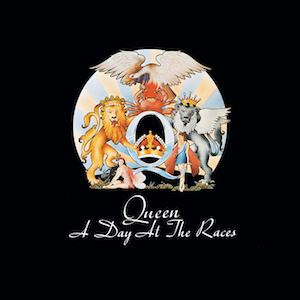
QUEEN: A Day At The Races


(#178: 8 January 1977, 1 week)

Track listing: Tie Your Mother Down/You Take My Breath Away/Long Away/The Millionaire Waltz/You And I/Somebody To Love/White Man/Good Old-Fashioned Lover Boy/Drowse/Teo Torriatte (Let Us Cling Together)

Listening to Queen’s individual studio albums, as opposed to simply their various Greatest Hits collections, I am more and more convinced that they are the Morecambe and Wise of rock. By that I do not mean that Freddie slapped Brian around the face and coughed “Arsenal!” or that Roger Taylor has short, fat, hairy legs, but that they are indubitably British, with a much-loved, audience-loving frontman who died too young, and that the people who claim they “love” them know only their “best bits.” Indeed I wonder what would happen if I stopped someone in the street and asked them if they knew any Queen beyond “Bohemian Rhapsody” or the other half-dozen or so of their songs regularly recycled on oldies radio; I suspect that most people would not, and that furthermore, if they delved beneath the hits, they might be rather surprised, and maybe not a little nonplussed, at what they find.

And just as watching any conventional episode of The Morecambe And Wise Show might in some cases lead to baffled viewers wondering what all the fuss was really about, then it’s equally possible that anyone listening to A Day At The Races might shrug their shoulders in bemused indifference. I know we have had things like Another Black And White Minstrel Show, The Rolling Stones No. 2 and The Best Of The Stylistics Vol II - not to mention Led Zeppelin II-IV - but this must be the first bona fide number one album that is the custom-built sequel to another number one album, and it is the regretful case that Races does not match the standard set by A Night At The Opera.

You certainly couldn’t fault the group for not trying; if anything, they try a little too hard here – although the cover insignia designs are different on each album, there is the Marx Brothers titular follow-on, the black album succeeding the white, and, over most of its ten songs, the mighty shadow of “Bohemian Rhapsody”; the whole album in fact starts with the gong that ended “Bo Rhap” and goes for a similar construction throughout. But, sadly, it doesn’t really come off. Mercury’s performances aside, there is little of the unforced humour that helped bring Opera its magic; the effortless, verging on insolent, stylistic genre-jumping prevalent on Opera now sounds forced and unnatural (there are no channel-hopping jump cuts, replaced as they are by ponderous ambient interludes). There is no “Bo Rhap”-style climax to sum the record up, no real sense of emotional deliverance. Instead the group’s eclecticism now begins to resemble a trap; the genre-hopping is superseded by what sounds like genuine confusion about what this group Queen should be, what they should sound like, what they ought to say.

Note that “ought”; A Day At The Races sounds like the album Queen felt they ought to make after Opera, rather than an album they wanted to make, and moreover the superb sequencing and editing on Opera show how important a part producer Roy Thomas Baker had to play; Races they opted to produce themselves (although a young Tim Friese-Greene helped engineer, and is thanked on the sleeve) and the result is rather how one would expect a Beatles album to sound like without George Martin there to curb their indulgences.

That all having been said, “Tie Your Mother Down” is one of the great album opening tracks; after a minute’s preamble of Oriental riffs and backwards harmonium, the song rips into being, Mercury’s “Oh!” exclaimed with the supreme confidence of someone springing out of bed, already wearing his jodhpurs, promising a great start to a hopefully great album. It’s clear from both the lyric and Mercury’s half-spoken snarl of a vocal that the song is a send-up of Jagger/Stewart-style jailbait cock rock (“Take your little brother swimmin’/With a brick (that’s all right)”) as he urges extreme violence against his would-be lover’s protectors before concluding “Why can’t they understand I’m just a peace lovin’ guy?” There is even a little Robert Plant takeoff towards the end and a complete assurance on the part of the whole group, a certainty which doesn’t really exist anywhere else on the record. It did only moderate business as a single, and so missed the Greatest Hits cut, but is one of their finest rockers and for years thereafter (although May had had the riff to hand since 1968) the staple opener to their stage act.

Then, disastrously, crucial momentum is lost. Following a meandering multitracked Mercury acappella Beach Boys vocal tribute, Mercury is largely alone with his piano to sing “You Take My Breath Away.” A clear attempt to reproduce the impact of Opera’s “Love Of My Life,” the song is not without its merits but its recitative nature – Mercury takes his time with it, doesn’t rush it and in part performs it out of tempo – clashes with the mood the opener set up, and the song isn’t strong enough to transcend that boundary. May briefly appears with a little guitar chorale, Taylor swishes his cymbal once, but the vocal and keyboard textures noticeably thicken when the song shows itself not to be a simple expression of idolatry: “Anywhere you go, I’ll be right behind you/Right until the ends of the earth” – does this remind you of another similarly-titled song? For something that depends on emotional power rather than brute volume, “Breath” is possibly misplaced here, and would have worked much better in a live or solo context (one of my regrets about Mercury is that he did not live long enough for Rick Rubin to get him and his piano into the studio for the solo album that surely would have happened).

All of a sudden, with the May-written and sung “Long Away,” we are in Big Star/power pop territory; a very confident mid-seventies soft rocker which, save for Mercury’s occasional massed harmonies and the characteristic long drone guitar pause in the centre, you would hardly recognise as a Queen track; May still looking for spiritual assurance (and his queries echo those of Mercury’s in “Somebody To Love”), the whole reminiscent of Teenage Fanclub playing what Lena terms “The Atheist’s Lament” (or possibly “The Astrophysicist’s Lament”).

“The Millionaire Waltz” encapsulates the problems at work on this album; within the group there are at least two forces wanting to pull their music in two different directions. It alternates between a cheerful camp piano-and-bass waltz and an all-out rocker, neither comfortable with the other – though I note, as with so many of these tracks, a tendency for the song to pause midsong for thought, or perhaps catching its breath. As Mercury is well on his way to inventing Rufus Wainwright, along comes a violent transition (“Come back to me!”), and via a quick Marlene Dietrich impression (“My fine friend”), forces its way back into – the third section of “Bohemian Rhapsody.” It is as though they cannot escape its shadow, and is jarring, rather than enjoyable, listening; yes, there is the quiet-loud-quiet alternating that would delineate so much of late eighties/early nineties American rock (and which, from the sound of it, I also suspect was a major influence on Earl Brutus; see, for instance, “On Me, Not In Me” from an album entitled Your Majesty, We Are Here), but not the point. Side one closes with John Deacon’s “You And I,” a competent slice of Elton-ish yacht rock which May repeatedly tries to engulf with his heavy riffing. It sounds like two records playing at once, although I note the House-anticipating piano riff at fadeout.

“Somebody To Love” was both the lead single and the album’s main setpiece; since it made number two as a single, I shall keep my comments here to a minimum. It’s enough to say, however, that Mercury delivers his most committed performance on this album, taking the love/God self-questioning of the first section of “Bo Rhap” into more psychologically tortuous waters; in the middle eight his vocal runs almost at riot, ignoring bar lines, tempo and so forth, as Lydon’s on “Holidays In The Sun” but he manages to pull himself together (with self-mocking “He’s all right, he’s all right” backing vocals). Thematically it’s “Another Saturday Night” gone to church, though Lena sensed a compatibility with “A Change Is Gonna Come” and pointed out the piano quotes from “Jesu, Joy Of Man’s Desiring.” Inspired by Aretha Franklin’s gospel work, “Somebody To Love” finally reminds me of, of all people, Kevin Rowland; the same obsessive searching for “something” or “somebody” (“Where have you hidden it?” you can almost hear him asking), the same, near-religious commitment to escape and personal freedom. With “Tie Your Mother Down,” it is also the record’s best group performance.

May’s “White Man” tries to be Races’ “Prophet’s Song,” the record’s big rock epic, but unlike its predecessor never gets past first base; the lyrical theme is the same as “Indian Reservation,” complete with Cherokee tom-toms from Taylor, and despite (again) that quiet-loud-quiet trope, it is ponderous and proves that Queen at their most earnest were also Queen at their least entertaining. After that it is a relief to get into the familiar puddles of Mercury’s “Good Old-Fashioned Lover Boy” (strange how the album’s two most immediately memorable songs were both written by Freddie) which confidently revisits and reshapes “Seaside Rendezvous” with a sudden dip into 10cc territory (“Hey boy where do you get it from?”) and the only convincing use of the noun “patter” in pop outside “Dick-A-Dum-Dum” (as well as a nice meditative interlude, distantly reminiscent of “Beautiful Dreamer”) which makes you wonder – May and Taylor may have been rockers wanting hard rock, but Mercury was happy with pop art, or art-pop.

Certainly there is little to be happy about with Taylor’s “Drowse,” a very long-sounding 6/8 trudge with atrocious lyrics (“Waves of alternatives wash at my sleepiness/Have my eggs poached for breakfast I guess” - See The Old Lady Decently this is not) and nothing of the spirit and enthusiasm of his previous “I’m In Love With My Car.” The album then limps to an unsatisfying close with “Teo Torriatte,” written by May as a tribute to the group’s Japanese fans. If anything, the track reminds me of the hits of Slik; doleful minor key piano verses bolted to an incongruous (and musically illogical) jaunty major key chorus. Pink Martini could probably make a decent fist of the song, but as it moves towards its inevitable stadium singalong finale (the backing chorus make it sound like an Official English World Cup anthem) and then meanders morosely to fade, succeeded by a reverse reprise of the album’s opening to bring the track’s final running time to 5:55 (the same length as “Bo Rhap”) one does not feel liberation, or euphoria, but rather a feeling that Queen on occasion were not tough enough with themselves, as self-producers; much of the record betrays a sense of tracks not good enough to make it onto Opera, a too-hasty attempt to reproduce Opera’s adventure and power. Though their popularity in Britain remained relatively undiminished, Queen do not reappear in this tale until 1980, and by the time News Of The World came out in the autumn of 1977 they found, possibly to their surprise, that they had to battle for their chart place along with everybody else. For 1977 may well be the toughest of Then Play Long years to negotiate; seventeen different albums, including Races, made it to number one – which means that it will take me about four months to get through it – and less than half of these are, at the time of writing, still in print. Indeed I note with some disquiet that this number includes no less than four 40-track double compilations. There will be many acts we have not seen on TPL for quite some while – and some we have not seen before. I do not know how recognisable this tale will still be once I get to 1977’s end. But, just as the 1976 Morecambe And Wise Christmas Show is, in its way, cognisant of the fact that something, somewhere, needs to change, and soon, it is also the case that hurried “sequel” albums may not be the “day” Brian May wants us to look for.

Then again, was it not Queen who cancelled at the last moment their appearance on Thames Television’s Today show in December 1976, thus allowing another EMI act to take their place?

Wednesday, 4 July 2012

Glen CAMPBELL: Glen Campbell's Twenty Golden Greats


(#177: 27 November 1976, 6 weeks)

Track listing: Rhinestone Cowboy/Both Sides Now/By The Time I Get To Phoenix/Gentle On My Mind/Too Many Mornings/Wichita Lineman/One Last Time/Don’t Pull Your Love-Then You Can Tell Me Goodbye/Reason To Believe/It’s Only Make Believe/Honey Come Back/Give Me Back That Old Familiar Feeling/Galveston/Dreams Of The Everyday Housewife/The Last Thing On My Mind/Where’s The Playground, Susie/Try A Little Kindness/Country Boy (You Got Your Feet In L.A.)/All I Have To Do Is Dream/Amazing Grace

“I really don’t know life at all.”
“Is this what I really am?”

After too long, the Worried Man found that he was satisfied. He had made it. Yes, he had made it, up to a point, before then, but he hadn’t found it very enjoyable. He knew his guitar like the back and front of his hands, he felt what songs we wanted to sing, but the people who had invested their interest in him were happy for him to go along as a sort of post-hippie Gene Autry, being a cartoon country and western avatar. He wasn’t happy with this, and then sometime in the mid-seventies, when even his friend Jimmy had become forgotten, he found a song which outlined and encapsulated what he felt about the whole, stinking scene. He was in L.A., but, like Neil Diamond, it wasn’t home to him. This song spelled out everything he couldn’t stand about the way his life had gone, complete with swipes at “On Broadway” and “The Hustle,” and his means of standing up for himself and shouting “No more!”

He thought he’d done a pretty good job on the song. Good, controlled but very heartfelt vocals; in places he sounded not very far away from Neil Young. “A Man Needs A Maid.” He thought: there’s a song I could have done.

Paradoxically – because that is the way things happen – the song made him more popular than ever, brought him back. Number one on the Hot 100; that hadn’t happened to him before. And so the song about getting out of this rat race made him even more susceptible to rats, the people he didn’t even know, calling him with offers – what offers? Hollywood Squares next Tuesday? – which meant that, when he thought about putting it all together, he looked back on the life that had brought him to this point. “Rhinestone Cowboy” as a framing device for an extended dream – for in his songs there had been so many dreams, so many “believe”s, too many contradictions.

He thought about Joni. She was all right. She’d been on his Goodtime Hour, those weird guitar tunings which produced piano jazz chords, that laughing openness. And he sang the song of hers many had sung before – hey, another song about rain and snow! – but stretched the melody so far over the bar lines that he sang it virtually out of tempo. Nobody was going to hurry him. But what, the song asks, has he learned of life? His regretful answer is: not very much at all, nothing of worth or value.

Back to Johnny Rivers. That was who the song was written for originally, and he got a copy of his album, heard the song and recognised something of himself in it. Somebody called Webb, from Elk City, Oklahoma, was the composer, and so he tried to get in touch with him. Oh yeah; good old Jim, his songs and singing always showed a marked difference, a heightening of intensity and commitment, when he sang and played them.

The record only did fair business on Billboard - peaking at #26 – but it got his name noticed, and he still chuckled at the thought of Jimmy, and of “Phoenix.” Man, the variations that guy got out of an F major seventh – that key, which you don’t come across every day, was the basis for most of his famous songs. He grinned remembering that Jamaican guy with his “No Woman, No Cry” that came out around the same time as “Rhinestone Cowboy” – that was in F major too. Should keep an eye on him.

But “Phoenix.” Why the chuckle? He thought of how many people had covered it, or rearranged it, or resculpted it, at how often the original got played on oldies radio (thereby giving the impression that it was a far bigger hit than in reality it was). He still warmed with inner admiration at the song’s economy, a story told in just three verses, terse, concise. He goes travelling, rather numbed, but breaks out into tearful emotionalism when the signifiers are flagged up – “So many times before,” “But time and time again,” that latter line sung as though yanking the goodbye letter out of his throat – and when he sings “Off the wall – that’s all,” it’s a bit like the Big O. He doesn’t erupt into sadness, though; just Webb’s genius as the song finally modulates down before unexpectedly settling (“I would really go”) on a reproachful D major. He travels on, and away from the listener. When were places like Albuquerque and Oklahoma referenced in pop songs anyway, outside of Chuck Berry or Rodgers and Hammerstein?

Yes, he ruminated, his was quite the performance. And that Isaac Hayes one – giving the whole thing a backstory, building it up and up until the drummer’s hand is on the verge of falling off, then bringing in full orchestra and chorus as though his “Phoenix” were the end, or summation, or something? Eighteen minutes to do it. Wow.

And still he chuckled, because he wondered how many people had noticed the simple trick “Phoenix” pulls off. Not Isaac Hayes, that’s for sure, not the legions of writers who seized on the song’s finite sadness, the slow glide of regretful departure, the shaking off of an old and unsatisfactory life. Because, well…”She’ll,” “the ‘phone will…,” “She’ll” over and over, all in the same conditional future tense. Has he actually left her?. The answer has to be no – “Phoenix” is a dissatisfied man fantasising about leaving his lover; he doesn’t go to Albuquerque or Oklahoma, except in his mind.

Mind? “Gentle On My Mind,” the John Hartford song with its “columbines” pun, its piling up of fuck you detritus, a song all about a man who doesn’t think twice about walking out on his lover(s); if he gets bored, why, he just makes for the nearest railroad, or junkyard, or highway, carries on unfettered. But it’s not even as simple as that, because this one woman, she keeps invading his head every time he pauses to think, on the back road by the river, and he in truth is tormenting himself because he knows deep down she might have been The One, and, furthermore, there might still be a chance that he can get back to her. But bear in mind; this is the truth behind the façade of “Phoenix” – the man really has no regrets about worrying others.

And it digs deeper into his mind, and heart; in “Too Many Mornings” he faces up to the emptiness of his transient existence – no more lonely nights, indeed – and wants to break out of it. To head back home – so many songs of this time, he felt, were about going home, or trying to find home.

Instead of which, he washes up in the vast middle of Kansas.

Imagine that he kept on through Oklahoma – yes, you have to do many unnecessary twists and turns to get from there to Wichita, but geography here is really a state of mind – and finds his loneness. He is surrounded by nobody and nothing, and simultaneously by the world. He is working high up on the telephone lines, fixing them, fiddling with them, changing them around, and he is as alone as any hapless BrontĂ« heroine on the moors of West Yorkshire. He himself doesn’t change; from his story alone we could be in the twenties or thirties. In his mind he mingles workaday details of the pitfalls of his job and a piercingly sore yearning for the person he left behind. “I can hear you through the wires” – he is engulfed in quiet modernism, in a near-silent nowness, because he feels, he knows, that the world around him has changed, although he himself has not.

And then we get to the greatest lyric couplet in this tale. “What tale?” he asked. “This is my story.”

A couplet that has no need for the word “love” yet couldn’t exist without it.

A couplet in which “need” is given priority over “want” – the Carter Family marooned in a world full of Jetsons?

A couplet where that “for all time” could have been the corniest and laziest rhyme in all pop, but here, because of its emotional placement and delivery, stands for “eternity.”

The balance of old and new – the low-strung lead guitar paying tribute to Duane Eddy (“Because We Were Young”?), the RKO bleeps of Webb’s own organ, loaded onto a truck and taken to Western Recorders at the singer’s expressed wish.

High up, he knows the old world, and therefore his world, is fading, being superseded by a modernity he can’t quite understand. The camera of Al de Lory’s orchestration pulls away, to reveal an unending stream of green, of cars and trucks, of a dot in the middle horizon which if you look closely might still resemble a man.

Yes, he reflected, no matter what songs he sung, Jimmy always went above those.

That one where he did his Orbison thing, “One Last Time,” and you can tell, not just from the deliberately melodramatic drums and piano, that when he’s not dreaming about leaving her, when he is actually in a position to do it, he can’t quite do it. He begins solemn, reasonable, but the agony slowly builds up around him until he breaks down and confesses that he doesn’t want this to end. “Baby I WANT you!” he keeps screaming into the fade as though about to rip the song into pieces.

These Lambert and Potter guys, they brought him back by producing “Rhinestone Cowboy” and they suggested a little old-new medley. They’d already had a hit with “Don’t Pull Your Love” for Hamilton, Joe Frank and Reynolds – yes, he remembered them too, nice, clean kids from L.A., and weren’t they back on the charts now? – but slowed it down so he could marry it up with the old Casinos ballad. In one song he asks not to be left to cry for a hundred years, in the other he pleas to be loved for a million years. A bravura performance, always goes down well in concert. But a plea for permanence nonetheless. “Reason To Believe,” well, he doesn’t turn it into a Rod Stewart train wreck, he does it with good reason, even though the lover here is laughing at the tears he cried in “Don’t Pull Your Love.” And then he reaches out for love, for someone, for anything. “It’s Only Make Believe,” an old hit for his buddy Conway Twitty, and he does it, again, like Orbison, vaulting through two chord changes, daring the listener to guess how high he’s prepared to go, how much self-inflicted pain he’s prepared to suffer; he loves her, he’d do anything for her, but – perhaps like Barry Ryan’s “Eloise” – she doesn’t actually exist, except in his dreams.

What was that line from Barrie again about how Peter Pan wants to fly out the window but finds it closed and barred?

“Honey Come Back,” Jimmy again – and if this is not the sequence in which he recorded these songs (so their underlying, unifying story is slightly opaque), then this is the song where he drops all the pretending. “Seems like a hundred years ago,” he muses, but he may have already lost her; she’s off with someone else, off to the bright lights and big time. Half the song he talks, or at any rate mutters, before suddenly breaking back into song. Who is this, leaving him for a better future – could he even be singing to himself, his old self, about to become a huge star with the biggest of lives? The thought is examined more deeply in “That Old Familiar Feeling” with its arching, echoing pedal steel.

Was he really singing about himself, he wondered? And what, if anything, had he left behind?

“Galveston” – from Kansas to Texas, and yet to a Vietnam pretending to be the Civil War (hence the splashing cannons); he is prepared to go and fight, and risk his life, all in favour of forgetting what he’s running away from, but he can’t; the girl on the beach (did somebody say “The Girls On The Beach”?) is the same one loitering in the vagabond’s back roads of memory in “Gentle On My Mind,” but now with the added dynamic of the question “and is she waiting there for me?” – if indeed she is waiting at all. “I’m so scared of dying” – how often do you hear a line like that in pop, even now? But the girl, the beach, the sea, the memory, the war – “Galveston” is pop’s equivalent to Chris Marker’s La JetĂ©e, a series of stills all about memory, and love, and a horror barely touched upon.

But “Dreams Of The Everyday Housewife,” now that is a disturbing song. Written by one Chris Gantry, and a bigger hit for the singer in 1968 (in the USA) than “Gentle On My Mind” was, it is a delirious waltz which is more than a little reminiscent of Scott Walker’s very similar work, and lyrically just as double-edged; the housewife looks at her old photo albums, her old prom gown, wonders what the hell went wrong, from the time everybody wanted her. But – and here’s the mystifying rub – the housewife is clearly an Everywoman figure, but she “gave up the good life for me.” Every one of them. Musically the song looks forward to John Denver (especially “Calypso”) but this is worrisome. Again, that chuckle of his – all of these women giving up their lives for him? Or is he portraying himself as a kind of Everyman; is it a comment on the kind of people who buy and listen to his records – they think of the lives they used to have and the lives they live now, and his music is something of a succour, a balm, a form of pain relief?

“The Last Thing On My Mind,” Tom Paxton’s greatest song, and he thought he did it more than justice. Again his voice wanders down the corridors of Roy Orbison (though he wasn’t sure whether his 1971 version of “Dream Baby,” the missing link, would make the final cut; it didn’t, despite being Top 40 in both Britain and the States) but settles somewhere in the neighbourhood of Johnny Mathis. He is lying in his bed, like his friend Brian, consumed by fear and worry, and maybe the key point of his performance is when he exclaims “Lord, without you!,” putting an emphasis on the “Lord” as symbol of the thing which actually might be missing in his life…

…and did you catch, in that “Lord, without you!,” and the harmonic setting, the embryo of “Joan Of Arc” by Orchestral Manoeuvres In The Dark?

“Where’s The Playground, Susie” – Jimmy again, the most heartfelt thing of his he ever sung (though he wondered how many remembered his 1970 “Just Another Piece Of Paper” or “The Moon’s A Harsh Mistress” from ’74). “And here we stand/In a box of sand.” He thought again of his friend Brian, another sandbox dweller who never quite managed not to be a child. “And still you’re not content with something in me” – is this what we hoped for, grew up for, he asks, as he aims for the most absurd of high notes? Now he is in explicit pain.

And then there was “Try A Little Kindness,” a strange song for him to sing since it demanded the allowance of there being other people in the world. And yet “if you try a little kindness, you’ll overlook the blindness of narrow-minded people”…walking those streets of Broadway?

He snaps out of the reverie, or thinks he does. He’s in L.A., and it doesn’t matter that he was from Delight, Arkansas, rather than anywhere in Tennessee (America is his emotional shorthand); he takes another hard look at where he is, what he’s done with his life, and asks himself: “Is this who I really am?” and reminisces: “I can remember the time when I sang my songs for free.” Or the time a decade or so before, when he’d get up, do a round of golf, drive to the studios, read and play flyshit for a couple of hours, get paid, go back to the golf course, and then hang out with his family and friends drinking beer. Why couldn’t he have been satisfied with being L.A.’s best session guitarist? But Brian didn’t want to tour, so he went out on his behalf, and Brian even wrote and produced a song for him called “Guess I’m Dumb” which probably won’t be on this record and he guesses not too many people know about it; less than knew about “Turn Around, Look At Me” back in 1961.

The loneliness of the long-distance telephone repairman and that of the ageing surfer; move “Surf’s Up” inland, personalise it and you get “Wichita Lineman.”

And, finally, after a lifetime of walking out on girls or begging to be with girls, there is the voice of a girl, there in the studio with him. It is the voice of Bobbie Gentry, someone with a story of her own to tell, although there’ll be no real opportunity to tell it here, and they are remembering the Everlys (one side of a double-sided chart-topper, the other side of which was written by Roy Orbison). But it’s the same old story (that “gee whiz!” could stand for the sigh of Tantalus) of dreaming, imagining that love exists – and would you know Bobbie Gentry was on the record if you didn’t know it was her? Her voice is mixed so closely with his that you cannot clearly hear her; it could almost be him duetting with his overdubbed self. She is a ghost in his life’s camera.

No, this is not what he wants, or needs.

“Amazing Grace,” the last and most important song in this particular story

do you hear “Joan Of Arc” again? Same key and tempo and everything

and a song which keeps turning up when pop is in crisis – think “Never Ever,” think Calvin Harris’ “I’m Not Alone,” think even unto Kip Moore’s “Somethin’ ‘Bout A Truck”

Hey, I told you once, butt on out of MY story!

but “Amazing Grace,” a song he has known all his life, its dominant A major as reassuring a presence as the Statue of Liberty – and through performing this song he gains release, finds what he has been searching for. All of a sudden he leaves the world of heartaches and compromise behind, exceeds himself. His version pays tribute to both the Royal Scots Dragoon Guards – his own bagpipes – and Aretha Franklin (the gospel choir). He steadily and carefully ascends from sonorous baritone to Presley-like highness; it is a song of deliverance from the everyday, it is the song in which the singer finds his real self.

And he sings the song, the song he sang in church, when there was still hope, when possibilities still lay open for him, and realises that, like the song before it, he has wasted much too time dreaming his life away, travelling only in his head, for this Worried Man finds that he is not Glen Campbell, but living in the same house in Bedford Falls, Nebraska, while the world waited for him, and in part died for lack of him.

Is this record a map of the quietly tormented mind of George Bailey?

Where does he get these notions from? Alas, I know only too well; he gets them from me. I instilled them in him. He watches a film on television on Christmas Eve and he has all these crazy ideas.

I never say it to him, but I’m more than a little worried about what’s going to happen to him.

It is Christmas, 1976, and he has his presents; we give them to him straight now, rather than pretending that there is a Santa Claus. All because when he was seven, there was a stupid advertisement in a magazine he saw where the boy’s parents were laying out his presents beneath the tree. He stopped believing, and I believe something small but important died in him at that point.

But there is no question that he is racing ahead now; he’s only a month off thirteen, but he’s catching me out on stuff now, I who taught him half of everything he knows. But I can only lay the ground; he has to cultivate it. He has his music – so much music in here, even for a twelve-year-old, even for
him - and his books and he knows exactly what’s happening, and why. He makes me feel a little ashamed of myself a lot of the time, which is why I get so angry sometimes. At least that’s one of the reasons.

In truth, though, I can only do so much. I am forty-five, I have diagnosed hypertension, my heart isn’t in the best state, I have the overpowering feeling that I ought to have made more of my life, and the lives of those around me, than I perhaps did. I am well aware that in life expectancy terms I am now on stoppage time. If I make fifty that will be a real achievement. But if
he can make it to fifty I will feel, even beyond this life, that I have achieved something.

I have a feeling that he will end up too much like me. I can see it in his eyes. Heart problems are a given. But he will also have things that I never had, or never allowed myself to have. It will not be easy for him – I know this from looking at him now, even asleep. There is going to be trouble and the world will at times be astonishingly cruel towards him. But he still has that safety valve inside him – he’s made of stronger stuff than me, it’s beyond question.

All these records, though. 1976. He keeps his charts and I have to say I stopped keeping up a good while ago. Can’t abide
Top of the Pops. Nor, I suspect, can he. But he listens to these records, says things about them, writes about them and I don’t know anyone else who does, certainly no one of his age.

I frequently worry about what’s going to happen to him after he leaves school, when he’ll have to deal directly with The World, when he doesn’t have journalists and teachers to protect him. But I have no doubt he’ll find a way. He’s persistent and a survivor, like his mother.

I’m hard on you sometimes because the world’s going to be much harder.

But go on you must. After all, you’re my only son.


(The above is based on remembered talk and genuine writing by my father, who would have been eighty-one years old today.)

Wednesday, 27 June 2012

Bert WEEDON: 22 Golden Guitar Greats


(#176: 20 November 1976, 1 week)

Track listing: Dance On/Wipe Out/Wheels/Diamonds/40 Miles Of Bad Road/Yakety Axe/Kon Tiki/Ginchy/Pepe/Sleepwalk/Guitar Boogie Shuffle/Walk Don’t Run/Scarlet (sic) O’Hara/F.B.I./Sorry Robbie/Marie (sic) Elena/Shazam/Perfidia/Man Of Mystery/Hava Nagila/Albatross/Apache

When Bert Weedon died earlier this year, a couple of weeks short of his 92nd birthday, I wonder how many people still remembered him or what he had done. Indeed, I cautiously posted something on the I Love Music message board about his passing, and many American readers were astonished to discover the extent and significance of his achievements, as he was little known outside Britain. Growing up in mid-seventies Britain, I had no real idea who Bert Weedon was either. He was often on television, turning up on variety shows or game shows, a genial, middle-aged fellow who always got a warm reception from the audience, and I mentally filed him alongside Henry Cooper or Lionel Blair, a celebrity well known for being a celebrity, an all-round sporting chap who regularly turned out and did much good work for the Variety Club of Great Britain, and so forth…but what had he actually done in the first place?

I knew from listening to the Double Top Ten show on Radio 1 and reading Tony Jasper’s 20 Years Of British Record Charts, 1955-1975 that he had had some success as a guitarist in the late fifties and early sixties. From the weekly magazine series The Story Of Pop I also realised that he was rather more significant than chart data alone might disclose, but didn’t really feel the need to delve deeper. And when he appeared on TV screens in the autumn of 1976, cheerfully advertising his 22 Golden Guitar Greats, I had him firmly pegged down as light entertainment.

Listening to this album now – which in its day sold over a million copies – the unwary might justifiably wonder what the fuss was about. Twenty-two easy listening renditions of instrumental oldies from what was already a rather distant past, performed by a fifty-six-year-old man in smart suit and moustache (apart from Perry Como, the oldest living individual performer to have a number one album up to this point?) – what did this have to do with something like The Song Remains The Same?

It could hardly be acknowledged at the time that without this self-effacing, courteous man from East Ham, The Song Remains The Same could arguably never have happened, and that not only was he the chief architect of British rock music, but he was also (so to speak) instrumental in getting the guitar recognised as a legitimate musical instrument in his country. Weedon spoke many times about how he felt, even as a teenager in the thirties, he was on something of a mission to push the guitar to centre stage; until he did something about it, the instrument was chiefly known in Britain from its appearance in singing cowboy films. He initially took lessons from a classical specialist, James Newell, who didn’t have much time for jazz or Western swing (Weedon’s two main musical passions at the time) but convinced Weedon of what the instrument could express; he also taught Weedon something of yoga, Buddhism and philosophy.

After war service he began to establish himself as a guitarist, principally on the dance band circuit, working with Ted Heath, Mantovani, the Squadronnaires and others; with his jazz hat on, he struck up a long working and personal relationship with Stéphane Grappelli. At one engagement he found he had contracted TB, and was out of action for some months and also told to avoid working in smoky nightclubs and dancehalls. Initially perturbed, he opted to become a studio player and quickly gained a reputation as a session musician.

It was while working with Cyril Stapleton’s band that the breakthrough happened. Stapleton gave him a copy of an obscure import record he had sourced from the States – “Rock Around The Clock” by Bill Haley – and rather than turning his nose up (as virtually every other British musician of his generation did) Weedon welcomed the new music and adapted his style accordingly. Through the fifties and early sixties he kept a foot in both camps; he worked with many young British rockers, including Tommy Steele and Adam Faith, but was also first call guitarist for visiting American superstars, called upon to back Frank Sinatra, Judy Garland, Tony Bennett and others.

Somewhere in the midst of all this activity, he carved out a career for himself as a named musician. His first and biggest hit was a cover of “Guitar Boogie Shuffle,” originally written and recorded by one Arthur Smith in 1945 but a big US hit (on reissue) for Philadelphia group The Virtues in the spring of 1959. Others followed (two of which, “Ginchy” and “Sorry Robbie” are also re-produced here); he was first off the block with “Apache,” arranging the song from the original sheet music, but unaccountably sat on his version for several months before releasing it, only for the Shadows’ cover to have conquered all in the interim.

It’s fair to say that as the Shadows rose, Weedon’s star dipped a little, but he remained a busy and popular musician. His greatest legacy, however, was his 1957 guitar tutorial book, Play In A Day, inexpensive and easy to follow. The equivalent of Sniffin’ Glue’s “three chords, now form a band” manifesto a generation later (significantly, taking effect at the same time as 22 Golden Guitar Greats), every British rock guitarist of note bought the book, learned from it, practised for many months and developed; it has been cited as an essential starting point by, amongst others, Paul McCartney, George Harrison, Jimmy Page, Eric Clapton, Brian May, Mike Oldfield and, inevitably, Hank Marvin and Bruce Welch – while it might be a slight overstatement to suggest that British rock could not have happened without Play In A Day, Weedon’s book was the crucial catalyst, and if the mind baulks at so many Shadows covers on the present album, it might reasonably be argued that without Weedon these records might never have existed in the first place.

The lever behind the album was Warwick Records, a newish entrant to the budget TV-advertised compilation market, whose address – 120 King Street, London W6 – now houses the Hammersmith Holiday Inn. They tended to specialise in easily leasable (or re-recordable) compilations of hits by artists not quite in fashion; their roster included Vera Lynn, the Bachelors, Ken Dodd, Adam Faith and Frankie Laine, and their Various Artists albums incorporated things like David Hamilton’s Hot Shots. Quickly, however, Warwick realised that getting studio musicians in to re-record well-known hits of old was much faster and cheaper than obtaining leases for the originals, and so earlier in 1976 Instrumental Gold appeared, a collection of largely non-guitar dominant hits (although “Apache” again appears, as does Duane Eddy’s “Rebel Rouser”), largely from the pre-Beatles era, re-recorded by sundry stalwart British jazzers and sessioneers, Don Lusher, Stan Roderick, Jack Emblow and Gordon Langford among them, and spent five weeks at #3 over May and June. Clearly the “songs more important than the artists” market was still a goldmine waiting to be tapped (although the album’s version of “Telstar,” credited to “The Mellotronics,” is decidedly more bizarre than the original).

22 Golden Guitar Greats was designed as a sort of sequel to Instrumental Gold and Weedon was called upon to pick, choose and record the tracks (this we sort of gather from the anonymous sleevenote, written by someone for whom English was clearly a second language). Weedon went into the studio – not just any studio, but Konk Studios in Hornsey, owned by Ray Davies and the Kinks – with a band of rep reliables; Andy White, who played on “Love Me Do,” is the drummer, Rex Morris, whose provenance went back to Lord Rockingham’s XI and who played on “All You Need Is Love,” “Revolution 1” and “Honey Pie” (not to mention all of Weedon’s original hits), is on tenor saxophone, and Bill McGuffie, from the Radio 4 satire show Week Ending, is one of the keyboard players. The whole was co-produced (with Chris Harding) by none other than Brian Matthew, the venerable BBC broadcaster who now presides over Radio 2’s hugely popular show Sounds Of The ‘60s, a programme whose core audience is I feel not too far removed from the one that largely bought this album; in other words, elderly people who were always secretly rather disappointed with the Beatles, looking back to merry days of Craig Douglas, Jimmy Justice and the Fourmost, clinging onto their memories like oxygen masks. The recording engineer was Roger T Wake, an important figure in British jazz and improvised music of the period; among his other credits are Westbrook’s Citadel/Room 315 and Louis Moholo’s Spirits Rejoice!. The “Golden Guitar” may have been a tribute to Weedon’s golden Hofner, although it is not clear whether he used this on the record.

What about the record itself? Well, I don’t mean to render insult – quite the opposite – by comparing it with Italian cafĂ© music, but that’s what it reminds me of (or perhaps French, in the M Hulot’s Holiday soundtrack way); “Dance On” and “Wheels” are exactly the sort of thing you’d hear while eating your tub of coppa whisky ice cream on a hot Wednesday afternoon in Venafro (listen to the work of the Marino Marini Quartet and you’ll see what I mean). Or, closer to home, Biggar in Lanarkshire, or Portobello, near Edinburgh, or maybe even Blackpool out of season, which latter might be the loneliest place in the world; distant echoes of British studios, polite, muted playing (Weedon’s guitar on “Wheels” made me think, for no good reason, of “Pink Frost” by the Chills) – and yet the slight reggae lilt to both of these tracks makes me wonder how good a reception this album might still get had it been recorded in Jamaica in 1964.

On the whole, the British covers work better than the American ones. There is no whooping or cackling on Weedon’s “Wipe Out,” although White’s drums here are outstanding – indeed, White stops just short of walking away with the record, as his work on “Diamonds,” “Scarlett O’Hara” and “Shazam” proves. Meanwhile, McGuffie treats the track as a jazz workout, daringly morphing McCoy Tyner block chords before the rest of the band come back in, just as it is about to turn into a Bill Evans Trio tribute. But the Duane Eddy tracks do not really work, since Weedon did not grow up in Tucson and Brian Matthew is not Lee Hazlewood, so they are proficient but no more, and the yelps and whoops on Weedon’s “Pepe” are, to put it mildly, forced. He does better with the Ventures (who indeed covered “Ginchy” in return), his “Walk Don’t Run” pitched noticeably higher than theirs. “Yakety Axe” is the Benny Hill theme.

Of the five Shadows covers (seven if you count the Jet Harris/Tony Meehan ones, and leaving “Apache” aside for the moment) it would be unhelpful for me to say much about them at the moment, since I don’t believe it’s a spoiler to say that I will be getting back to the Shadows themselves very soon; suffice it to say here that Weedon’s tone and intonation, as they are generally on the rest of the record, are very much classical in nature, very clean and precise (and so the nearest direct stylistic heir to Weedon in British rock is probably Brian May, who likewise tends to be very careful with the notes he picks and avoids ungainly smudging), and in terms of dealing with a group who were essentially half Weedon’s age, there is a definite teacher/pupil symbiosis going on here; how far ahead (if at all) the pupils jumped from their teacher remains to be seen.

This more or less leaves seven tracks worthy of closer attention. Of these, three are re-recordings of Weedon’s own hits, and the enthusiasm and commitment he and his band show when he is on his own territory are immediate. “Guitar Boogie Shuffle” is effectively Page One of British rock, let there be light, etc., and almost a literal textbook demonstration; Weedon starts out with the simplest of patterns and then gradually and methodically introduces other, slightly more complex variations on the theme. But in comparison to the polite 1959 original (produced by a very young Tony Hatch) this reading has far more vigour to it, and one can tell how and why he went down so well at the Roundhouse in 1970 (recorded on the splendid but hard to find Rockin’ At The Roundhouse); suddenly everyone is raising their game; there is real ebullience and teamwork, McGuffie at times veering off towards Taylorish elbow-on-keyboard abstractions. “Sorry Robbie” is a cha-cha which quickly cha-chas somewhere else; Morris’ grainy tenor is so impressive both here and on “Ginchy” that it intertwines with both tracks’ underlying proto-ska feel so effectively that you remember that we are just three years away from “One Step Beyond.” Likewise, his effortless take on “Hava Nagila,” the essential rite of passage for any tyro guitarist in those days – faster, faster! – is performed with absolute assurance; he even drops in a quote from Eddy’s “Peter Gunn” towards the end, as though trying to demonstrate a point (to which I will return).

“Ginchy,” though, is the revelation; with his introductory E minor/tremolo arm epilepsy “glide” chord, Weedon invents My Bloody Valentine, and the track then proceeds into what I can only term “klezmer ska”; there are also hints here of what will happen with Roxy Music and, indeed, Led Zeppelin. If the slightly menacing/out-of-synch tone of the track is familiar, it could be because Weedon co-wrote it with Jack Jordan, writer of the sinister “Little Red Monkey,” which, in its 1953 hit version by Frank Chacksfield, is probably the first British hit single to utilise an electronic keyboard.

Weedon also does well with the brace of American slowies. His “Sleepwalk” is tidier than the Shadows’ rather fumbling version (although Marvin’s fumbling is a great part of their version’s charm) which even McGuffie’s Tatum voicings cannot disrupt. But his “Maria Elena” is better still, and although Brazilian duo Los Indios Tabajaros had the big hit with the tune in late 1963, it should be remembered that Jimmy Dorsey took the song to number one on Billboard in 1941; given that Xavier Cugat also had the original hit version of “Perfidia” in 1943, it is worth noting that Weedon probably not only remembered the originals, but played them at the time, in the various dance bands in which he worked. So maybe he is reaching out to a longer and more distant memory here, but the deceptive delicacy of his rapid fire single notes – all cotton bud kisses – not only points the way to Mike Oldfield and, indeed, to the Jimmy Page of “The Song Remains The Same” and “The Rain Song” but also reminds us that in the late forties, with Julian Bream, he provided the music to a London stage production of Lorca’s Blood Wedding. Morris’ desolate Sven Klang sax joins in for a mournful abandoned dancehall scenario; all very impressive indeed.

But it is with the last two tracks that Weedon perhaps reveals the real subtext behind 22 Golden Guitar Greats. “Albatross” is the only song here to date from after 1963; the “pulsating sounds of the Guitar,” as the sleevenote has it, is otherwise strictly limited to that idyllic lotus of a time (to the record’s core audience) between Elvis going into the Army and the Beatles going up the charts. When things were good, and you could still make sense of them. Peter Green – another Play In A Day disciple – was inspired to write it by Santo and Johnny’s original “Sleep Walk” and by the inspiration of the Shadows in general. Its emergence at the end of 1968 suggested coming out a long sleep in a long, dark tunnel; what has changed, since we came out the other end and found ourselves still to be alive? So Weedon plays it, very faithfully (the high guitar call-and-response also suggesting the influence of “Indian Love Call”), but with a bit more twang than Green. Keep note of that “twang.”

For the entire record finishes with “Apache,” and not the Shadows’ “Apache” either, but “Apache” as Weedon himself originally envisaged and arranged it. And it is a markedly different affair from the Shadows; musically far busier, rhythmically much rougher; for the first time on the record, Weedon distorts his notes, plays faster, more jaggedly (there may even be some laughter in the background), and then we realise the record’s real mission. Pushing forty as the Shadows, and then the Beatles and everything else, took hold, one might be forgiven for thinking that the original John the Baptist of British rock had simply been left behind, that everyone else had caught up with him and long since overtaken him. But no, that’s not what he’s doing, or saying, or playing, here; what is happening is…

…he is playing “Albatross” like Hank Marvin and “Apache” like Peter Green…

…and so proving that the rock he helped invent was, and is, a circle, and everything comes around, and everything owes everything to everything else. “We could go on and on,” says the rather optimistic annotator…but really there is no need; at this moment we realise exactly who Bert Weedon was, and why he still matters. And, yes, when I was growing up, I also knew him from a line in a Bonzo Dog Band song: “We are normal and we dig Bert Weedon” (written by Neil Innes, and we’ll be getting back to him soon enough), but really most things in British rock were normal until it started to dig Bert Weedon.